Dark Mode
The Dance of the Digital Puppet: Who Decides Where Your Finger Stops?

The Dance of the Digital Puppet: Who Decides Where Your Finger Stops?

Look at your right—or left—thumb. Right now. At this very moment. It’s either hovering above the screen or lightly touching the glass, poised for its next move. You believe that move is yours. You assume the decision—to scroll the news feed a little further or open the incoming notification—was born inside your own mind, independently. But let’s admit something that designers in Silicon Valley rarely say out loud: your finger isn’t following your will. It’s performing an invisible score written behind the screen. You’re simply moving to a rhythm someone else composed.… Read Full Article
See More
The Architecture of Anticipation: Why We Can’t Look Away as the Blue Bar Fills

The Architecture of Anticipation: Why We Can’t Look Away as the Blue Bar Fills

Think back to the last time you downloaded a large file or installed a system update. The screen dimmed slightly, the world seemed to pause, and then it appeared—a thin, rectangular shape slowly filling with color. You know perfectly well that staring at it won’t make the process faster. You know you could stand up, make coffee, or look away entirely. And yet you stay, watching, as if your gaze itself were the fuel pushing this digital train toward the finish line. This strange fixation isn’t just boredom. It’s a deep psychological response to uncertainty—a kind of lifeline thrown into the ocean of the unknown. That lifeline has a name: the progress bar.… Read Full Article
See More
The Echo We Call Intelligence: How Our Own Predictability Enchants Us

The Echo We Call Intelligence: How Our Own Predictability Enchants Us

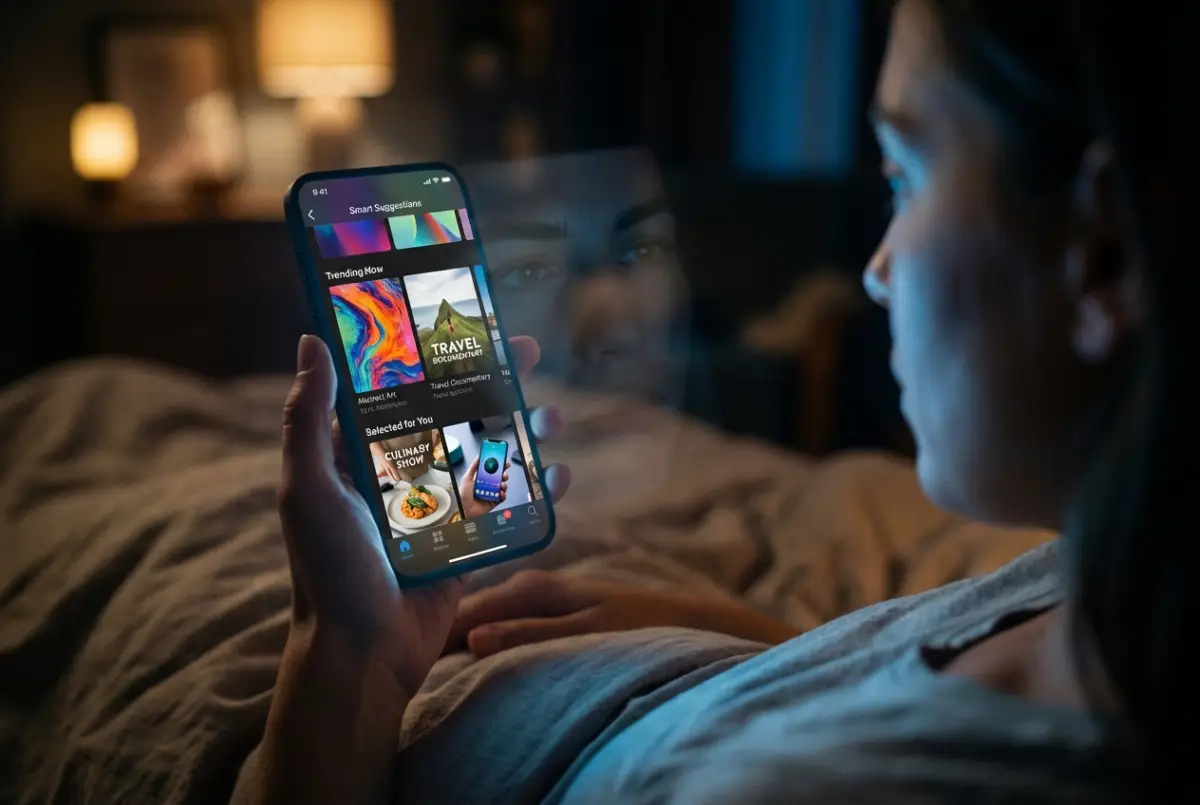
You’ve likely experienced this moment yourself. It’s late at night, you’re tired, and you pick up your phone almost absentmindedly. You open a social network or a music app without a clear goal—you’re not looking for a specific song or video, you just want to switch your mind off. And then it happens. Instantly, the screen serves you something that feels uncannily precise: a video related to a topic you discussed with a friend yesterday, or a playlist that perfectly matches your current, slightly melancholic mood.… Read Full Article
See More
The Digital Jungle: Why Buttons “Caress” Us and Errors “Bite”

The Digital Jungle: Why Buttons “Caress” Us and Errors “Bite”

Pick up your smartphone, unlock it, and simply look at the screen. What do you see? Chances are, you won’t find a single truly aggressive corner. App icons are rounded, notification bubbles are oval, search bars resemble soft pills. Even the phone itself is sculpted to slide smoothly in your hand, without digging into your fingers. Now think back to the last time your phone or computer showed an error message. What did it look like? Almost always, it appeared inside a sharp, angular frame—often with an exclamation mark trapped in a triangle. This contrast is not a matter of aesthetic taste or a design trend started by Apple or Google. It’s based on something your brain learned millions of years ago: shape can either protect you—or hurt you.… Read Full Article
See More
Designing Free Will: How We Choose the Path Someone Else Paved

Designing Free Will: How We Choose the Path Someone Else Paved

Imagine a typical evening. The glow of a laptop or smartphone screen fills the room. You’re buying something or signing up for a new service. On the screen, three options appear: Basic, Standard, and Premium. You scan the features, compare prices, consider your budget, and finally—after what feels like careful analysis—you click the middle option. You’re satisfied. You believe you’ve made a rational choice, a sensible compromise. In reality, that decision wasn’t yours. It was made the moment a designer laid out the interface. You simply accepted the suggestion. We like to believe that the digital world is a space of freedom. The internet, after all, feels like an endless ocean of possibilities. But if you look closely, you’ll notice that this “ocean” behaves more like a carefully engineered water park, where currents carry you exactly where the system was designed to send you. Interfaces are not neutral environments. They are architectures of choice, where every color, spacing, and… Read Full Article

See More
The Glass Labyrinth: Why We Can’t Stop Scrolling When the Mind Is Already Asleep

The Glass Labyrinth: Why We Can’t Stop Scrolling When the Mind Is Already Asleep

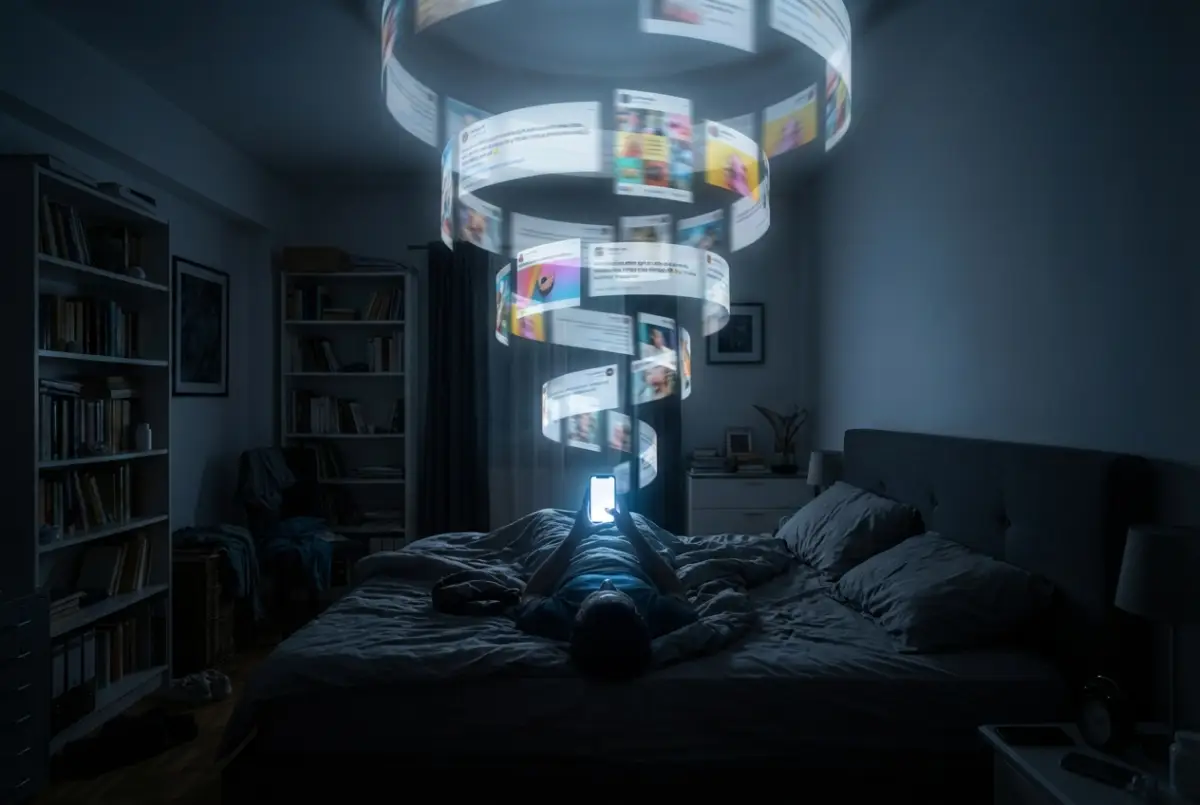
It always begins innocently. Evening arrives, the day’s tasks are done, and your body settles into a pleasant fatigue. You slide into bed, pull up the blanket, and sketch an ideal plan in your head: I’ll grab my phone for just five minutes—check the news, reply to a message—and then sleep. I’ve got an early morning. Reality, of course, unfolds differently. Five minutes stretch into forty-five, then into an hour and a half. When you finally look away from the screen, time has dissolved, your eyes burn, and your brain feels stuffed with informational debris. The scenario is so universal it has become a shared tragicomedy—and yet we rarely consider that this isn’t a failure of willpower. We’re simply playing a game designed to never end.… Read Full Article
See More
The Silence That Commands Us: Why the Brain Obeys the Button, Not the Words

The Silence That Commands Us: Why the Brain Obeys the Button, Not the Words

Your thumb approaches the surface of the screen. The movement is so automatic—so deeply embedded in muscle memory—that it requires no conscious thought. In a fraction of a second, your eyes scan a chaos of pixels, bypass hundreds of words, paragraphs, and headlines, and lock onto it: a bright, defined geometric shape. This isn’t reading. It’s hunting—or rather, magnetic attraction. The moment your finger touches the glass and the interface responds visually, a very different chemical process unfolds in the brain than when you read plain text. We don’t trust words; we trust form. And that trust is far older and more primitive than any algorithm of the modern digital world.… Read Full Article
See More
The Silent Oracle: Why an App “Listens” Even When We Say Nothing

The Silent Oracle: Why an App “Listens” Even When We Say Nothing

The scenario is uncomfortably familiar. You’re chatting with a friend about planning a vacation, casually mentioning a city or a hotel you’ve never searched for before. Ten minutes later, you open a social app—and the very first ad promotes that exact destination. A chill runs down your spine. The immediate, almost paranoid thought appears: They’re listening to us. We imagine phone microphones permanently switched on, private conversations analyzed somewhere on distant servers. The reality, however, is far more complex—and, honestly, more unsettling—than simple eavesdropping.… Read Full Article
See More
A Behavioral Lab in Your Pocket: Who Makes the Decision—You or the Pixel?

A Behavioral Lab in Your Pocket: Who Makes the Decision—You or the Pixel?

Pause for a second before your finger touches the screen. At first glance, the action feels entirely yours—autonomous, rational, deliberate. Yet when viewed through the lens of cognitive psychology and digital architecture, that sense of “free will” often turns out to be the product of a finely tuned algorithm. We don’t truly interact with screens; we respond to stimuli. Color is the primary manipulator, and the interface is the invisible hand gently pushing us in a preferred direction.… Read Full Article
See More
Why an App “Changes Its Face” Under Different Lighting Conditions

Why an App “Changes Its Face” Under Different Lighting Conditions

You have probably noticed this strange metamorphosis. You open an app in bright morning sunlight while standing at a bus stop, and the interface looks dry, schematic, almost harsh. The very same app, later at night in a dimly lit room, feels completely different—colors deepen, shapes soften, and the interface suddenly becomes more intimate and immersive. Our first instinct is to search for a technical explanation. But in reality, the pixels haven’t changed at all. What has changed is the stage on which this digital performance unfolds—and, more importantly, the viewer: your eyes and your brain.… Read Full Article
See More