



The Echo We Call Intelligence: How Our Own Predictability Enchants Us
 Tornike Moss
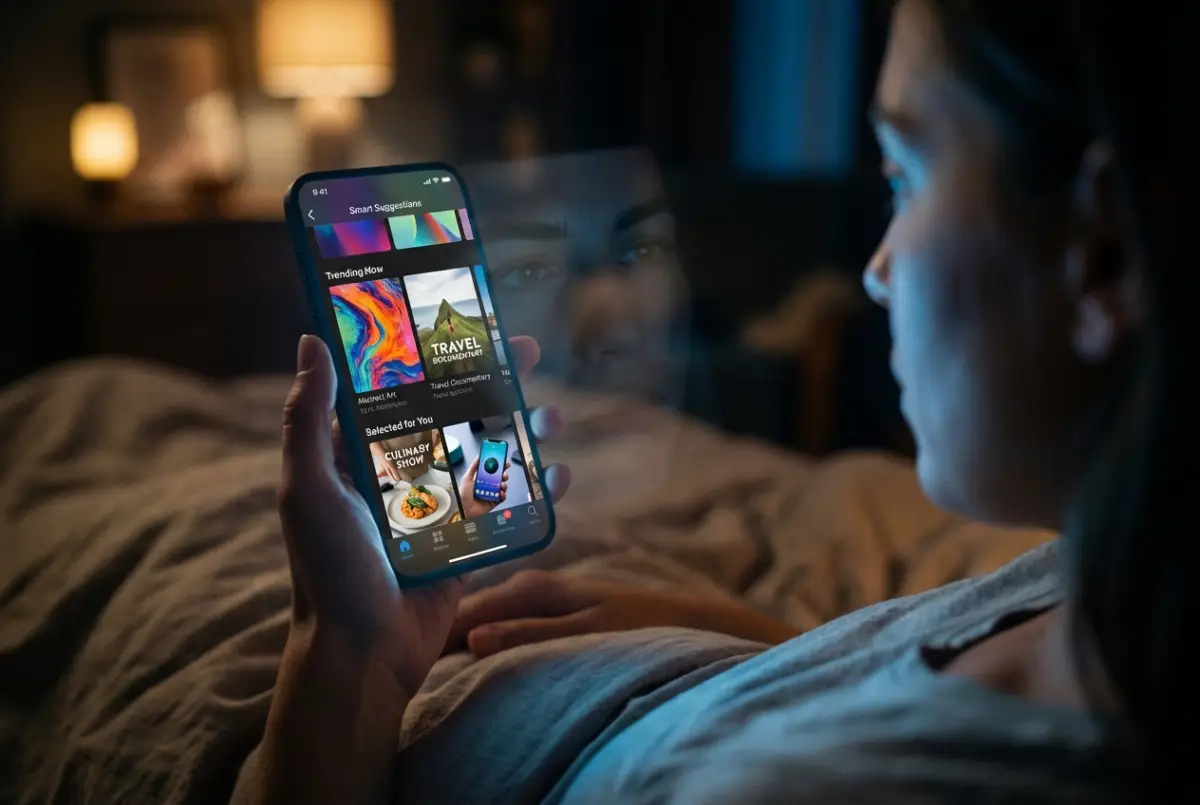
You’ve likely experienced this moment yourself. It’s late at night, you’re tired, and you pick up your phone almost absentmindedly. You open a social network or a music app without a clear goal—you’re not looking for a specific song or video, you just want to switch your mind off. And then it happens. Instantly, the screen serves you something that feels uncannily precise: a video related to a topic you discussed with a friend yesterday, or a playlist that perfectly matches your current, slightly melancholic mood.
The first reaction is often emotional, even mystical—a mix of surprise and mild paranoia. They’re listening to us. The app knows what I’m thinking. This is getting creepy. We start to believe that the black mirror in our pocket is powered by some supernatural intelligence capable of reading our thoughts. The truth, however, is far more ordinary, slightly ironic, and ultimately much more interesting than simple eavesdropping.
The reality is that humans greatly overestimate their own uniqueness and randomness. We like to think our choices are spontaneous and our desires unpredictable. Any UX psychologist or data scientist will tell you the opposite: humans are creatures of habit, and our behavior is largely cyclical and repeatable. When an app “suggests” exactly what you want, it isn’t predicting the future—it’s remembering the past with remarkable accuracy.
The system knows that on a Tuesday night around 11 p.m., your activity slows down, your scrolling becomes more passive, and your interests narrow toward lighter entertainment. It doesn’t know that you’re feeling bored, but it does know that at this time, in this context, and at this scrolling speed, there’s an 85% statistical chance you’ll tap on a cat video rather than a political analysis. That’s not mind-reading—it’s pattern recognition.
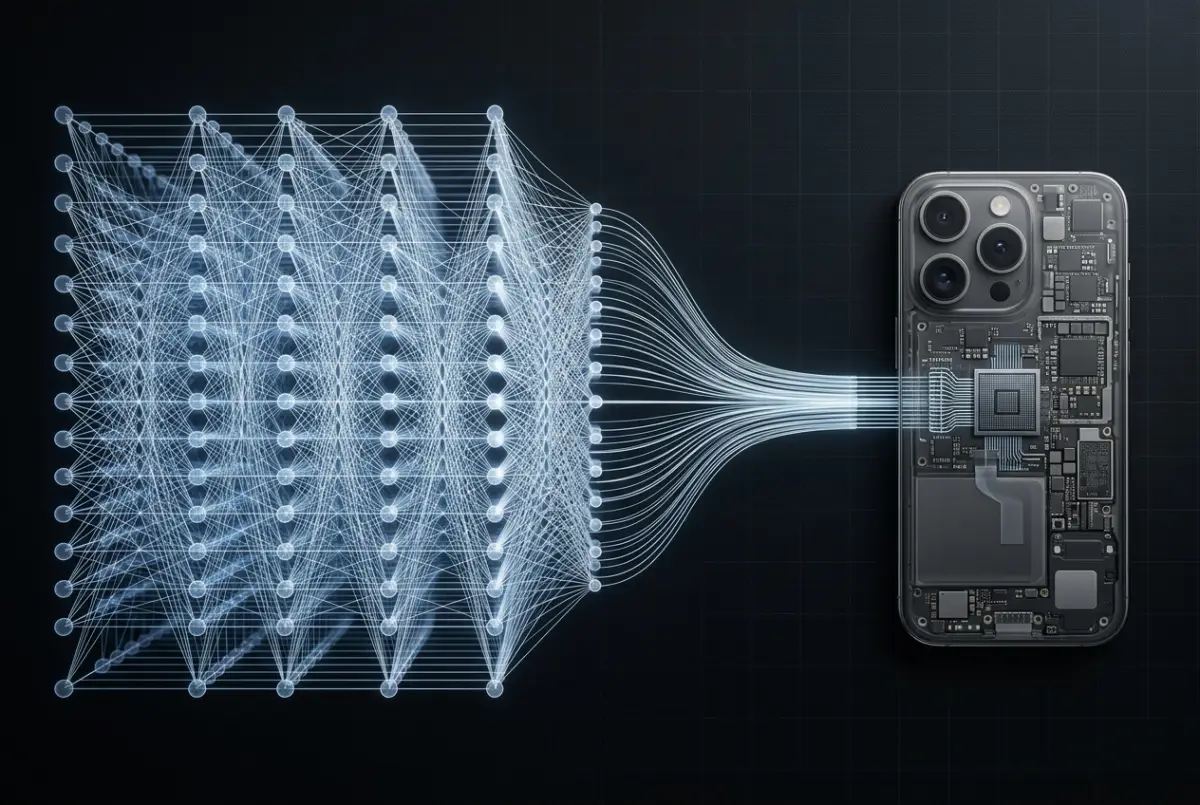
Our brains are evolutionarily wired to conserve energy by following familiar paths. Technology has learned this and now plays our own game back at us. When we call a system “smart,” what we’re really noticing is how carefully it observes details we ignore. You may not realize that you pause two seconds longer on photos of coffee than on photos of tea—but the algorithm does. It doesn’t read your thoughts; it measures reaction time, hesitation, return frequency, and even the velocity of your scroll. This isn’t magic. It’s behavioral biometrics—a digital reflection built from your own actions.
Here lies the central irony. We admire—or fear—algorithms for their supposed intelligence, when in fact they are mirrors of our own banality. When an ad appears for something you “only thought about,” chances are your online behavior has been pointing in that direction for a while. Your social circle, location, age, and the fact that you casually liked an interior design post last night all form a logical chain. The system works on a simple rule: people who behave like you eventually buy this. We interpret statistical probability as intuition.
This technological mirror is comforting because it relieves us of the burden of choice. Netflix doesn’t ask, “What do you want to watch?” because it knows you don’t have an answer. Instead, it says, “You’re the kind of person who likes this—here you go.” And we accept, willingly, because we recognize ourselves in the suggestion. Yet there’s something quietly unsettling about this precision. When an app predicts our desires perfectly, it means we haven’t changed. We are exactly who we were yesterday, last week, last month. The “smart” system merely confirms that our tastes, fears, and interests are stable enough to be translated into code.
So the next time your phone seems to read your mind and offers the exact song you needed, don’t assume technology has developed a soul. Instead, see it as a reminder that your digital self is made up of thousands of small, automatic reflexes—reflexes the machine remembers better than you do. The algorithm isn’t an oracle. It’s an echo, reflecting your own voice back to you, cleaned up and optimized.
And perhaps all this technological progress leads to one simple question: if an app knows what I want before I do, who is really making decisions in my life—me, or the digital shadow of my habits?
Go backComments (0)
From This Author
Select Crypto to Support the Author 💫
×TXintEE7aezp6QxNNtbghCXvmXJdgofEyr
0x9c6299454A6B617A0Db228024279F2a3EEf956dD
bc1qj7caz3xfh5qd4ud3v3nh7k4tfl5lg8jh9er73e
0x9c6299454A6B617A0Db228024279F2a3EEf956dD
3TndfWAhPytTaBZjC2GbNWqh9iWx171SYACjbG2j5vx8
DHsrtwiL56Xk1xAj3fe8pVcfLhE8xgt3EQ
0x9c6299454A6B617A0Db228024279F2a3EEf956dD
UQDFkubJxb8KmxFmy1arJxkewzmNEg6-G2pJFVzFihB65d7W
ltc1q3fentl6ur9cxm0vxyqkdmmzxkj92j00p9l8m7z
✍ Article Author
- Registration: 26 July 2025, 19:34
- Location: Georgia