


Why the Internet Cannot Sustain Trillions of AI-Generated Data Streams
 Tornike Moss
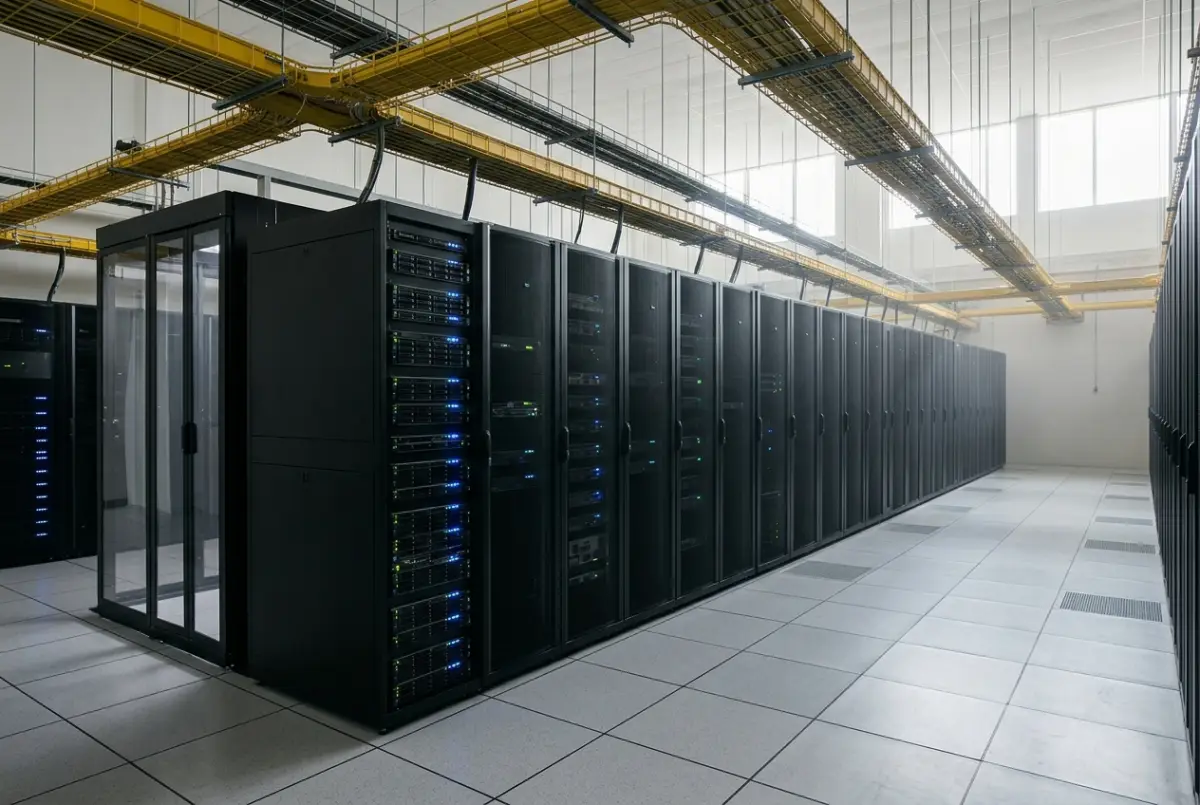
The modern digital ecosystem is entering a phase of structural strain: the exponential growth of data generated and processed by artificial intelligence is pushing global network infrastructure toward its physical limits. The number of connected IoT devices continues to rise rapidly—approaching roughly 21 billion by 2025 and projected to exceed 39 billion by 2030. At the same time, continuous high-resolution video streams and real-time sensor systems generate data at the scale of exabytes and zettabytes annually. This relentless flow places sustained pressure on traditional cloud-based architectures. Global data transmission backbones, once perceived as virtually limitless, are now operating near capacity, increasing the likelihood of systemic congestion and persistent network bottlenecks.
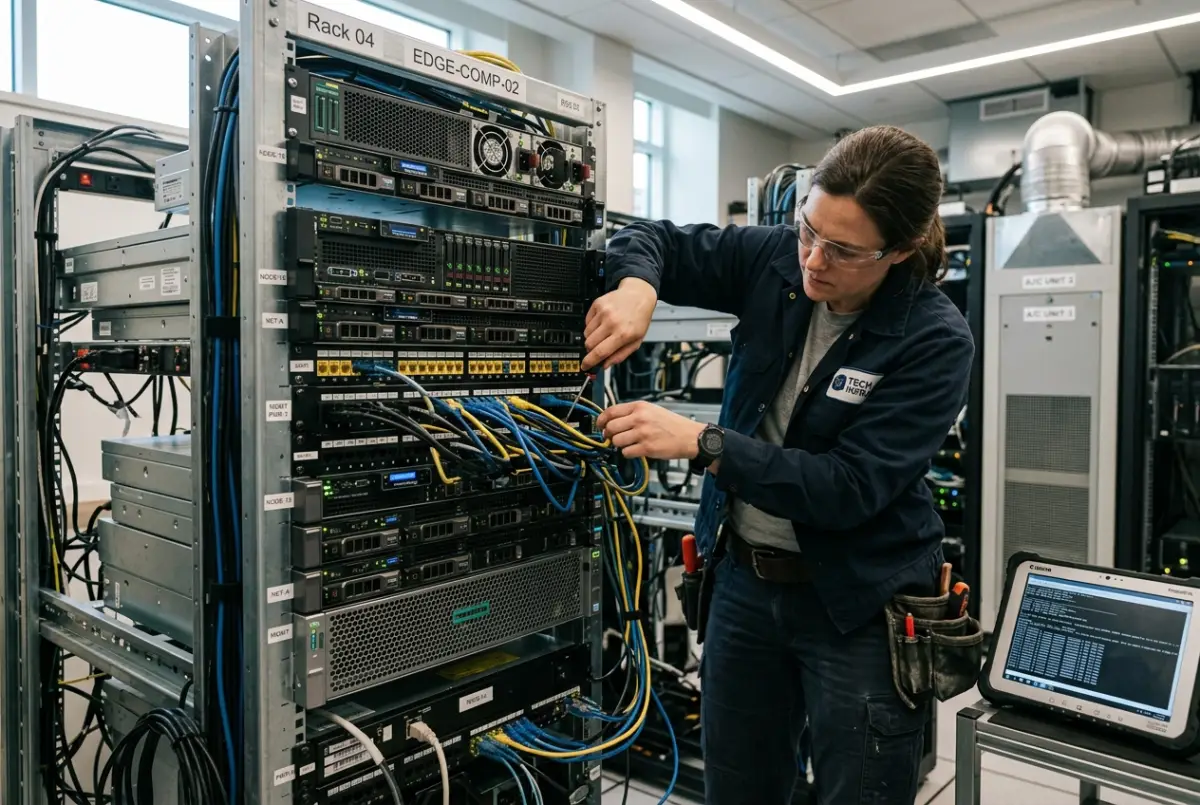
As this pressure intensifies, it becomes clear that bandwidth constraints, data transmission latency, and processor energy consumption are converging into systemic bottlenecks that are beginning to constrain overall scalability. This is especially critical in domains such as autonomous transportation, industrial monitoring, and telemedicine, where real-time responsiveness is non-negotiable. The traditional centralized networking model is no longer capable of accommodating the fundamental physical constraints imposed by transmitting massive volumes of data to geographically distant data centers and back. In response, the technology industry is being forced to rethink its architectural assumptions and move computational capabilities closer to the source of data. This is why edge AI systems are no longer a convenience—they are becoming a foundational requirement, reducing the burden on centralized infrastructure, minimizing latency, and enabling sustainable performance at scale.
Quick Summary
Key takeaways: The main ideas and conclusions of the article are summarized below.
- Global internet infrastructure is approaching physical and energy limits due to exponential AI-driven data growth.
- Bandwidth, latency, and energy consumption are converging into systemic constraints.
- Centralized cloud architectures are no longer scalable for real-time, high-volume systems.
- Video and computer vision workloads dominate network traffic and infrastructure load.
- Data transfer and storage costs increasingly exceed the actual value of raw data.
- IoT and industrial sensors are reshaping network topology toward edge-centric models.
- Local processing can reduce data transmission by up to 70–90% and minimize latency to microseconds.
- Hybrid cloud–edge architectures are emerging as the dominant infrastructure model.
- Decentralization improves energy efficiency and enables scalable system growth.
- The future of the internet depends on distributed intelligence rather than centralized processing.
Table of Contents
Physical Limits: Why Cloud Architectures Are Reaching Their Ceiling
For decades, the cloud computing paradigm rested on a simple yet powerful assumption: network bandwidth is effectively unlimited, and centralized compute resources will continue to become cheaper over time. Today, that assumption is breaking down. Modern internet infrastructure is rapidly approaching physical and economic limits, where the scale and complexity of generated data are increasingly in conflict with network capacity and energy constraints. Expanding infrastructure is no longer merely a matter of capital investment—it is constrained by the laws of physics and global energy availability.
When billions of sensors, industrial systems, and autonomous devices simultaneously transmit terabytes of continuous data streams to centralized servers, the limitations of this model become increasingly apparent. A system that once ensured efficient data management has now become a structural bottleneck. Infrastructure evolution has reached a point where moving data is often more complex and costly than processing it.
Bandwidth Constraints: Physical and Economic Boundaries
Fiber-optic networks—the invisible backbone of the global internet—are approaching their technological limits. Data transmission capacity is fundamentally constrained by Shannon’s theorem, which defines the maximum theoretical information throughput of a communication channel. While advanced multiplexing techniques such as dense wavelength division multiplexing (DWDM) have significantly extended these limits, the physical properties of light cannot be altered indefinitely. Data volumes are growing exponentially, while network capacity scales, at best, linearly. Modern optical fibers can carry hundreds of terabits per second, yet the pace of data generation—particularly from IoT systems and video streams—is increasing far more rapidly, pushing infrastructure toward saturation.
This challenge is compounded by the economic cost of physical expansion. Deploying new transoceanic cables, expanding continental backbones, and upgrading last-mile infrastructure requires massive capital investment measured in billions of dollars. For telecommunications providers, scaling bandwidth at the rate demanded by the digital ecosystem is often economically infeasible. As a result, a structural imbalance emerges: the global network is generating significantly more data than it can physically transport.
Latency as a Critical Constraint in Real-Time Systems
Beyond bandwidth limitations, latency has become a defining constraint. The speed of light imposes an unavoidable physical boundary. In fiber-optic cables, propagation speed drops to approximately 200,000 km/s, introducing inherent delays in global communication. When autonomous systems, industrial robots, or remote medical devices send sensor data to distant cloud servers and wait for a response, cumulative latency becomes unavoidable.
While a 100-millisecond delay may be acceptable for web applications or streaming services, it is unacceptable in real-time systems. A computer vision model detecting an obstacle on a roadway must respond locally within microseconds. Centralized cloud architectures, by design, require long-distance data transmission, making ultra-low latency unattainable at global scale. In real-world network conditions—where data traverses multiple nodes and processing layers—latency often accumulates to tens or hundreds of milliseconds.
The Risk of Energy Collapse in Data Centers
The infrastructure crisis extends beyond networking into energy consumption. Hyperscale data centers consume an increasing share of global electricity. Training large AI models and performing continuous inference workloads require unprecedented computational power, driving exponential increases in energy demand.
Today, data centers account for approximately 2–3% of global electricity consumption, with projections indicating substantial growth as AI workloads expand. High-performance GPU and TPU clusters generate significant heat, rendering traditional air cooling insufficient. Liquid cooling systems and alternative thermal management technologies introduce additional energy overhead. In many regions, local power grids are already struggling to meet the demand of large-scale data centers, creating real risks of localized energy shortages. Energy sustainability is no longer a secondary concern—it has become a defining constraint on technological progress.
Asymmetry Between Storage and Data Transfer Costs
A less visible but equally critical issue is the growing imbalance between data generation rates and the economics of managing that data. Modern sensor ecosystems produce vast volumes of information, yet much of it constitutes low-value noise. Static temperature readings or hours of uneventful surveillance footage often provide minimal analytical value.
Despite this, transmitting and storing all raw data in centralized systems incurs significant costs. Network egress fees and storage expenses frequently exceed the value derived from the data itself. Transferring and storing a single terabyte may cost tens of dollars, which quickly scales into substantial operational expenditure in large systems. This creates an unsustainable economic model where infrastructure costs dominate system design. As a result, companies are rethinking data strategies—shifting toward filtering and analysis at the point of generation to reduce unnecessary data movement.
The Exponential Pressure of IoT and Sensor Ecosystems
The internet was originally designed for human communication and asynchronous data exchange. Activities such as loading web pages or sending emails created burst-based traffic patterns that networks could handle efficiently. The emergence of IoT and large-scale sensor ecosystems has fundamentally altered this model. Today, the global network has evolved into a continuous machine-to-machine communication system, where billions of devices generate uninterrupted streams of telemetry and multimedia data.
This transformation introduces exponential pressure on physical infrastructure. Sensors operate continuously, without pauses, generating persistent data flows. With IoT devices projected to approach 21 billion by 2025 and expand toward 39–40 billion in the following decade, the scale of this traffic is unprecedented. Traditional cloud architectures, built on centralized data aggregation, are now under severe stress. The growth in device count and complexity directly amplifies bandwidth demand, forcing engineers to reconsider network architecture and data processing strategies.
Global Data Volume Projections
The growth trajectory of the digital ecosystem has surpassed traditional forecasting models. A decade ago, terabytes and petabytes defined industrial data scales. Today, global analytics organizations such as IDC describe a transition into the zettabyte era. Estimates suggest that by 2025, global data generation will reach approximately 175–181 zettabytes. However, the true inflection point lies in the coming decade. With active IoT devices approaching 50 billion, the industry is preparing for the transition toward yottabyte-scale data production. Some projections indicate that by 2030, global data volumes could exceed 500 zettabytes.
This data is predominantly generated by machines rather than humans. Smart appliances, weather stations, logistics trackers, and industrial robots perform millions of data operations per second. Individually, each device may transmit only kilobytes, but collectively they create massive data waves that strain core internet infrastructure. Managing data at this scale requires not only expanded storage capacity but also unprecedented increases in network throughput—resources that current cloud providers cannot sustain indefinitely. This exponential curve highlights the physical limits of centralized processing models.
The Weight of Computer Vision and Continuous Video Analytics
While simple telemetry dominates in device count, the heaviest burden on infrastructure comes from video streams and computer vision systems. More than 80% of global internet traffic is already video-based, making it the dominant source of network load. Smart city infrastructure, global surveillance networks, and autonomous vehicles continuously generate high-resolution (4K and 8K) imagery. A single Level 5 autonomous vehicle can produce 4–5 terabytes of sensor and video data per day. At scale, transmitting this raw data to cloud systems becomes physically impractical, even with advanced network technologies.
In practice, industries are already adapting. Autonomous systems perform primary data processing locally. Cameras, LiDAR, and radar sensors analyze environmental data on-device, enabling real-time decision-making without reliance on remote servers. Only aggregated or critical insights are transmitted, significantly reducing network load and improving system reliability.
The nature of video data—frame-by-frame transmission at high frequency—makes it inherently heavy. A single 4K camera can generate dozens of megabytes per second. At scale, thousands of such sources produce terabytes per hour. The only viable optimization strategy is to transform data at the point of capture. Local processing enables systems to identify relevant events and transmit only compact metadata rather than full video streams. This architectural shift frees network capacity and enables scalable real-time analytics without exceeding physical bandwidth limits.
Industrial Sensors and the Transformation of Network Topology
Beyond consumer applications, industrial IoT (IIoT) is driving a fundamental transformation in network topology. Modern factories, logistics hubs, and critical infrastructure systems rely on dense networks of distributed sensors. These devices measure vibration, temperature, pressure, and chemical composition with millisecond precision. A single production line can generate tens of thousands of data points per second. Traditional best-effort internet protocols are insufficient for such workloads, which require deterministic performance and continuous data flow.
This density of industrial sensors is reshaping how networks are structured. The traditional star topology—where devices connect directly to centralized cloud systems—is increasingly inefficient and risky. In critical environments, systems cannot afford delays caused by long-distance data transmission. Instead, industrial networks are evolving toward hierarchical and mesh-based architectures, where local gateways aggregate and process data streams.
This shift introduces dynamic routing and distributed control mechanisms. The center of data gravity moves from the cloud toward the edge. Industrial systems must determine locally which data is critical, what should be processed on-site, and what should be transmitted for long-term analysis. As a result, modern telecommunications infrastructure is evolving into a layered system where intelligence is distributed across multiple tiers.
Decentralization as a Solution: Migrating Compute to the Edge
The physical and economic constraints of centralized cloud architectures are forcing a fundamental shift in data processing paradigms. When data volume, bandwidth, and energy consumption simultaneously become limiting factors, decentralization emerges as the only viable engineering solution. Computational resources are moving closer to where data is generated. This is no longer an optimization strategy—it is a necessity to prevent systemic collapse of global infrastructure.
Local Data Processing at the Source
Processing data at its point of origin—within sensors, cameras, or industrial controllers—fundamentally changes network dynamics. Most data generated by IoT systems consists of repetitive or low-value telemetry. Sending all of this data to centralized servers provides little analytical benefit.
Local filtering algorithms eliminate this noise at the source. Instead of transmitting raw data streams, systems send structured metadata, anomaly reports, and critical signals. This approach can reduce transmitted data volumes by 70–90%, significantly lowering bandwidth requirements and infrastructure costs.
Local processing also addresses latency constraints. In real-time systems such as autonomous vehicles or robotics, decision speed is critical. By eliminating the need for round-trip communication with cloud servers, latency is reduced from milliseconds to microseconds. This enables closed-loop control systems that operate independently of network stability. These capabilities are powered by specialized edge processors and NPU chips, optimized for AI inference workloads.
The Emergence of Hybrid Cloud-Edge Architectures
Moving computation to the edge does not eliminate the role of the cloud. Instead, modern systems are evolving into hybrid architectures where centralized and decentralized resources complement each other. In this model, data flows through a structured hierarchy.
At the lowest layer are end devices performing real-time filtering and immediate response. The next layer consists of edge gateways and micro data centers that aggregate and analyze data at a local level. At the top, centralized cloud systems focus on high-value tasks such as long-term analytics, large-scale simulations, and training AI models.
This architecture transforms the role of the cloud from a primary data processor into a global intelligence layer. Instead of ingesting all raw data, it receives refined, high-value information from edge systems. This allows cloud resources to focus on computationally intensive tasks while edge systems handle real-time operations.
Dynamic Workload Distribution Across Systems
The efficiency of hybrid infrastructure depends on intelligent workload distribution. Decisions about where computation occurs are based on latency sensitivity, network cost, and data privacy requirements. For example, in smart camera systems, local processing handles object detection, while only relevant alerts are transmitted to central systems.
Workload orchestration platforms dynamically evaluate system conditions in real time. If local resources are constrained or deeper historical analysis is required, workloads are redirected to the cloud. This adaptive balancing ensures optimal performance, cost efficiency, and system resilience.
Building Sustainable and Scalable Infrastructure
Decentralization plays a critical role in ensuring long-term sustainability. By reducing the need to transport massive data volumes across networks, energy consumption decreases significantly. Efficiency gains are achieved not only through improved hardware but by minimizing the physical distance data must travel.
Decentralized systems also enable near-infinite scalability. In traditional models, adding new devices required proportional expansion of centralized infrastructure. In edge-driven architectures, each new device contributes its own computational capacity. The system scales organically, maintaining stability even as data volumes approach yottabyte levels.
Ultimately, the current crisis in internet infrastructure demonstrates that exponential data growth cannot be sustained through incremental expansion of centralized systems. Fundamental limits in bandwidth, latency, and energy demand require a paradigm shift. The future of digital infrastructure depends on distributed intelligence, where computation is embedded throughout the network. By migrating processing closer to the edge and adopting hybrid architectures, the global internet can evolve to meet the demands of a data-driven world without exceeding its physical limits.
Go backComments (0)
From This Author
Select Crypto to Support the Author 💫
×TXintEE7aezp6QxNNtbghCXvmXJdgofEyr
0x9c6299454A6B617A0Db228024279F2a3EEf956dD
bc1qj7caz3xfh5qd4ud3v3nh7k4tfl5lg8jh9er73e
0x9c6299454A6B617A0Db228024279F2a3EEf956dD
3TndfWAhPytTaBZjC2GbNWqh9iWx171SYACjbG2j5vx8
DHsrtwiL56Xk1xAj3fe8pVcfLhE8xgt3EQ
0x9c6299454A6B617A0Db228024279F2a3EEf956dD
UQDFkubJxb8KmxFmy1arJxkewzmNEg6-G2pJFVzFihB65d7W
ltc1q3fentl6ur9cxm0vxyqkdmmzxkj92j00p9l8m7z
✍ Article Author
- Registration: 26 July 2025, 19:34
- Location: Georgia