

NPU Chips: Why Artificial Intelligence Needs a New Class of Processor
 Tornike Moss
The rapid advancement of artificial intelligence has forced a fundamental rethinking of digital infrastructure. Modern language models and neural networks demand such vast computational resources and energy that traditional CPU and GPU architectures are increasingly reaching their efficiency limits. This constraint is particularly evident in real-time data processing scenarios, where both latency and energy consumption become critical bottlenecks.
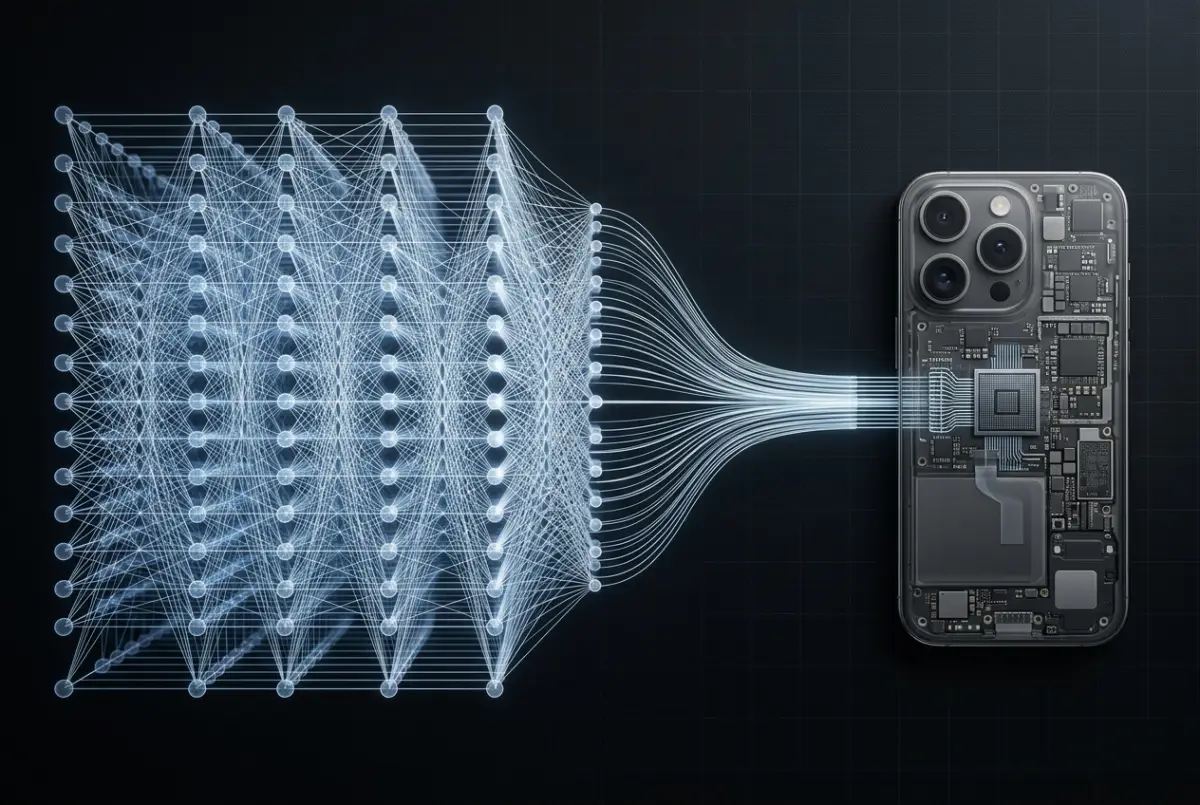
To bridge this technological gap, the NPU (Neural Processing Unit) has emerged — a specialized processor designed explicitly for neural network operations. This new generation of silicon does more than accelerate complex computations; it establishes a new industry standard in which local Edge AI systems play an increasingly central role. This transition is not merely a technical upgrade — it represents a logical evolution in computational architecture.
Quick Summary
Key takeaways: The main ideas and conclusions of the article are summarized below.
- Traditional CPU and GPU architectures are no longer sufficient for modern AI workloads due to performance and energy limitations.
- NPUs are specialized processors optimized specifically for neural network computations and parallel data processing.
- AI models rely heavily on tensor operations, where NPUs significantly outperform general-purpose processors.
- Systolic arrays and on-chip memory reduce latency and improve computational throughput.
- Quantization (INT8, FP16) enables higher efficiency with minimal impact on model accuracy.
- Performance per watt (TOPS/W) has become a key metric in evaluating AI hardware efficiency.
- NPUs reduce thermal output, making them suitable for mobile and edge environments.
- On-device AI improves privacy and eliminates the need to transmit sensitive data to the cloud.
- Edge and cloud systems work together in a hybrid model to balance performance and scalability.
- NPUs are emerging as a foundational component of decentralized, real-time AI infrastructure.
Table of Contents
Architectural Shift: From CPU and GPU to NPU
For decades, the computing industry relied on general-purpose processors, with progress largely driven by Moore’s Law and increases in clock frequency. However, the rapid evolution of artificial intelligence and deep learning algorithms has made it clear that traditional silicon architectures are no longer sufficient. Modern AI models require not sequential decision-making, but massive parallel mathematical operations across vast datasets. This shift has forced the industry to reconsider its computational paradigm at a fundamental level.
The general-purpose nature that once defined the strength of classical processors has now become their primary limitation in AI workloads. Traditional chips are designed to handle a wide range of software tasks — from operating system management to web rendering. But when processing billions of neural network parameters, this versatility becomes a source of inefficiency, necessitating the adoption of specialized infrastructure such as Neural Processing Units.
Limitations of CPUs in Serial Processing
The Central Processing Unit (CPU) is optimized for low-latency execution of complex, sequential instructions. A significant portion of its architecture is dedicated to control logic, branch prediction, and hierarchical cache systems. In neural networks, where millions of simple arithmetic operations must be executed simultaneously, a limited number of powerful CPU cores cannot provide sufficient throughput. Additionally, the von Neumann bottleneck becomes evident, where the processor spends more time retrieving data from memory than performing actual computations. This severely limits performance when running large-scale AI models, particularly in inference scenarios that demand both real-time responsiveness and energy efficiency.
GPU as a Transitional Technology
Graphics Processing Units (GPUs) were originally designed for rendering three-dimensional graphics, a task that inherently requires high parallelization. The industry quickly recognized that thousands of smaller GPU cores were well-suited for training neural networks. However, GPUs remain a transitional solution. They include many architectural components irrelevant to AI workloads, leading to significant energy consumption. Their high power requirements and physical scale make them impractical for mobile devices and Edge AI systems, where power efficiency and thermal constraints are critical. As a result, while GPUs remain effective for training, inference optimization and energy efficiency are increasingly shifting toward dedicated NPU architectures.
Anatomy and Purpose of NPUs
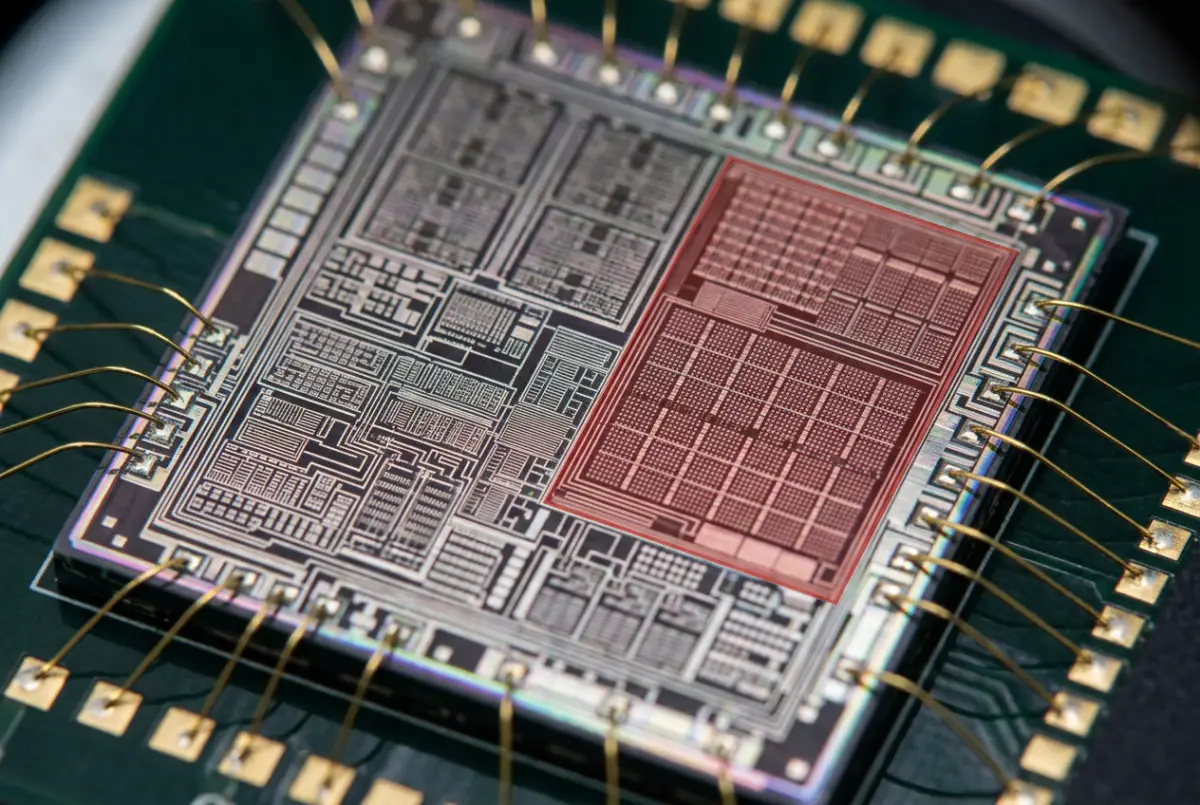
An NPU represents the evolution of Application-Specific Integrated Circuit design in the age of artificial intelligence. Unlike CPUs and GPUs, NPUs eliminate unnecessary general-purpose and graphics-related logic. Their silicon architecture is exclusively dedicated to neural network algorithms. Built around a dataflow execution model, NPUs maximize utilization of computational units while minimizing energy consumption. The result is a processor capable of performing trillions of operations per second (TOPS) with high efficiency. In this context, performance per watt becomes a defining metric, determining real-world applicability in mobile and Edge environments.
Tensor Computation and Parallel Processing
At a fundamental level, artificial intelligence models operate on principles of linear algebra, where tensors play a central role. A tensor is a multi-dimensional data structure that stores the weights and activations of neural networks. Traditional processors operate on scalar or vector data, making them inefficient for processing high-dimensional tensors.
The core technological advantage of NPUs lies in their ability to execute tensor operations directly at the hardware level. They incorporate specialized tensor cores designed to perform entire matrix multiplications and accumulations within a single clock cycle. This level of parallelism creates a dramatic performance advantage, enabling real-time AI processing without perceptible delays.
Optimizing Matrix Multiplication
More than 90% of neural network computations consist of Multiply-Accumulate operations. NPUs utilize systolic arrays — tightly interconnected networks of processing elements where data flows rhythmically between nodes. Instead of writing intermediate results back to main memory after each operation, these arrays pass results directly to the next computational stage. This approach reduces latency substantially and allows NPUs to achieve performance levels unattainable with conventional architectures.
Solving the Memory Bandwidth Problem
A well-known limitation in computing — the memory wall — occurs when processor speed outpaces memory bandwidth. Tensor operations require extremely high data throughput, and NPUs address this by integrating large on-chip SRAM positioned close to compute units. By minimizing reliance on off-chip DRAM, NPUs reduce both latency and the substantial energy cost associated with data movement across system buses.
Precision Reduction and Quantization
Traditional scientific computing relies on high-precision formats such as FP32. However, neural networks have proven remarkably tolerant to lower precision. They can operate effectively using FP16 or even INT8 representations. NPUs are specifically optimized for quantization, enabling processors to perform up to four times as many operations within the same time frame while reducing memory requirements by approximately 75%, with minimal impact on model accuracy. This capability is a key factor in making NPUs highly efficient for Edge devices.
Energy Efficiency: The New Economics of Silicon
The rapid expansion of artificial intelligence infrastructure is confronting a fundamental physical and economic constraint: energy consumption. As the parameter count of large-scale models grows exponentially, so does the demand for computational power. GPU clusters, which currently form the backbone of AI infrastructure, consume vast amounts of electricity. With the end of Dennard scaling, performance gains can no longer be achieved without significantly increasing power consumption.
This shift has led to a new economic model of silicon, where processor value is measured not only by raw performance but by energy efficiency. NPU architectures are designed from the ground up to minimize wasted energy. By eliminating unnecessary instruction paths and reducing architectural overhead, these specialized accelerators direct nearly all electrical activity toward useful mathematical operations. This paradigm shift is essential for both hyperscale data centers and autonomous micro-systems.
Performance per Watt
Traditional performance metrics such as clock speed or raw TOPS are becoming less relevant for AI workloads. The critical metric is performance per watt. NPU architectures, with their optimized dataflow and localized memory, can activate significantly more neural operations per unit of energy compared to CPUs or GPUs. In real-world deployments, modern NPUs often achieve tens of TOPS per watt, far exceeding the efficiency of conventional GPU architectures and substantially reducing total energy consumption.
Thermal Design and Power Management
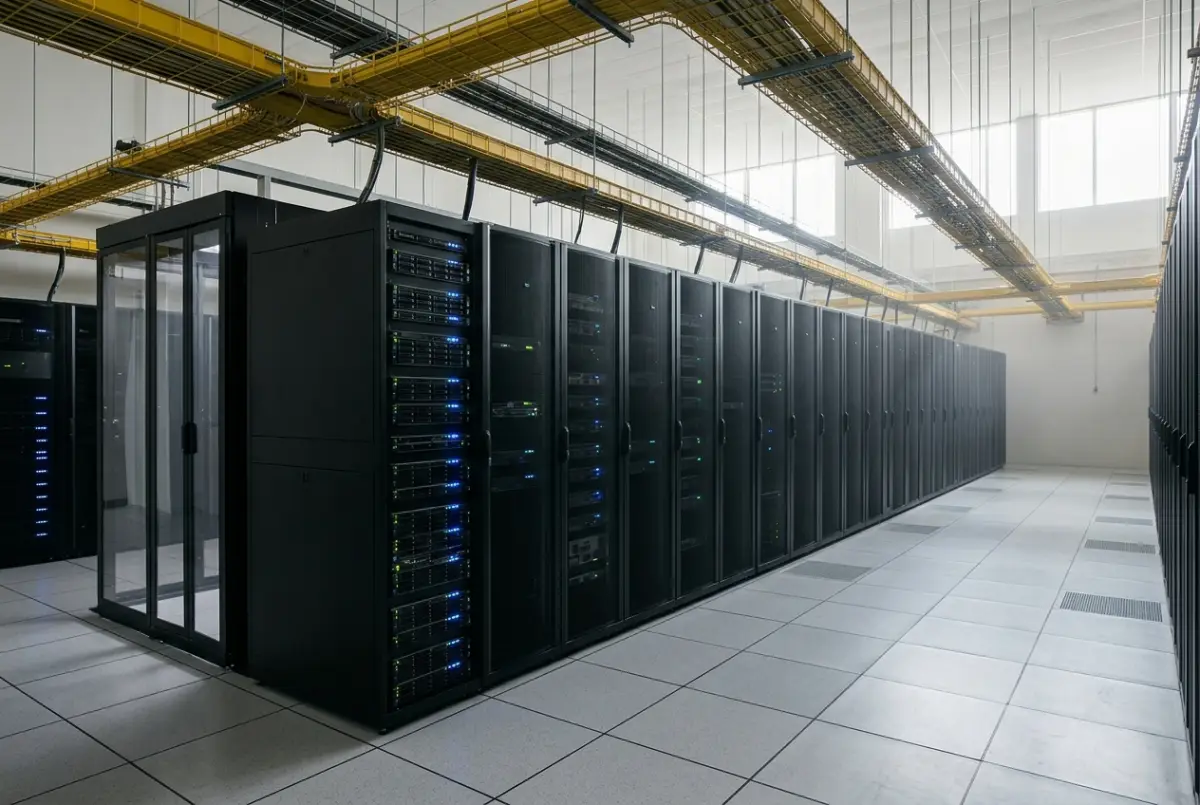
Energy consumption directly translates into heat generation. Thermal Design Power (TDP) defines how much heat must be dissipated for stable operation. In data centers, high TDP requires expensive liquid cooling systems. In mobile and Edge devices, where active cooling is often impractical, excess heat leads to thermal throttling and reduced performance. The inherently low power consumption of NPUs ensures lower TDP, enabling sustained performance even under passive cooling conditions. In contrast, modern data center GPUs can reach TDP levels of several hundred watts, necessitating complex thermal management infrastructure.
Environmental Impact and Sustainable Infrastructure
As global digital infrastructure expands, data center emissions are becoming a significant contributor to climate change. Training and deploying modern AI models require enormous energy resources. The widespread adoption of NPUs in cloud architectures is not just a technical upgrade — it is a strategic tool for building sustainable infrastructure. By optimizing energy consumption, NPUs help reduce Power Usage Effectiveness metrics and support progress toward net-zero emission goals. As AI systems scale, energy-efficient architectures are increasingly viewed as both a technical necessity and an environmental imperative.
Decentralized Intelligence: NPU at the Device Level
In the early stages of AI development, limited computational resources necessitated a centralized model, where complex AI systems were hosted in the cloud and user devices functioned primarily as data collection endpoints. However, this architecture exposed critical limitations — dependency on network bandwidth, server congestion, and significant security risks. Continuous data transmission also increases infrastructure costs and network load, making the centralized model increasingly unsustainable.
NPUs represent a fundamentally different approach. Through silicon miniaturization and integration into system-on-chip designs, they enable Edge AI — the execution of neural networks directly on devices. This shifts intelligence closer to the source of data generation. Instead of sending data to distant data centers, devices can perform inference locally within milliseconds, transforming the computing landscape into a decentralized ecosystem.
Security and Privacy in On-Device AI
Modern data protection standards highlight the risks associated with transmitting sensitive information such as biometric data, personal conversations, or medical records to the cloud. On-device AI, enabled by NPUs, eliminates this requirement. Since all computations occur locally, raw data never leaves the device. This approach significantly reduces exposure to cyber threats and aligns with strict regulatory frameworks such as GDPR.
Eliminating Latency in Critical Systems
Latency remains one of the primary weaknesses of cloud computing. While a delay of a few hundred milliseconds may be acceptable for consumer applications, it is unacceptable in autonomous systems, industrial robotics, and medical devices. NPU-equipped systems eliminate network latency, enabling ultra-low and deterministic response times. Decisions can be made in real time, even without an active internet connection. While cloud-based systems may introduce delays of hundreds of milliseconds, local NPU inference can operate within millisecond or sub-millisecond intervals.
Hybrid Model: Edge and Cloud Synergy
Despite the rise of Edge computing, the future of AI infrastructure is not strictly divided between local and centralized systems. Instead, it is inherently hybrid. NPUs enable efficient collaboration between Edge devices and cloud platforms. Lightweight, continuous tasks such as speech recognition, sensor filtering, and video preprocessing are handled locally, reducing bandwidth usage. More complex tasks involving large-scale models are dynamically offloaded to the cloud. This creates a balanced, scalable computational ecosystem, where only essential data is transmitted while the majority of processing remains local.
Although NPUs are still evolving, their role as a critical component of modern AI infrastructure is already evident. As computational demands continue to grow, the industry is moving away from general-purpose processors toward specialized silicon optimized for specific workloads. Within this emerging architecture, CPUs, GPUs, and NPUs operate together as a hybrid ecosystem — flexible, energy-efficient, and scalable. In this context, the NPU is no longer just an auxiliary accelerator; it is a foundational technology for building real-time, decentralized artificial intelligence systems.
Go backComments (0)
From This Author
Select Crypto to Support the Author 💫
×TXintEE7aezp6QxNNtbghCXvmXJdgofEyr
0x9c6299454A6B617A0Db228024279F2a3EEf956dD
bc1qj7caz3xfh5qd4ud3v3nh7k4tfl5lg8jh9er73e
0x9c6299454A6B617A0Db228024279F2a3EEf956dD
3TndfWAhPytTaBZjC2GbNWqh9iWx171SYACjbG2j5vx8
DHsrtwiL56Xk1xAj3fe8pVcfLhE8xgt3EQ
0x9c6299454A6B617A0Db228024279F2a3EEf956dD
UQDFkubJxb8KmxFmy1arJxkewzmNEg6-G2pJFVzFihB65d7W
ltc1q3fentl6ur9cxm0vxyqkdmmzxkj92j00p9l8m7z
✍ Article Author
- Registration: 26 July 2025, 19:34
- Location: Georgia