

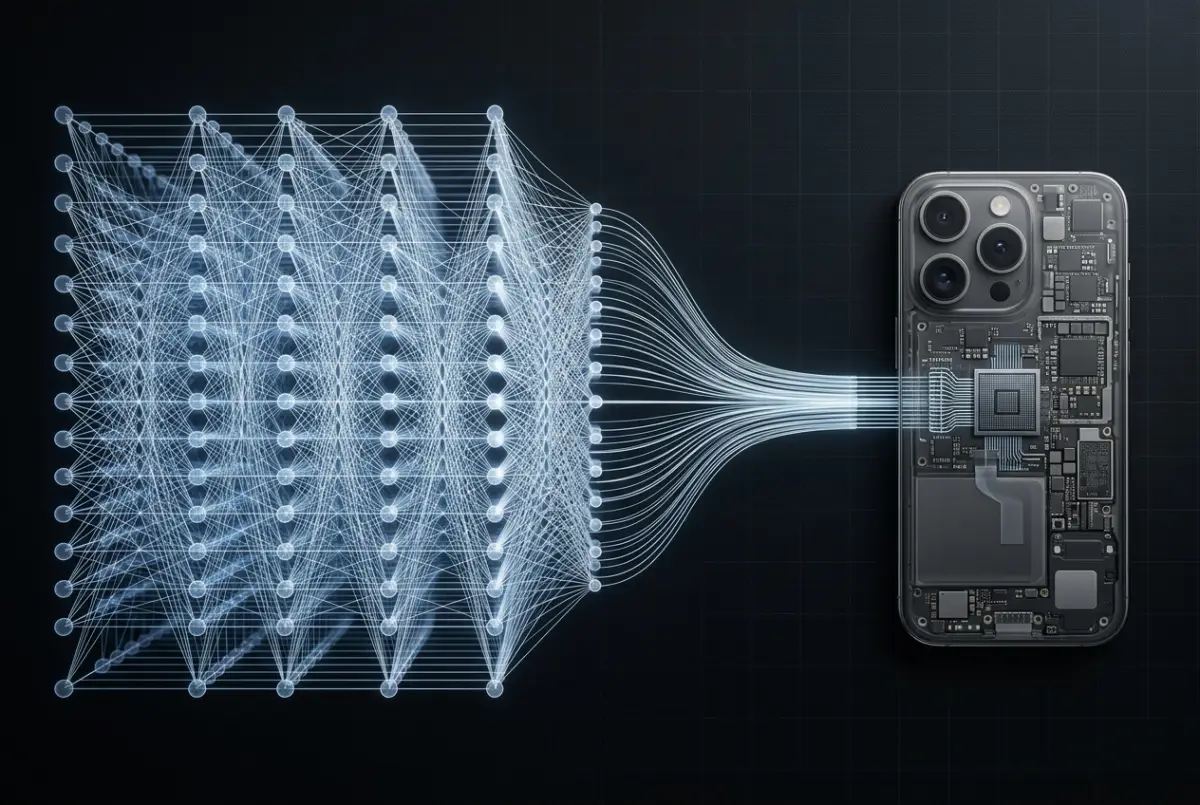


The Glass Labyrinth: Why We Can’t Stop Scrolling When the Mind Is Already Asleep
 Tornike Moss
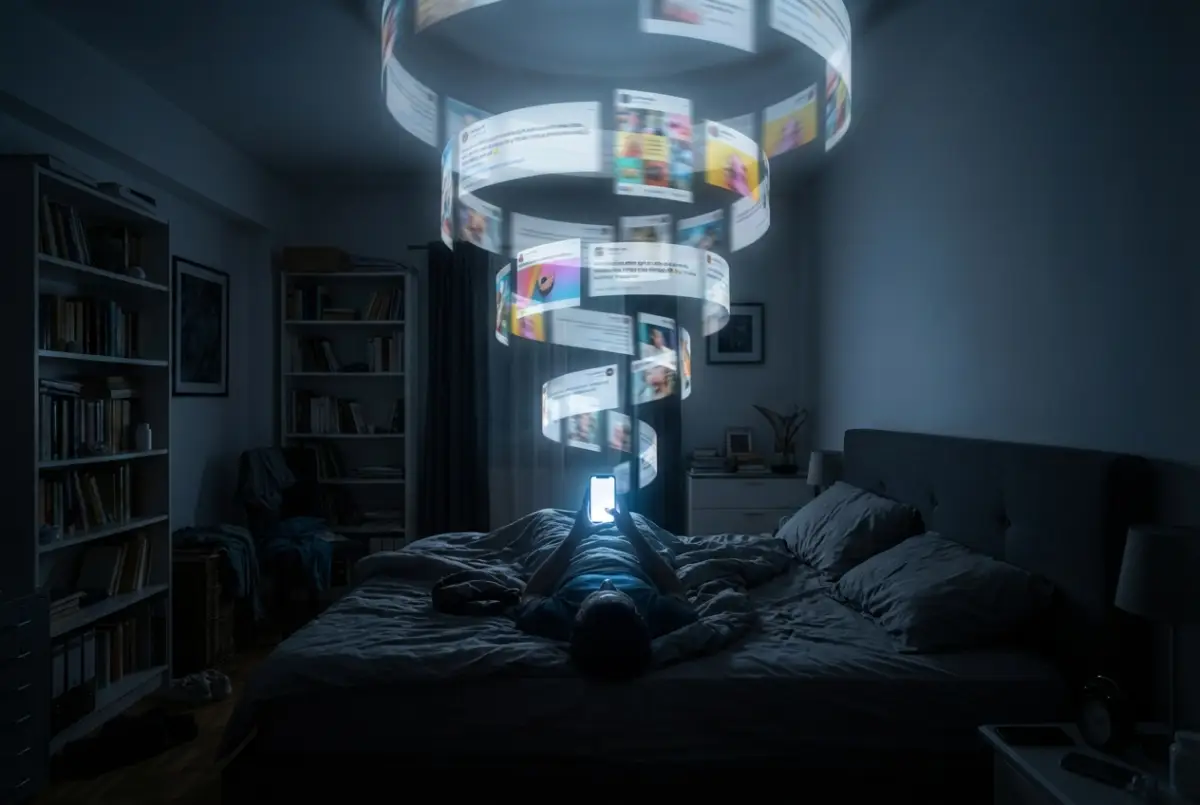
It always begins innocently. Evening arrives, the day’s tasks are done, and your body settles into a pleasant fatigue. You slide into bed, pull up the blanket, and sketch an ideal plan in your head: I’ll grab my phone for just five minutes—check the news, reply to a message—and then sleep. I’ve got an early morning.
Reality, of course, unfolds differently. Five minutes stretch into forty-five, then into an hour and a half. When you finally look away from the screen, time has dissolved, your eyes burn, and your brain feels stuffed with informational debris. The scenario is so universal it has become a shared tragicomedy—and yet we rarely consider that this isn’t a failure of willpower. We’re simply playing a game designed to never end.
Endless scroll—the continuous stream of content refreshed by a single finger movement—is one of the most brilliant and, at the same time, most deceptive inventions of the modern digital world. From a UX perspective, it represents the complete elimination of friction. Think of a book: it has chapters, pages, and an ending. When you reach the end of a chapter, a natural pause appears—a decision point. Do I keep reading or close the book?
Endless scroll destroys these decision points. Content never finishes; it keeps loading as long as you reach the bottom of the screen. Psychologically, this mirrors the famous “bottomless bowl” experiment, where people consumed far more soup because the bowl never emptied. The brain never receives the signal that says enough, because there is no visible end.
Design alone, however, wouldn’t keep us glued to screens for so long without the skillful exploitation of our biological vulnerabilities. Enter dopamine—a neurotransmitter often mislabeled as the “pleasure hormone.” In reality, dopamine fuels anticipation and seeking. Evolutionarily, it pushed us to search for food and resources. Social media algorithms operate on the principle of variable reward, closely resembling the mechanics of slot machines.
Each swipe is a gamble. You don’t know what comes next: an irrelevant ad (loss), a dull post (neutral), or something genuinely funny or fascinating (win). It’s precisely this unpredictability—the hope that one more scroll will deliver something special—that keeps dopamine flowing. We become lab rats pressing a lever not for certainty, but for possibility.
As this continues, we slip into a state psychologists and designers call flow—or, more accurately here, a form of trance. The outside world fades, time perception warps, and even basic physical needs—hunger, sleep, getting up—lose priority. The algorithm knows exactly what might hook you and times the delivery of an engaging video or image for the precise moment your interest dips and you’re about to close the app. This isn’t coincidence. It’s artificial intelligence worth billions, competing against a tired, pre-sleep brain. In this unequal battle, self-blame is pointless—your willpower is up against a system that understands your preferences better than you do.
In the end, endless scrolling promises connection and relaxation but delivers exhaustion and empty time. We keep searching for something that will finally satisfy us enough to put the phone down. The paradox is that satisfaction is exactly what the algorithm must prevent. A satisfied user closes the app—and that’s bad for business. So we keep scrolling by inertia, convinced that somewhere just beyond the next swipe lies the “holy grail” that will fill the inner void and grant us permission to sleep.
And now, as you read these lines—perhaps thinking it really is time to put the phone away—ask yourself one honest question:
Are you truly curious about what the next scroll will reveal, or are you simply afraid of the silence that follows when the screen finally goes dark?
Comments (0)
From This Author
Select Crypto to Support the Author 💫
×TXintEE7aezp6QxNNtbghCXvmXJdgofEyr
0x9c6299454A6B617A0Db228024279F2a3EEf956dD
bc1qj7caz3xfh5qd4ud3v3nh7k4tfl5lg8jh9er73e
0x9c6299454A6B617A0Db228024279F2a3EEf956dD
3TndfWAhPytTaBZjC2GbNWqh9iWx171SYACjbG2j5vx8
DHsrtwiL56Xk1xAj3fe8pVcfLhE8xgt3EQ
0x9c6299454A6B617A0Db228024279F2a3EEf956dD
UQDFkubJxb8KmxFmy1arJxkewzmNEg6-G2pJFVzFihB65d7W
ltc1q3fentl6ur9cxm0vxyqkdmmzxkj92j00p9l8m7z
✍ Article Author
- Registration: 26 July 2025, 19:34
- Location: Georgia