



The Silent Oracle: Why an App “Listens” Even When We Say Nothing
 Tornike Moss

The scenario is uncomfortably familiar. You’re chatting with a friend about planning a vacation, casually mentioning a city or a hotel you’ve never searched for before. Ten minutes later, you open a social app—and the very first ad promotes that exact destination. A chill runs down your spine. The immediate, almost paranoid thought appears: They’re listening to us. We imagine phone microphones permanently switched on, private conversations analyzed somewhere on distant servers.
The reality, however, is far more complex—and, honestly, more unsettling—than simple eavesdropping.
Tech giants don’t need to record your conversations. Processing audio at scale is expensive, inefficient, and unnecessary. Instead, they already possess something far more valuable than your voice: your behavioral history and the mathematical precision to predict what comes next. Every action you take in the digital space leaves behind what could be called digital breadcrumbs. These aren’t limited to what you like or what you type into a search engine. They include how long you linger on a photo, how fast you scroll, what time you wake up, and even which other phones are physically near yours.
The algorithm isn’t listening to you—it’s listening to your context. When you talk with a friend about traveling to Italy, your phones are likely close to each other, sharing proximity data through GPS or network signals. The system already knows that your friend has been searching for flights to Italy over the past week. From there, the algorithm makes a simple but elegant assumption: people who spend time together often share interests and plans. The ad you receive isn’t proof that your phone heard the word “Rome”; it’s a reflection of someone else’s search history combined with probability theory. What feels like surveillance is actually correlation.
Here another psychological factor enters the picture: a cognitive bias known as the frequency illusion (the Baader–Meinhof phenomenon). Every day, we are exposed to thousands of ads that have nothing to do with our interests. Our brains filter them out and forget them. But when a single ad aligns perfectly with a recent conversation or thought, the brain locks onto it. We remember the coincidence and forget the thousands of mismatches. This selective attention creates the illusion that technology is either magical—or spying on us.
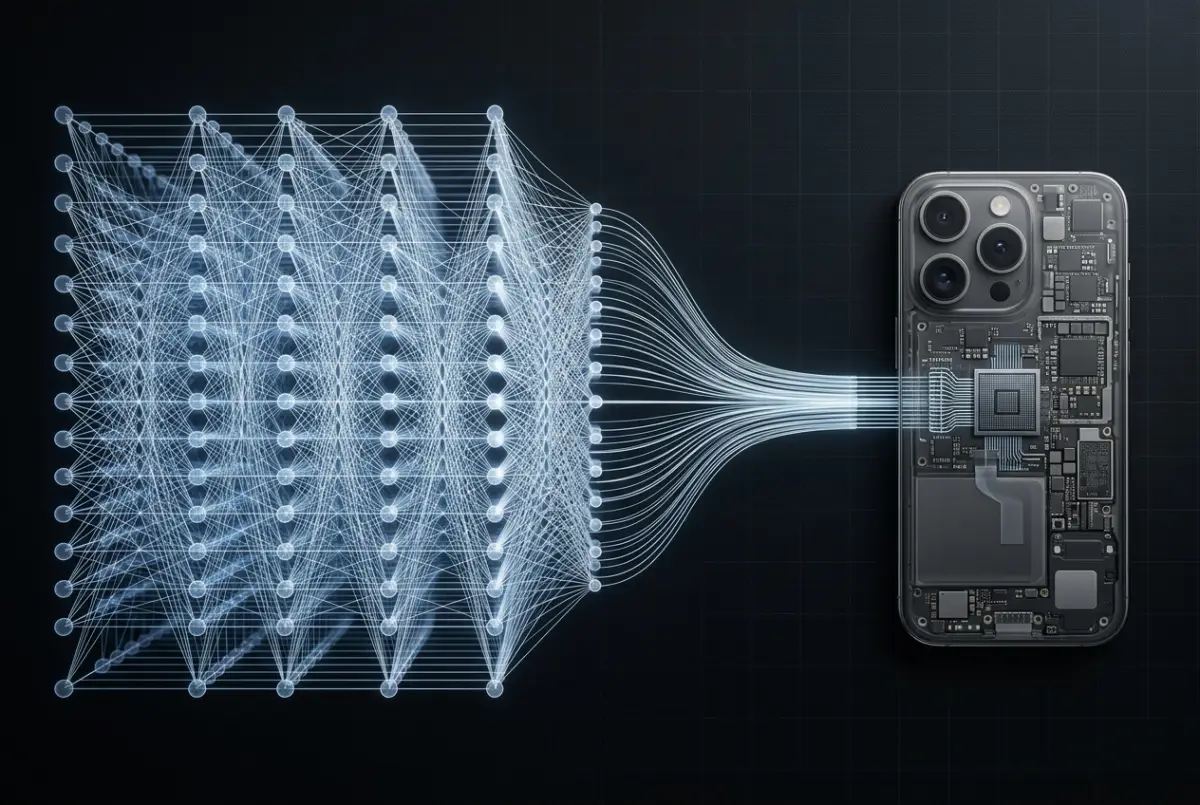
Look deeper, and an even more uncomfortable truth emerges: our behavior is far more predictable than we like to believe. We are creatures of habit. Modern UX design is built around these habits, guiding us with minimal resistance toward outcomes the algorithm prefers. Every touch on the screen communicates information about our emotional state. Erratic scrolling signals boredom. Slow, deliberate movement suggests interest. Rapid switching between apps hints at anxiety. Machine learning systems assemble these micro-signals into a larger picture, constructing your digital twin. That twin already knows you’ll probably order pizza on Friday night—sometimes before you consciously feel hungry.
This invisible screenwriter quietly shapes our reality. We believe we make independent choices, yet our desires are often echoes of algorithmic suggestions. A social platform isn’t a mirror reflecting the world; it’s a prism that reshapes reality into forms most comfortable for us to consume. When we feel that an app is listening, what we’re really afraid of is ourselves—the fact that a machine has decoded our subconscious patterns.
In the end, the myth of technological eavesdropping persists because it’s easier to accept than the truth. The truth is that we are not as unique or unpredictable as we think. Our lives are collections of data patterns that a well-trained neural network can read in seconds. And perhaps the real question isn’t whether they are listening—but whether there’s anything left to say that the algorithm doesn’t already know before we do.
Go backComments (0)
From This Author
Select Crypto to Support the Author 💫
×TXintEE7aezp6QxNNtbghCXvmXJdgofEyr
0x9c6299454A6B617A0Db228024279F2a3EEf956dD
bc1qj7caz3xfh5qd4ud3v3nh7k4tfl5lg8jh9er73e
0x9c6299454A6B617A0Db228024279F2a3EEf956dD
3TndfWAhPytTaBZjC2GbNWqh9iWx171SYACjbG2j5vx8
DHsrtwiL56Xk1xAj3fe8pVcfLhE8xgt3EQ
0x9c6299454A6B617A0Db228024279F2a3EEf956dD
UQDFkubJxb8KmxFmy1arJxkewzmNEg6-G2pJFVzFihB65d7W
ltc1q3fentl6ur9cxm0vxyqkdmmzxkj92j00p9l8m7z
✍ Article Author
- Registration: 26 July 2025, 19:34
- Location: Georgia