



Why an App “Changes Its Face” Under Different Lighting Conditions
 Tornike Moss
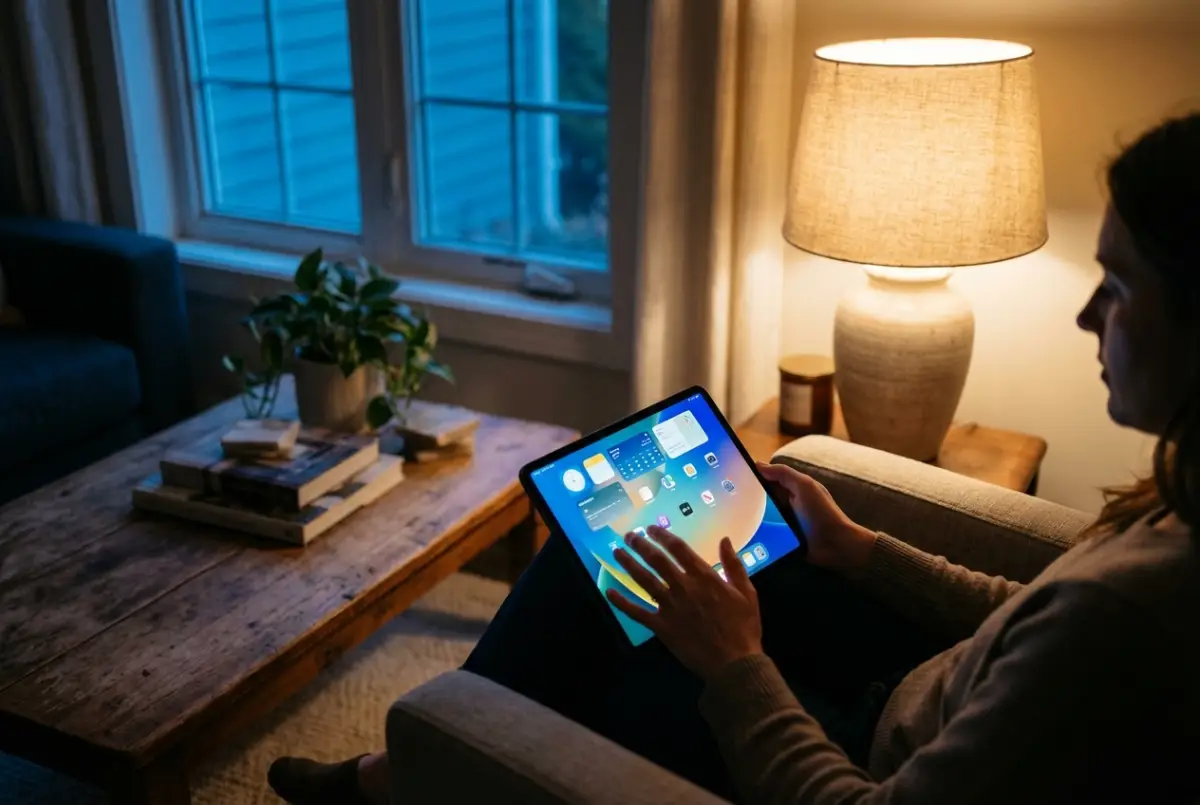
You have probably noticed this strange metamorphosis. You open an app in bright morning sunlight while standing at a bus stop, and the interface looks dry, schematic, almost harsh. The very same app, later at night in a dimly lit room, feels completely different—colors deepen, shapes soften, and the interface suddenly becomes more intimate and immersive. Our first instinct is to search for a technical explanation. But in reality, the pixels haven’t changed at all. What has changed is the stage on which this digital performance unfolds—and, more importantly, the viewer: your eyes and your brain.
Screen design is never a static entity; it is always hostage to context. In strong daylight—cold, intense, and unforgiving—our eyes fight an excess of light. The pupils constrict to protect the retina, increasing depth of focus but reducing sensitivity to contrast. In these conditions, the environment is so bright that even a screen at maximum brightness struggles to compete with sunlight. Black is no longer truly black; it becomes a gray reflection on the glass. As contrast collapses, the interface visually “flattens.” Subtle design nuances—soft shadows, color gradients, micro-animations that normally create a sense of depth—disappear. What remains is the bare skeleton: text and buttons. This is why an app feels more pragmatic, tool-like, and emotionally cold during the day. Part of its “soul” fades, leaving pure functionality behind.
The picture changes dramatically under artificial lighting, especially in the evening when light temperatures grow warmer. Incandescent bulbs or yellow streetlights interact in unexpected ways with the screen’s cooler blue spectrum. Here, contrast is no longer the enemy—it becomes the dominant force. As the surroundings darken, our pupils dilate to let in more light. This physiological shift directly alters how we perceive detail. A widened pupil slightly reduces sharpness, producing what is known as a “blooming” effect—bright elements gently spill into darker backgrounds. This optical “imperfection” is precisely what gives the interface its softness. Rigid geometric lines seem to melt, and the digital product begins to feel more organic. At this point, the app is no longer just a tool; it becomes a light source—a kind of digital campfire we instinctively gather around.
A deeper psychological layer emerges when we consider how focus is distributed. During the day, the screen is only one fragment of a busy visual field. Peripheral vision captures cars, trees, walls, movement. The app must fight for attention. At night, in a darkened room, the rest of the world fades away. The screen becomes the only reality. With no competing stimuli at the edges of our vision, our full cognitive capacity locks onto the interface. Suddenly, we notice details that were invisible earlier: font weight, icon curvature, the emotional temperature of the color palette. This “tunnel vision” creates intimacy. A daytime “like” may feel like a mere statistic; at night, the same red icon becomes a symbol of connection, because red on a dark background feels more dramatic and emotionally charged than it ever does in sunlight.
Lighting also subtly manipulates our sense of time while interacting with interfaces. Cold, office-style lighting gives screens a “task-oriented” character, subconsciously pushing us to move faster, as if something must be completed. Warm, low light lowers our internal alarm levels. An interface that felt cluttered and overwhelming during the day may feel rich and engaging at night. A brain exhausted by daytime sensory noise no longer demands speed from the screen—it seeks comfort. This is why the same UI that functions as a productivity tool in an office transforms into a portal for entertainment and escapism in a bedroom. Designers often craft interfaces in ideal, laboratory-like conditions, where colors are precise and contrast is perfectly calibrated. But users never live in that laboratory.
In the end, our relationship with an app is not just about tapping glass. It is a complex dance between light and biology. Every activation of Dark Mode or reduction in brightness is an attempt to adapt the digital world to our physical reality. The interface responds like a living organism—not because the code changes, but because the lens of our perception does. True design is not created in a Figma file or on a server. It is recreated every single time, in the microscopic space between the screen and your eyes. And who knows—perhaps the version of the app you see right now exists only for you, and only in this exact moment.
Go backComments (0)
From This Author
Select Crypto to Support the Author 💫
×TXintEE7aezp6QxNNtbghCXvmXJdgofEyr
0x9c6299454A6B617A0Db228024279F2a3EEf956dD
bc1qj7caz3xfh5qd4ud3v3nh7k4tfl5lg8jh9er73e
0x9c6299454A6B617A0Db228024279F2a3EEf956dD
3TndfWAhPytTaBZjC2GbNWqh9iWx171SYACjbG2j5vx8
DHsrtwiL56Xk1xAj3fe8pVcfLhE8xgt3EQ
0x9c6299454A6B617A0Db228024279F2a3EEf956dD
UQDFkubJxb8KmxFmy1arJxkewzmNEg6-G2pJFVzFihB65d7W
ltc1q3fentl6ur9cxm0vxyqkdmmzxkj92j00p9l8m7z
✍ Article Author
- Registration: 26 July 2025, 19:34
- Location: Georgia