

The Dance of the Digital Puppet: Who Decides Where Your Finger Stops?
 Tornike Moss

Look at your right—or left—thumb. Right now. At this very moment. It’s either hovering above the screen or lightly touching the glass, poised for its next move. You believe that move is yours. You assume the decision—to scroll the news feed a little further or open the incoming notification—was born inside your own mind, independently.
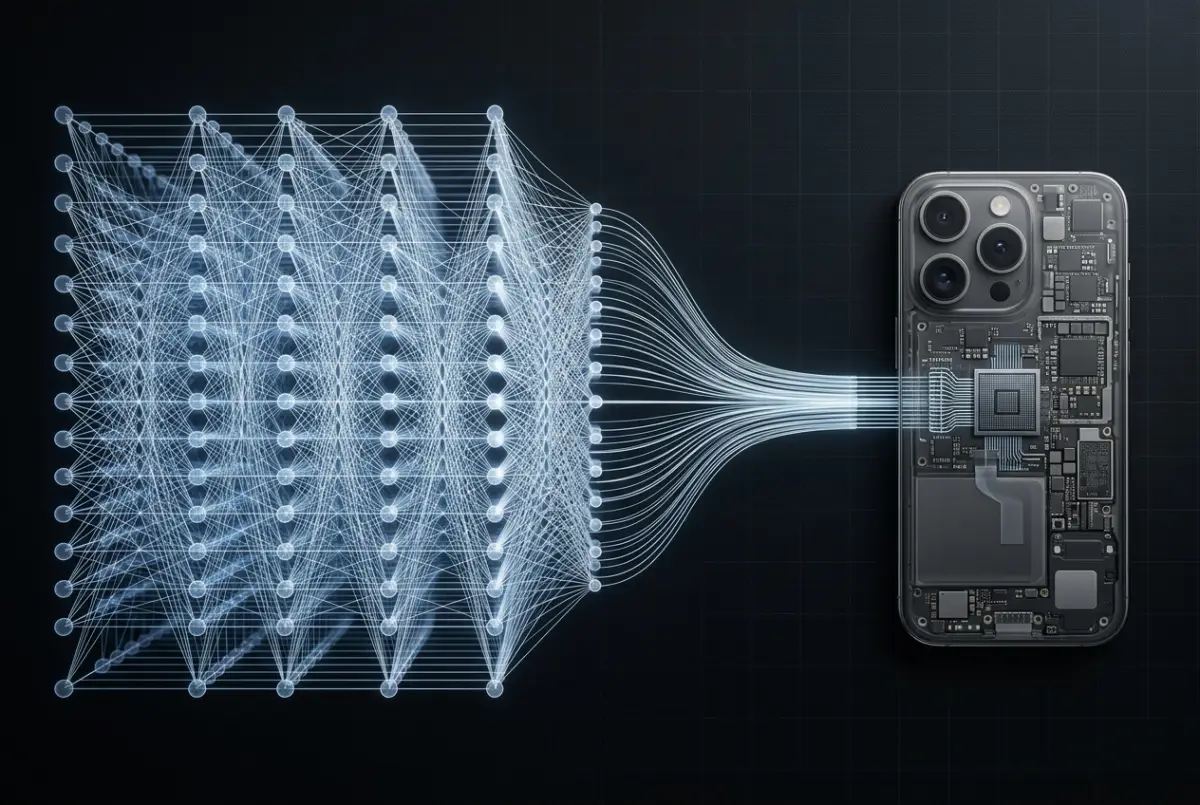
But let’s admit something that designers in Silicon Valley rarely say out loud: your finger isn’t following your will. It’s performing an invisible score written behind the screen. You’re simply moving to a rhythm someone else composed.
It all begins the instant you unlock your phone. Notice how the interface “comes alive.” Icons don’t just appear—they bounce in, as if breathing. These micro-animations aren’t decorative flair; they’re carefully calculated psychological hooks. When you swipe and the content keeps moving with “inertia,” slowing down gently before coming to a soft stop, your brain receives a signal that this motion is natural, physical—like turning a real page or spinning a wheel. That illusion convinces you that control is in your hands.
In reality, that inertia is a mathematical function tuned precisely so your eyes never tire—and, more importantly, so scrolling never stops abruptly. A hard stop invites reflection. Reflection leads to exit. And exits are bad for business.
When was the last time you consciously pressed a “Next” or “Continue watching” button? You probably can’t remember—because those buttons often no longer exist. Infinite scroll is one of the most brilliant and most deceptive inventions of the digital age. It erased stopping points. A book has a final page. A film has credits. A performance has a curtain. A social feed has no bottom.
The interface whispers, “Don’t stop—something better is just below.” And you follow. You don’t choose the pace; the algorithm does. Sometimes it slows you down with a large, striking image. Other times it accelerates the rhythm with short, dynamic videos. Even your heartbeat begins to sync with this visual tempo.
Then comes its majesty: the notification. A red dot. A bell. A vibration. You think it’s information. It isn’t. It’s a command. The interface doesn’t ask, “Are you free?” It says, “Now.”
Look closely at the buttons. “Confirm,” “Buy,” “Send” are always bold, saturated, inviting—often blue or green, colors associated with safety and correctness. Meanwhile, “Cancel,” “Later,” or “Decline” appear faint, small, almost apologetic. Through visual hierarchy, the interface tells you what the “right” behavior is. You believe you chose freely. In truth, the designer already paved the preferred path—you simply followed the route of least resistance.
This “caring” design also distorts time. Have you ever opened an app “for just a minute” and emerged half an hour later, unsure where the time went? That’s no accident. Like casinos, digital interfaces rarely display clocks prominently. In full-screen modes, even the status bar disappears. The interface creates its own time zone—an eternal “now.”
Every pull-to-refresh is a scratch-off lottery ticket. What’s next? What’s new? That anticipation releases small doses of dopamine, pulling you back again and again. We become pianists playing someone else’s sheet music—convinced the melody is our own creation.
So the next time you feel that strange, automatic urge to reach for your phone—just because you’re in an elevator and boredom lasts three seconds—pause. Recognize it for what it is. Not a desire, but a reflex trained over years of interface design. You are a user who, in the name of convenience, has been quietly deprived of the right to pause.
And now, as you read these lines, I’ll admit something too: I’m part of the same game. I used the very techniques I’m describing to bring you this far.
So here’s the final question I’ll leave you with: when you finish this sentence, will you really turn off the screen and sit with your own thoughts—or will you slide, by inertia, toward the next link, because somewhere in a California office, someone already decided that this isn’t the end for you yet?
Go backComments (0)
From This Author
Select Crypto to Support the Author 💫
×TXintEE7aezp6QxNNtbghCXvmXJdgofEyr
0x9c6299454A6B617A0Db228024279F2a3EEf956dD
bc1qj7caz3xfh5qd4ud3v3nh7k4tfl5lg8jh9er73e
0x9c6299454A6B617A0Db228024279F2a3EEf956dD
3TndfWAhPytTaBZjC2GbNWqh9iWx171SYACjbG2j5vx8
DHsrtwiL56Xk1xAj3fe8pVcfLhE8xgt3EQ
0x9c6299454A6B617A0Db228024279F2a3EEf956dD
UQDFkubJxb8KmxFmy1arJxkewzmNEg6-G2pJFVzFihB65d7W
ltc1q3fentl6ur9cxm0vxyqkdmmzxkj92j00p9l8m7z
✍ Article Author
- Registration: 26 July 2025, 19:34
- Location: Georgia