Dark Mode
Edge Computing vs Cloud: Why Cloud Alone Is No Longer Enough

Edge Computing vs Cloud: Why Cloud Alone Is No Longer Enough

Over the past decade, the dominant paradigm of the technology world has been the centralization of data. Cloud computing revolutionized how businesses operate by allowing companies to abandon expensive local servers and instead access computing resources flexibly, on demand. However, today we are facing a new technological challenge. The exponential growth of internet-connected devices (IoT), the rapid advancement of artificial intelligence, and the deployment of autonomous systems have pushed data generation to unprecedented levels. When billions of sensors produce terabytes of information every second, sending everything to a centralized cloud for processing and returning the results is often inefficient, costly, and in many cases physically impractical. This is where a new rule of the game emerges: edge computing. It is not merely another technological trend but an infrastructure evolution driven by necessity. In this article, we will explore the boundary between these two… Read Full Article
See More
How Artificial Intelligence Is Transforming Our Daily Lives in 2026

How Artificial Intelligence Is Transforming Our Daily Lives in 2026

By 2026, Artificial Intelligence (AI) is no longer merely a futuristic concept or an isolated technological tool. It has seamlessly evolved into the foundational layer of modern digital infrastructure, invisibly orchestrating our daily lives, decisions, and services. Today, AI is as natural and indispensable a part of our routine as electricity or the internet. The vast majority of users do not even notice how algorithms analyze their behavior, create hyper-personalized experiences, or ensure real-time cybersecurity. This article explores the invisible web through which artificial intelligence connects our digital and physical realities in 2026, shaping an entirely new, intelligently driven world.… Read Full Article
See More
Why “Typing…” Is the Loudest Silence in Our Chats

Why “Typing…” Is the Loudest Silence in Our Chats

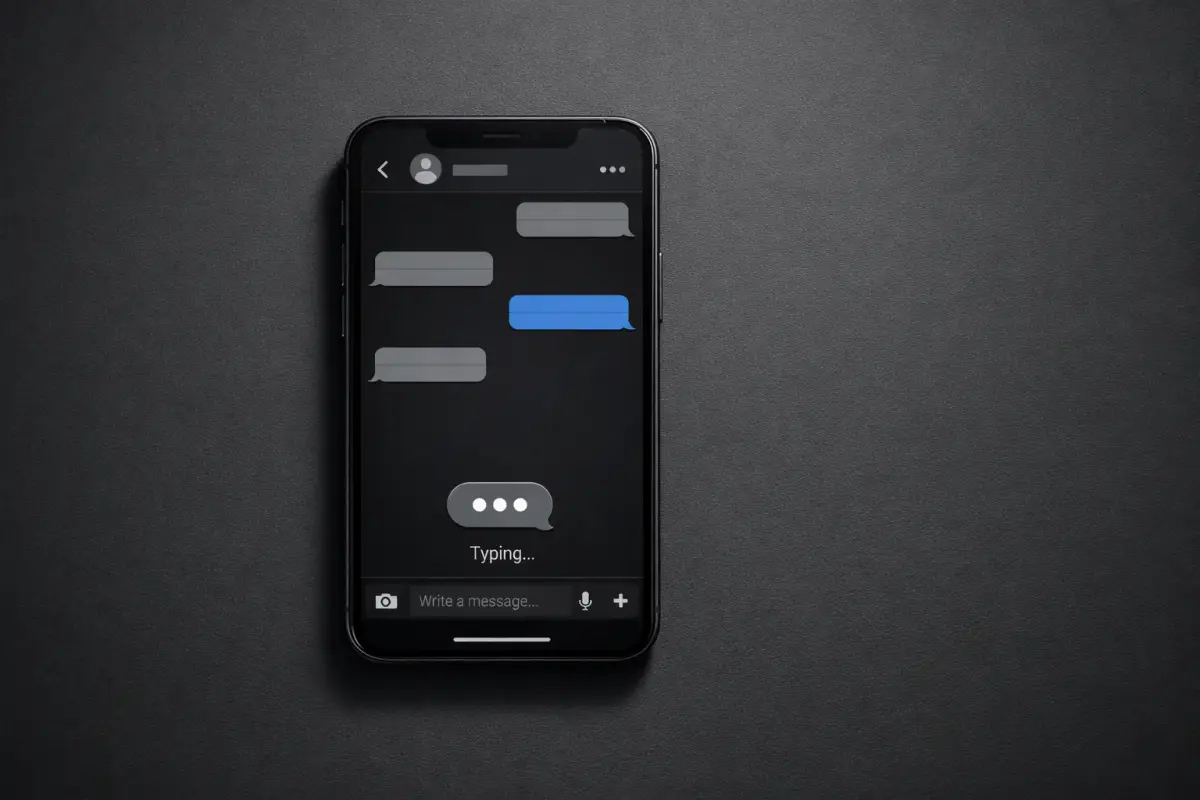
Picture this: it is late at night, or perhaps the middle of a workday you have deliberately cleared. You are holding your phone, staring at the screen. You have just sent a message — rhetorical, risky, or simply one that feels critically important. And then it appears. A small gray bubble with three dots moving in a rhythmic pulse. “Typing…”. Your heart rate rises almost imperceptibly. Your fingers tighten around the phone. Your brain begins constructing scenarios at high speed, already preparing for that dopamine surge associated with receiving a reply. And then, suddenly, it disappears.… Read Full Article
See More
What Happens to the Brain When We Listen to Content in the Background

What Happens to the Brain When We Listen to Content in the Background

This scene is probably familiar to you. You’re lying in bed, the lights are off, and technically it’s time to sleep—but your hand reaches for the phone almost automatically. You’re not looking for anything specific. You turn on a video, a podcast, or a series you’ve already seen. The content itself doesn’t really matter. What matters is that there’s sound in the room.… Read Full Article
See More
Time Doesn’t Run Out on Screens — It Evaporates: Where Our Days Really Go

Time Doesn’t Run Out on Screens — It Evaporates: Where Our Days Really Go

Almost everyone has experienced this moment. You pick up your phone “for just five minutes,” simply to check if there’s anything new. When you finally look up, dusk has settled outside, or the coffee you poured hot is now ice cold. We casually call this “losing track of time,” joking about internet black holes. But beneath the humor lies a far more intriguing—and slightly unsettling—psychological mechanism. Our brains don’t measure time with stopwatches. They measure it through memories and change. The digital world has learned how to exploit that internal clock.… Read Full Article
See More
When the Screen Goes Black: Who Do We Really See When the Phone Falls Silent?

When the Screen Goes Black: Who Do We Really See When the Phone Falls Silent?

You’ve probably felt it—that strange, fleeting anxiety that appears when your battery suddenly dies. Or when the internet stalls and the endless social feed, which moments ago was flooding your eyes with colorful videos and fragments of other people’s lives, abruptly freezes. This isn’t just a technical glitch. It’s the instant when digital anesthesia wears off and we are dropped back into reality. At that exact moment—when the screen goes black—our fingers start moving instinctively, almost in panic, as if searching for rescue. What frightens us isn’t the lack of information. It’s the emptiness that waits on the other side of the screen.… Read Full Article
See More
Digital Twilight: Why We Seek Calm in Black Screens

Digital Twilight: Why We Seek Calm in Black Screens

There is something intimate—almost ritualistic—about the moment when the sun goes down, the room slips into dusk, and you open your phone’s settings to activate Dark Mode. Sometimes it happens without your involvement at all, switching automatically into night mode. The harsh, aggressive white light disappears, replaced by deep, velvety black. It feels as if the digital world has lowered its voice, held its breath, and quietly stepped into your bedroom. This shift is far more than a simple change of pixel color. It’s a moment when the brain exhales in relief, because on a subconscious level we believe the danger—visual or otherwise—has passed. We tend to think of Dark Mode as a practical choice: a way to save battery life or protect our eyes. In reality, our attraction to black screens is rooted in much deeper psychology than any ophthalmologist’s advice.… Read Full Article
See More
The Master Illusion: Why the World Tricks You Into Feeling Productive—While Quietly Wearing You Out

The Master Illusion: Why the World Tricks You Into Feeling Productive—While Quietly Wearing You Out

Take a look at your desk right now. On your laptop screen, at least ten browser tabs are open. Spotify is playing in the background, supposedly helping you focus. A notification sound pops up from a work chat. Your phone lights up intermittently, calling for attention with messenger bubbles. Your fingers move quickly across the keyboard, your eyes jump from one point to another, and somewhere inside you feel a subtle sense of satisfaction—the feeling that you’re at the center of events, that you’re managing the chaos, that you’re productive.… Read Full Article
See More
Invisible Walls: Why We Can’t Find the Exit Where There Is No Door

Invisible Walls: Why We Can’t Find the Exit Where There Is No Door

It’s two in the morning. Or maybe three. The room is silent, except for the blue glow of your smartphone lighting up your face, creating the illusion that the rest of the world has temporarily disappeared. You know exactly how tomorrow will feel—heavy, slow, exhausting. You know that this “just five more minutes” has already turned into half an hour for the third time. And yet, your thumb keeps moving upward with stubborn persistence, as if it were an independent mechanism.… Read Full Article
See More
The Invisible Conductor: When a Whisper of Motion Speaks Louder Than Digital Noise

The Invisible Conductor: When a Whisper of Motion Speaks Louder Than Digital Noise

Imagine standing in a crowded, noisy room. Everyone is talking at once, music hums in the background, glasses clink. Suddenly, someone shouts your name. You flinch, turn toward the sound—but the reaction comes with irritation, a subtle sense of intrusion, as if your personal space has been violated. Now picture a different moment in that same room: at the edge of your peripheral vision, someone gently raises a hand and makes a quiet, wordless gesture. Your eyes drift there instantly, instinctively, without annoyance. This is the fundamental difference between a loud digital alert and a subtle animation. One demands attention by force; the other simply receives it—often without us even realizing what just happened.… Read Full Article

See More