


Edge Computing vs Cloud: Why Cloud Alone Is No Longer Enough
 Tornike Moss
Over the past decade, the dominant paradigm of the technology world has been the centralization of data. Cloud computing revolutionized how businesses operate by allowing companies to abandon expensive local servers and instead access computing resources flexibly, on demand. However, today we are facing a new technological challenge. The exponential growth of internet-connected devices (IoT), the rapid advancement of artificial intelligence, and the deployment of autonomous systems have pushed data generation to unprecedented levels.
When billions of sensors produce terabytes of information every second, sending everything to a centralized cloud for processing and returning the results is often inefficient, costly, and in many cases physically impractical. This is where a new rule of the game emerges: edge computing. It is not merely another technological trend but an infrastructure evolution driven by necessity. In this article, we will explore the boundary between these two concepts, the types of technological problems each is designed to solve, and why the future of data processing does not belong to a single location but rather to a carefully distributed architecture.
Table of Contents
What Is Cloud Computing Today?
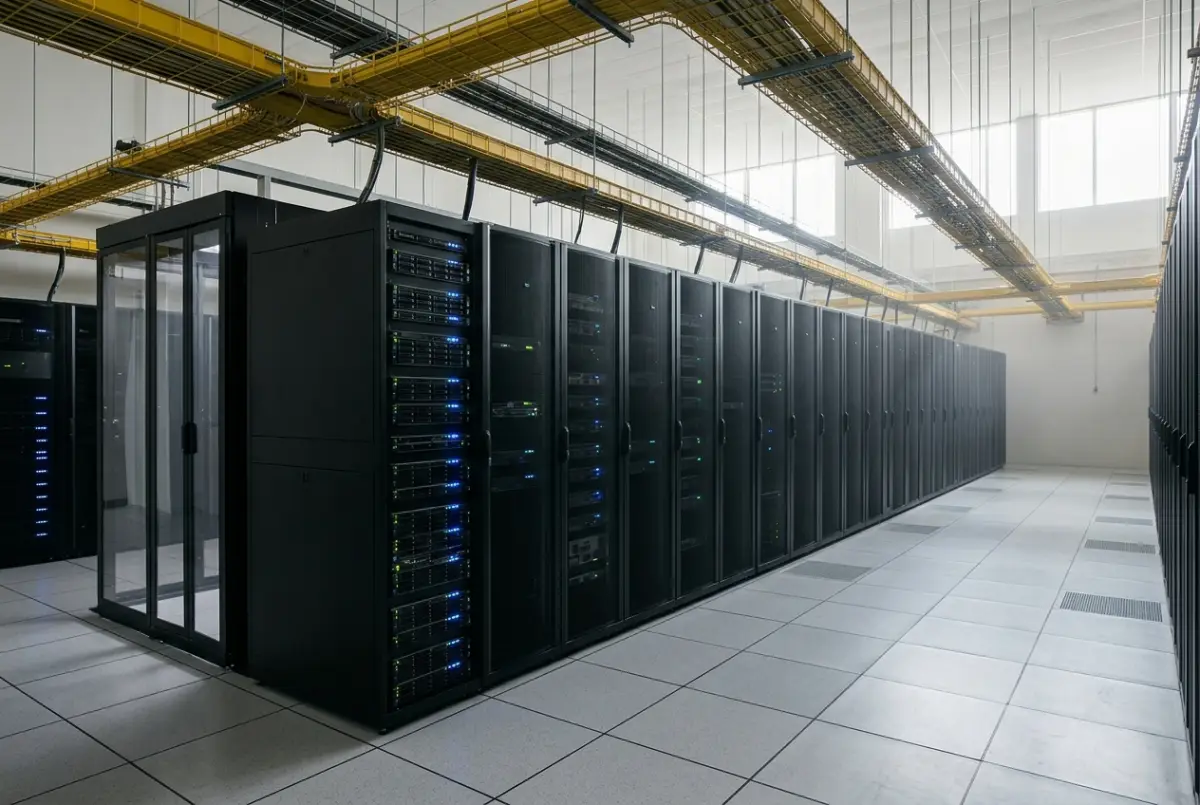
Cloud computing is undeniably the backbone of the modern digital economy. Today, it is no longer just an innovative concept; it has become the de facto standard for organizations of every size, from small startups to global corporations. At its core, the cloud represents vast centralized data centers equipped with virtually unlimited computing power and storage capacity. These resources are managed and delivered to users by technological giants such as Amazon Web Services (AWS), Microsoft Azure, and Google Cloud Platform.
The primary advantage of the cloud lies in its scalability and economic model. Companies no longer need to invest millions of dollars in building and maintaining physical infrastructure. Instead, they can rent precisely the amount of server resources they need at any given moment. Furthermore, the centralized model is ideal for tasks that require deep analysis of historical data or the training of complex artificial intelligence models. For example, when analyzing the behavior of millions of users to identify patterns and trends, the cloud’s vast computing capacity becomes indispensable.
Despite these strengths, traditional cloud architecture relies on one fundamental assumption: data must first be collected, then transmitted over a network to a centralized server, processed there, and finally returned to the user or device. This cycle works perfectly well for web applications, email services, or CRM systems where slight delays are not critical. However, when technology begins interacting directly with the physical world, the limitations of this centralized approach become increasingly visible.
Network bandwidth is not infinite, and maintaining large-scale data transmission can be extremely expensive. More importantly, the laws of physics impose unavoidable delays in data transmission, resulting in what is known as latency. These limitations have created the need for a new technological paradigm.
Security and data sovereignty also play an important role. For many organizations, transmitting sensitive information to third-party centralized servers introduces regulatory and compliance risks. As a result, while the cloud remains an extremely powerful tool, it can no longer meet every requirement of the modern technological ecosystem on its own.
What Is Edge Computing and Why Has It Become Relevant?
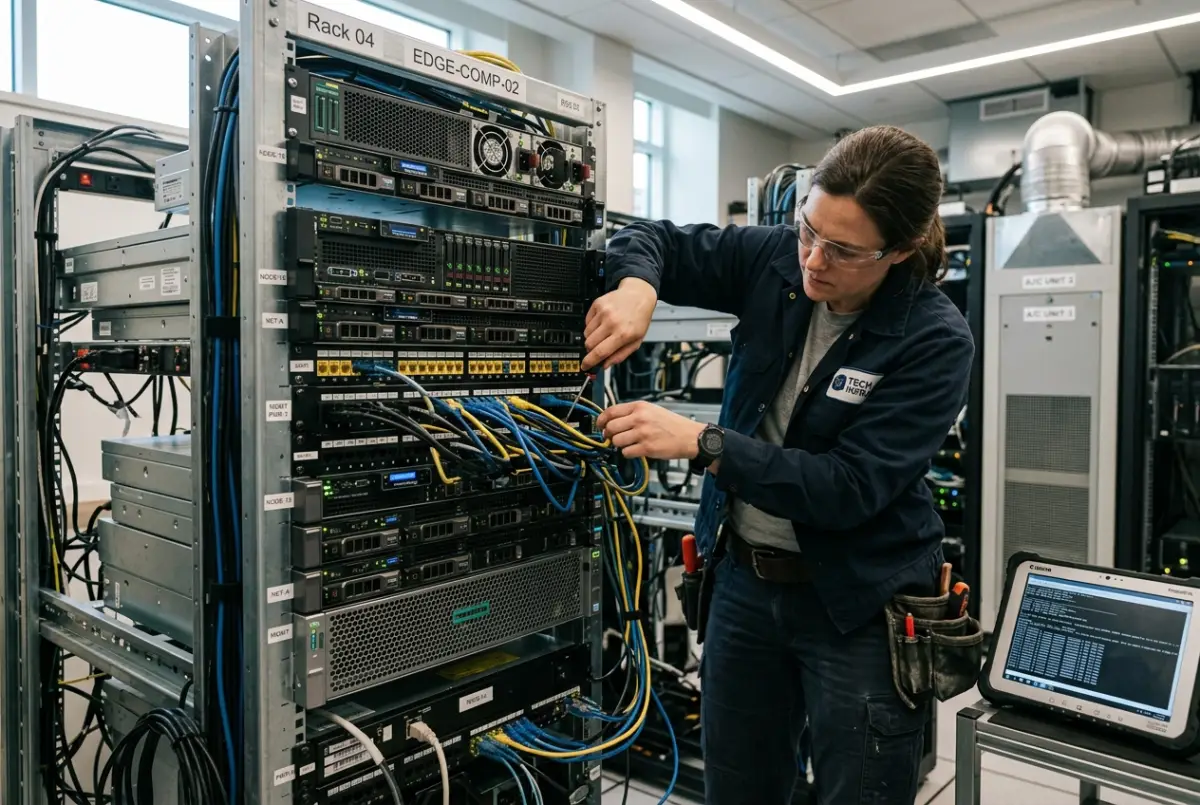
Edge computing is a distributed computing architecture whose core principle is to move data processing as close as possible to where the data is generated. Instead of automatically sending information from sensors, cameras, or industrial equipment to cloud servers hundreds or even thousands of kilometers away, the data is processed locally — either directly on the device itself or on a nearby microserver known as an edge node.
If you want to explore the technological foundations of edge infrastructure in greater depth, you can read our detailed guide — What Is Edge Computing? — The Role of Peripheral Computing in the Modern Internet.
The growing relevance of this technology is directly tied to the expansion of the Internet of Things (IoT). Today, billions of smart devices continuously generate and collect data around the world. Consider a smart city infrastructure, where thousands of surveillance cameras monitor traffic in real time. If each camera were to stream high-resolution video directly to the cloud, it would overwhelm network capacity and generate enormous financial costs associated with data transmission.
With edge computing, the situation changes fundamentally. The processor embedded within the camera analyzes the video locally, detects events such as traffic congestion or accidents, and sends only a small text notification or metadata to the cloud. This drastically reduces the amount of data that must travel across networks.
Another key factor behind the rise of edge technologies is the evolution of artificial intelligence, particularly AI inference — the process by which trained models generate predictions or decisions. While training neural networks still requires massive computational resources and typically takes place in the cloud, running a trained model in real time is often far more efficient when executed locally.
Modern microprocessors have become powerful enough to execute complex algorithms directly on smartphones, drones, robots, and industrial devices. This means that a device can make independent, intelligent decisions even without an active internet connection — a capability that is critically important for many modern industries.
From a security and privacy perspective, edge computing also offers significant advantages. Because sensitive data is processed locally rather than transmitted across public networks, the risk of cyberattacks can be significantly reduced. Additionally, organizations save substantial financial resources by minimizing bandwidth usage.
This transition from centralized to decentralized, edge-oriented computing creates new opportunities for business optimization and the development of innovative services where speed, reliability, and real-time responsiveness are essential.
Latency and Real-Time Decision Making
One of the most important metrics in modern computing systems is latency — the time required for data to travel from one point to another and for a response to return. In traditional cloud architectures, this delay can range from a few dozen to several hundred milliseconds. For many applications, this delay is acceptable, but there are critical systems where milliseconds can determine success or failure, making real-time decision-making an absolute necessity.
Autonomous vehicles provide a clear example. A self-driving car generates tens of gigabytes of data every second from LIDAR sensors, radar systems, and cameras. If a pedestrian suddenly steps into the road, the system must react instantly — within fractions of a millisecond.
If the vehicle were to send this data to the cloud, wait for it to be processed, and then receive a braking command, the resulting delay — even if it were only 100 milliseconds — could lead to catastrophic consequences. Edge computing solves this problem by enabling data processing and decision-making directly within the vehicle’s onboard computer, effectively eliminating network latency.
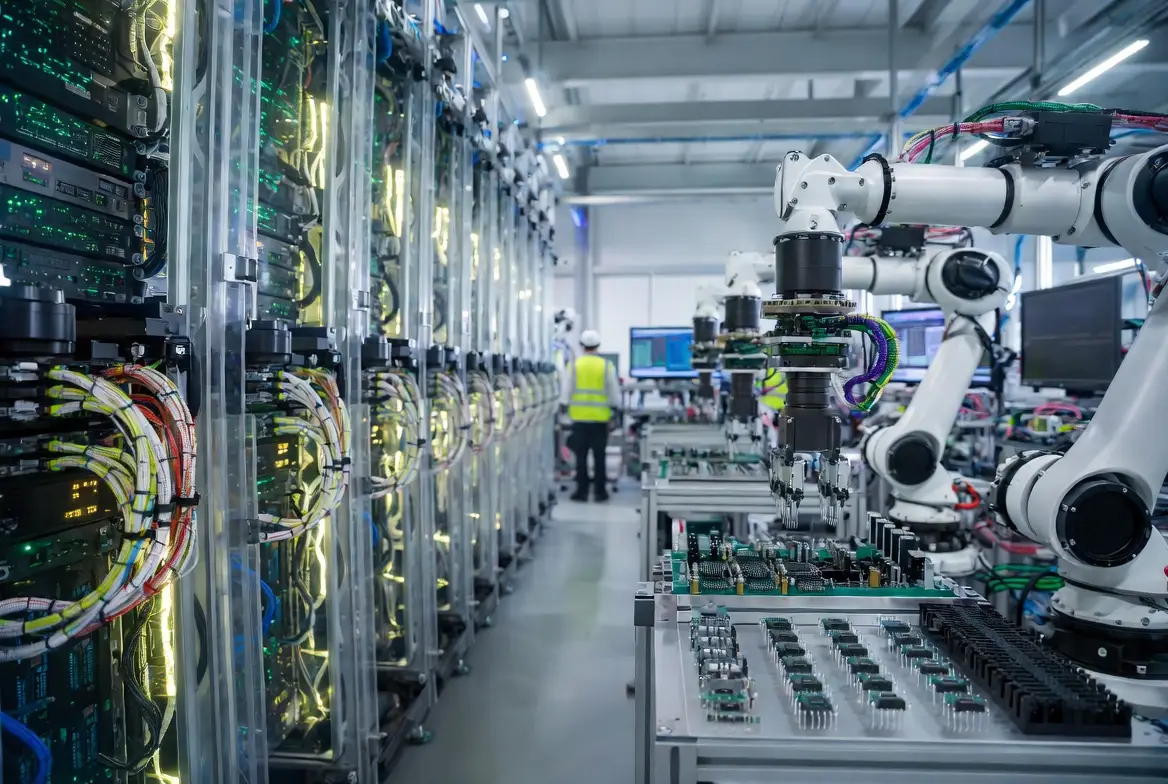
The same principle applies in industrial automation, particularly within Industrial IoT environments. In modern smart factories, robotic arms and conveyor systems operate in perfect synchronization with extreme precision. If a sensor detects a critical temperature increase or an abnormal vibration in a machine, the system must immediately halt the process to prevent equipment damage or workplace accidents.
Relying on cloud connectivity in such scenarios introduces risk, since even a brief disruption in internet connectivity could produce serious consequences. Edge computing ensures that local infrastructure can continue operating autonomously and safely even when network connections are temporarily unavailable.
Latency reduction therefore represents one of the strongest arguments in favor of edge computing. The healthcare sector offers another compelling example. In remote robotic surgery, a surgical robot must replicate the surgeon’s hand movements with absolute precision and without delay. Ultra-low latency, enabled by a combination of local edge computing nodes and advanced 5G networks, forms the technological foundation for the next generation of medical services.
Hybrid Architecture: The Real Infrastructure Model
Although edge and cloud technologies are often presented as competing approaches, in reality they are not engaged in a zero-sum competition where one replaces the other. In modern IT strategies, the most effective approach is a hybrid architecture that combines the strengths of both models. The future of data processing lies in this synergy, where responsibilities are logically distributed across the infrastructure.
Within a hybrid model, the edge acts as the first line of processing and response. It handles real-time data analysis, makes immediate operational decisions, and filters unnecessary information, significantly reducing network traffic. Meanwhile, the cloud continues to serve as the central repository and analytical engine. It receives high-value insights generated at the edge and uses them for large-scale analytics, trend identification, and further refinement of artificial intelligence models.
A practical example can be found in large retail networks. Edge servers installed in individual stores locally process information from smart shelves and surveillance systems. They monitor inventory levels in real time, detect customer traffic patterns across different sections of the store, and support security systems — all without requiring immediate cloud communication.
At the end of each day, however, the store’s edge system sends summarized reports and anonymized sales statistics to the central cloud platform. There, data from hundreds of stores is aggregated to optimize global supply chains and forecast future sales using sophisticated machine learning algorithms.
This distributed approach allows companies to remain locally responsive while maintaining global intelligence. Implementing such an architecture requires careful infrastructure planning. Organizations must clearly determine which computational processes should occur at the edge and which should remain in the cloud.
Data sensitivity, bandwidth limitations, latency tolerance, and security requirements are all critical factors that guide engineers when designing an optimal hybrid ecosystem.
A New Horizon for Data Management
The explosive growth of data generation and the emergence of technologies that depend on real-time responsiveness have demonstrated that relying solely on centralized cloud infrastructure is no longer sufficient to meet the demands of the modern digital world. Edge computing is not a competitor or replacement for the cloud. Rather, it is a natural extension that connects computational power directly to the physical environments where data originates.
We are leaving behind an era in which organizations had to choose between local servers and cloud platforms. Instead, we are entering a new phase known as the Cloud–Edge Continuum. In this emerging paradigm, the most successful organizations will be those capable of building flexible infrastructures in which algorithms can move freely between the edge of the network and centralized systems, depending on the specific requirements of each task.
For today’s technology leaders, the primary challenge is no longer simply collecting data but using it intelligently in real time. The next wave of innovation — whether fully autonomous transportation, smart energy grids, or advanced robotics — will rely on infrastructure that is not constrained by latency and not limited to a single physical location.
The decentralization of computing resources forms the foundation upon which the next architecture of the digital economy will be built.
Ultimately, the future of data processing will develop wherever it is technologically and economically most efficient. Whether it is a microchip embedded in industrial machinery analyzing vibration in real time or a global data center processing millions of transactions, each component plays a unique and irreplaceable role.
The harmonious integration of these components will determine the speed and quality of technological progress in the years ahead.
If you want to explore how artificial intelligence inference is moving from centralized cloud servers directly to devices and why local processing is becoming the new standard for intelligent systems, read our analysis — Edge AI: Why Artificial Intelligence Is Moving from the Cloud to Devices.
Go backComments (0)
From This Author
Select Crypto to Support the Author 💫
×TXintEE7aezp6QxNNtbghCXvmXJdgofEyr
0x9c6299454A6B617A0Db228024279F2a3EEf956dD
bc1qj7caz3xfh5qd4ud3v3nh7k4tfl5lg8jh9er73e
0x9c6299454A6B617A0Db228024279F2a3EEf956dD
3TndfWAhPytTaBZjC2GbNWqh9iWx171SYACjbG2j5vx8
DHsrtwiL56Xk1xAj3fe8pVcfLhE8xgt3EQ
0x9c6299454A6B617A0Db228024279F2a3EEf956dD
UQDFkubJxb8KmxFmy1arJxkewzmNEg6-G2pJFVzFihB65d7W
ltc1q3fentl6ur9cxm0vxyqkdmmzxkj92j00p9l8m7z
✍ Article Author
- Registration: 26 July 2025, 19:34
- Location: Georgia