


What Is Edge Computing? — The Role of Peripheral Computing in the Modern Internet
 Tornike Moss
The modern digital ecosystem is undergoing an unprecedented transformation in which the rate of data generation far exceeds the transmission capacity of traditional network architectures. Billions of connected sensors, advanced artificial intelligence applications, and real-time autonomous systems continuously generate enormous streams of information every second. Sending this constant flow of data to distant centralized cloud servers for processing is becoming increasingly inefficient and time-consuming.
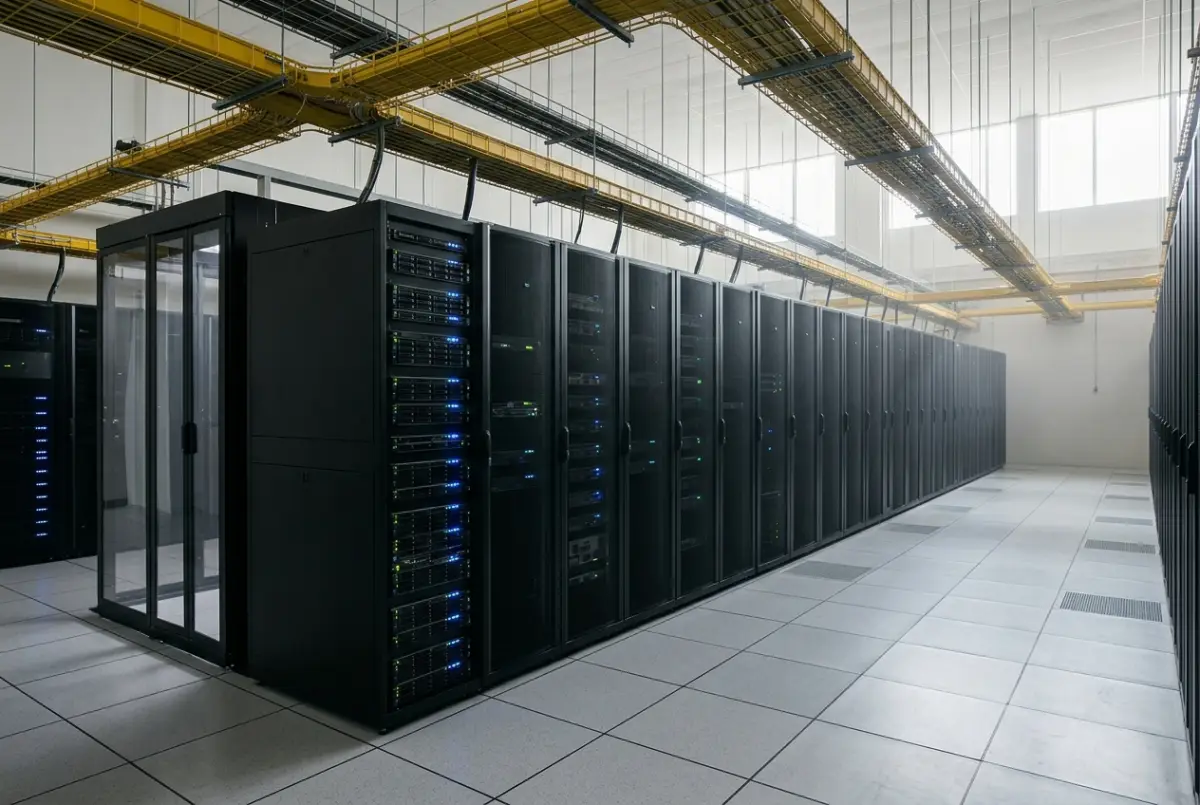
Against this backdrop, Edge Computing is emerging as a critical layer of modern digital infrastructure. Importantly, it does not replace traditional cloud technologies but rather complements and extends them. By relocating data processing closer to the source of generation — at the periphery of the network — this approach dramatically reduces latency and significantly relieves pressure on the core internet infrastructure. Such capabilities are essential for technologies that must make critical decisions within milliseconds and that increasingly serve as the driving force of the modern digital economy.
Quick Summary
Key takeaways: The main ideas and conclusions of the article are summarized below.
- Edge computing processes data closer to where it is generated, reducing latency and improving system responsiveness.
- Unlike traditional centralized cloud architecture, edge infrastructure distributes computing resources across local nodes, micro data centers, and intelligent devices.
- This architecture minimizes bandwidth consumption by filtering and processing raw data locally before transmitting only valuable information to the cloud.
- Edge systems are essential for real-time applications such as autonomous vehicles, industrial automation, and smart city infrastructure.
- The future internet will rely on a hybrid architecture where edge computing delivers immediate local decisions while cloud infrastructure performs large-scale analytics and AI model training.
Table of Contents
- The Concept of Edge Computing: Moving Computational Power Toward the Network Edge
- The Limitations of Centralized Cloud Architecture and the Problem of Latency
- The Technical Architecture and Infrastructure Logic of Edge Computing
- Practical Implementation of Edge Technologies in Real-Time Systems
- Edge Computing as the Next Evolutionary Stage of Internet Infrastructure
The Concept of Edge Computing: Moving Computational Power Toward the Network Edge
For decades, traditional internet architecture relied on a centralized model in which large cloud data centers acted as the primary hubs for processing digital information. However, the exponential expansion of the global digital ecosystem and the emergence of new real-time applications have made a fundamental transformation of infrastructure paradigms inevitable.
Edge Computing represents a complex process of network decentralization whose primary objective is to bring computational power, data storage, and analytical resources physically closer to the locations where data is generated. Instead of requiring information to travel thousands of kilometers to centralized servers and back again, critical computational operations can now be executed directly at the network’s edge. This architectural shift fundamentally alters the dynamics of how digital systems operate.
Topological Transformation: From Centralized Clouds to Local Micro-Nodes
From the perspective of systems architecture, edge computing does not reject or replace cloud technologies but instead extends them spatially. In traditional models, sensors and smart devices located at the endpoints of the network function mainly as passive collectors and transmitters of information.
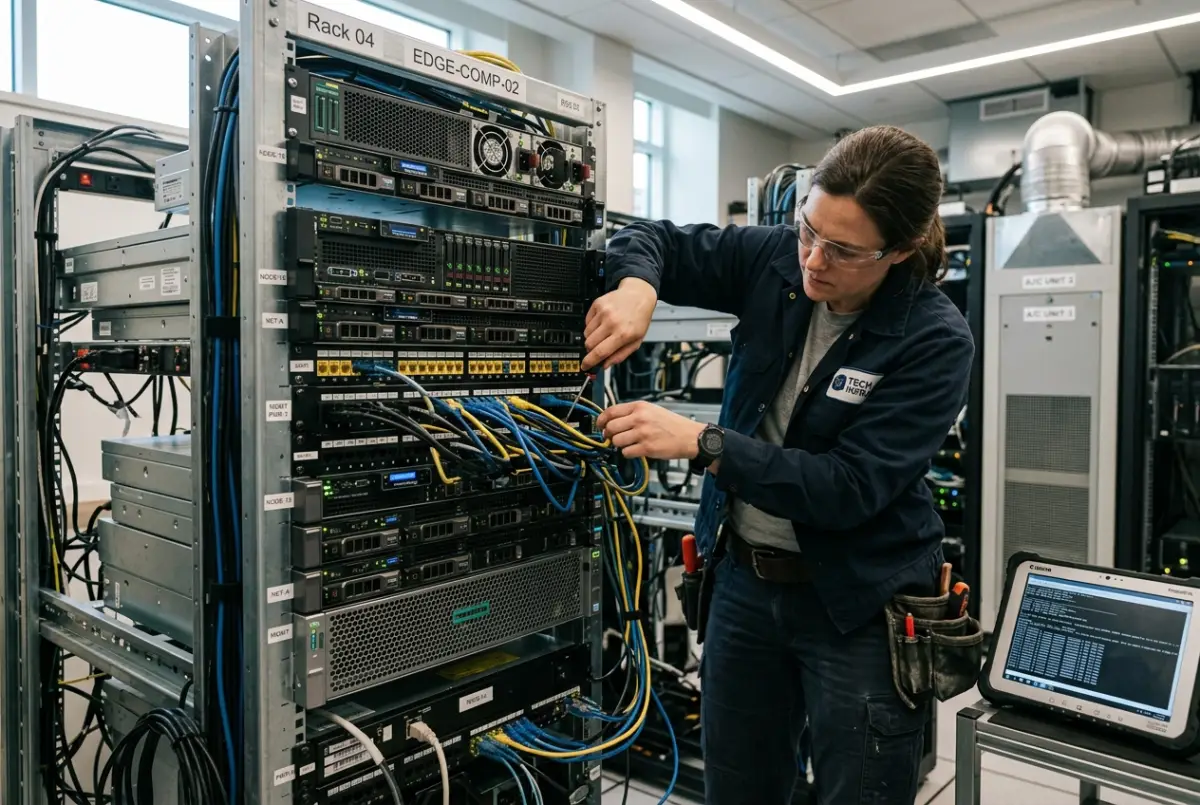
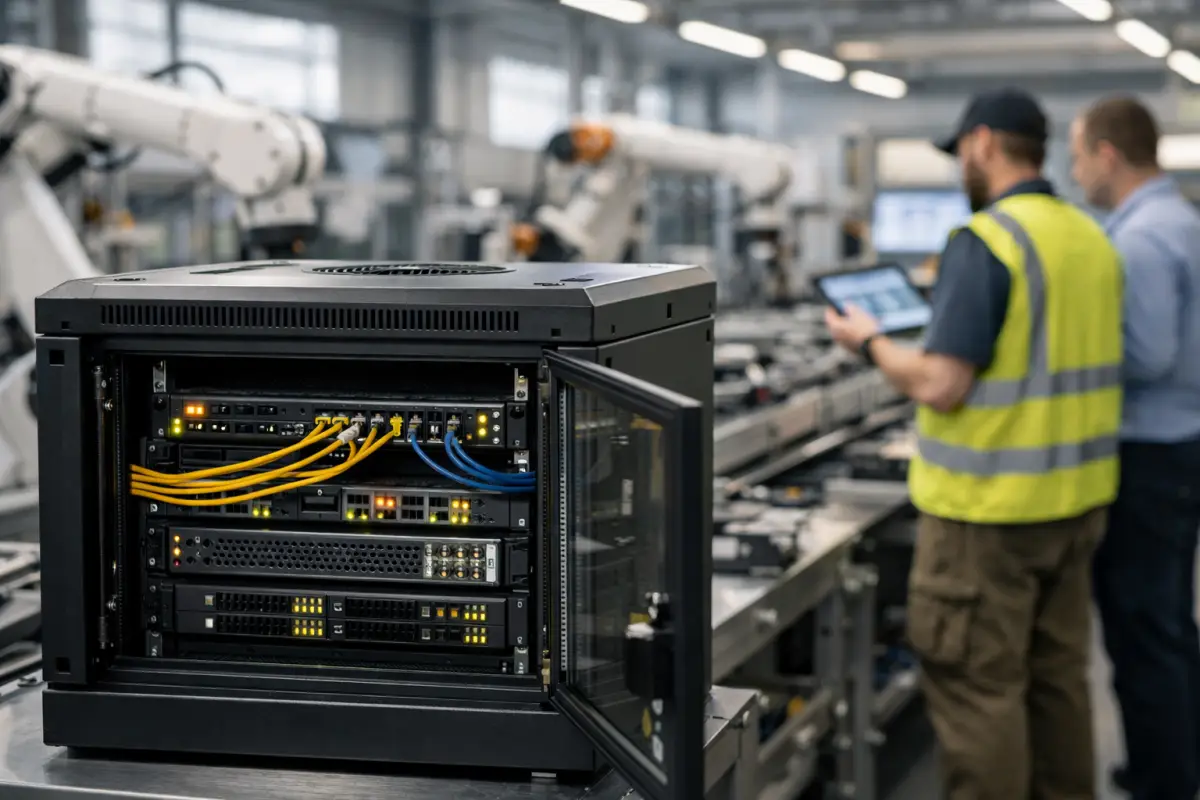
Within edge infrastructure, however, a new intermediate layer emerges. This layer consists of local computational nodes, micro data centers, industrial gateways, and specialized edge servers. Such hardware can be installed directly alongside production lines, at telecommunications tower bases, or within intelligent buildings.
These nodes are equipped with sufficient processing power to perform initial data filtering, analysis, and critical control decisions independently, even without continuous connectivity to central networks. This distributed topology significantly increases system resilience while simultaneously reducing congestion on backbone internet infrastructure.
Data Gravity and the Logic of Architectural Optimization
The large-scale adoption of edge computing is strongly influenced by a phenomenon known in systems engineering as data gravity. Modern industrial automation systems, high-resolution streaming video analytics platforms, and billions of Internet-of-Things devices generate enormous quantities of unstructured information every day.
Transferring all of this data to distant cloud servers is often physically impractical and economically inefficient. In many cases it is simply impossible due to limitations in network bandwidth.
Edge architecture therefore follows a different principle. Instead of moving data toward computation, computation is moved toward the data itself. At the local level, unnecessary or redundant telemetry is filtered immediately, while only valuable processed information is transmitted to central cloud environments. This typically includes aggregated metadata that can later be used for long-term analytics and machine-learning model optimization.
Expanding Physical Boundaries and Integrating Artificial Intelligence
In practical technological environments, the concept of edge computing becomes particularly visible in industrial systems and artificial intelligence applications. A modern autonomous vehicle, for example, functions as a mobile high-performance edge computing platform. Its LiDAR sensors, radar systems, and optical cameras generate gigabytes of information every second.
This data must be processed directly within the vehicle’s onboard computing system without delay, allowing the system to recognize obstacles and adjust navigation decisions in real time. A similar approach is used in smart infrastructure management and advanced robotics, where local hardware performs AI inference instantly.
In this context, the edge of the internet is no longer merely a passive point where data is generated or consumed. It has evolved into an active computational environment that forms one of the fundamental pillars of the modern digital economy.
The Limitations of Centralized Cloud Architecture and the Problem of Latency
Over the past two decades, cloud computing has become one of the primary drivers of technological innovation. Consolidating computational resources, servers, and data storage within large centralized environments has delivered unprecedented operational efficiency for businesses worldwide.
However, this strictly centralized model has gradually revealed a fundamental structural limitation: the geographic and physical distance between the source of data generation and the location where it is processed.
In modern digital ecosystems, where systems must handle millions of transactions and sensor signals every second, the physical laws governing network transmission and the structural constraints of traditional infrastructure increasingly define the boundaries of centralized cloud computing.
To better understand how edge infrastructure complements traditional cloud environments, it is useful to examine their architectural differences in detail. A deeper comparison is explored in the article — Edge Computing vs Cloud: Why Cloud Alone Is No Longer Enough.
Physical Distance and the Anatomy of Network Latency
Latency represents the precise amount of time required for a data packet to travel from its source to its destination and back again. Even though modern fiber-optic infrastructure provides enormous bandwidth capacity, the speed of data transmission remains constrained by fundamental physical laws.
Additional delays occur as data passes through network infrastructure components such as routers, switches, and intermediary nodes. These delays include packet queuing, protocol processing time, and micro-interruptions along transmission paths.
For conventional web applications or email communication, delays of 100 to 200 milliseconds are barely noticeable. However, when machine-to-machine communication or automated real-time response is involved, such latency becomes problematic. Sending information from a local sensor to a server thousands of kilometers away and waiting for a response creates a technological cycle that is inefficient and often unacceptable.
Bandwidth Constraints and Network Congestion
Alongside latency challenges, centralized architecture also faces severe bandwidth constraints. Consider the infrastructure of a modern smart city, where thousands of high-resolution cameras, traffic sensors, and environmental monitoring systems continuously generate petabytes of video and telemetry data.
Sending this raw information entirely to centralized cloud systems would overload backbone internet infrastructure and create enormous financial costs. From a systems engineering perspective, such an architecture is inefficient because much of the generated data is not immediately useful.
For example, surveillance cameras may record hours of footage without detecting any activity. Continuously transmitting these massive data streams places unnecessary strain on networks and interferes with the timely delivery of signals that actually require priority processing.
The Critical Requirements of Real-Time Systems
The limitations of centralized cloud models become most evident in fields such as industrial automation, robotics, and safety-critical systems. On modern manufacturing lines, robotic manipulators must synchronize their actions with precision measured in milliseconds.
If every operation required confirmation from remote servers, even minor network disruptions or packet loss could cause mechanical collisions, damage expensive equipment, or halt production entirely. Similar constraints apply to dynamic management of smart electrical grids and high-frequency algorithmic trading systems.
In these environments, infrastructure stability and rapid decision-making depend on how independently systems can operate from external network connectivity. Traditional cloud architectures struggle to provide the ultra-low latency required for such applications.
The Technical Architecture and Infrastructure Logic of Edge Computing
Edge computing is not a single device or standardized technology. Instead, it represents a distributed infrastructural continuum that fills the space between the physical world and centralized cloud environments.
The technical logic of this system is based on decentralizing computing resources, data storage, and network functions so that information can be processed at the hierarchical level most appropriate for each task. From an infrastructural perspective, edge architecture acts as an intelligent bridge through which data flows pass complex stages of filtering, aggregation, and rapid analysis before reaching the broader internet.
Hierarchical Topology: From Devices to Micro Data Centers
Edge systems are typically structured across multiple physical and logical layers. At the lowest level lies the device edge, which includes sensors, industrial controllers, and IoT terminals that perform basic computational tasks.
Above this layer lies the infrastructure edge, which includes gateways, local servers, and micro data centers integrated into telecommunications infrastructure such as 5G base stations.
In a modern automated factory, thousands of sensors may transmit data to a local edge server installed directly within the facility. This server processes operational information and manages the production line with millisecond precision without relying on the stability of external internet connections.
Containerization and Software Orchestration at the Edge
Hardware alone cannot create scalable infrastructure without an accompanying software architecture. Modern edge computing environments rely heavily on cloud-native technologies adapted for distributed environments.
Engineers deploy applications across thousands of nodes using containerization platforms and lightweight orchestration frameworks such as K3s. This approach allows services to be updated or managed centrally even though they operate across geographically distributed edge infrastructure.
For example, in a smart traffic management system, an engineer could update machine-vision algorithms across hundreds of camera-based servers distributed throughout a city without interrupting system operations.
Hybrid Synergy: Local Inference and Global Analytics
Perhaps the most important aspect of edge architecture is the intelligent distribution of processing responsibilities. Edge nodes perform artificial intelligence inference, which involves evaluating new data in real time using pre-trained models.
Meanwhile, the system filters raw data streams locally and transmits only anomalies, aggregated metadata, or historical trends to centralized cloud environments. Powerful cloud infrastructure can then use this aggregated information for large-scale analytics and machine learning model training.
This hybrid cycle allows local systems to respond instantly while enabling long-term data-driven evolution across the entire infrastructure.
Practical Implementation of Edge Technologies in Real-Time Systems
Beyond theoretical architecture, edge computing has become the critical foundation upon which modern real-time digital ecosystems operate. By placing computational resources directly at the point where data is generated, engineers have enabled technological scenarios that would be impossible within purely cloud-based systems.
Autonomous Navigation and Mobile Edge Nodes
Autonomous vehicles represent one of the most complex practical implementations of edge computing. In architectural terms, a self-driving car functions as a mobile high-performance computing node.
Its LiDAR sensors, radar systems, and optical cameras generate gigabytes of raw data every second. Processing this information in remote cloud servers would introduce delays that make safe navigation impossible.
Instead, computer vision algorithms and AI inference operate directly on the vehicle’s onboard systems. This closed local processing loop enables ultra-low latency responses that are essential for safe navigation.
Industrial Automation and Predictive Analytics
In the context of Industry 4.0, manufacturing systems rely heavily on continuous machine-to-machine communication. Edge computing allows robotic manipulators to synchronize their operations and perform automated quality control.
High-frequency cameras and sensors monitor assembly processes, while local edge servers analyze video streams in real time to detect defects. These systems can adjust or halt production processes within fractions of a second.
Local analysis of vibration and temperature data also enables predictive maintenance. By identifying anomalies early, edge systems can prevent equipment failures without transmitting enormous volumes of telemetry to centralized storage.
Intelligent Urban Infrastructure and Distributed Sensor Networks
The concept of smart cities relies on distributed sensor networks in which edge computing forms the nervous system of urban infrastructure.
Modern traffic management systems integrate computational modules directly into traffic lights and camera installations at intersections. These local nodes analyze video streams, detect vehicle types, estimate traffic density, and dynamically adjust signal timing to reduce congestion.
Instead of transmitting large video files to central control centers, the system sends processed metadata such as vehicle counts or traffic flow metrics. This approach dramatically reduces network load while simultaneously improving privacy protection by performing identity detection and anonymization locally.
Edge Computing as the Next Evolutionary Stage of Internet Infrastructure
An analysis of contemporary digital infrastructure clearly demonstrates that edge computing is not a temporary technological trend. Rather, it represents a natural evolutionary stage in the development of internet architecture.
Traditional cloud infrastructure will continue to play a critical role in large-scale data storage, advanced analytics, and artificial intelligence model training. However, concentrating all data processing within centralized data centers is no longer the most efficient architectural strategy.
Instead, a hybrid model is emerging in which cloud infrastructure and distributed edge nodes form a unified technological continuum. In this model, edge systems perform local data processing, real-time analytics, and immediate decision-making.
At the same time, centralized cloud environments continue to aggregate global datasets, perform long-term analytics, and support the ongoing development of artificial intelligence models.
This functional division creates powerful technological synergy that increases both efficiency and resilience across digital infrastructure.
Over the coming decade, the expansion of distributed artificial intelligence systems, autonomous technologies, and billions of interconnected devices will further accelerate this transformation. In such an environment, low-latency local data processing becomes not merely advantageous but essential.
The future of the internet will therefore be shaped by distributed, decentralized computing architectures designed for real-time responsiveness. Cloud infrastructure will remain the global analytical core of digital systems, while edge computing will deliver operational speed and immediate response precisely where data is generated.
Ultimately, the emergence of this hybrid architecture will define the next stage in the evolution of global internet infrastructure.
Go backComments (0)
From This Author
Select Crypto to Support the Author 💫
×TXintEE7aezp6QxNNtbghCXvmXJdgofEyr
0x9c6299454A6B617A0Db228024279F2a3EEf956dD
bc1qj7caz3xfh5qd4ud3v3nh7k4tfl5lg8jh9er73e
0x9c6299454A6B617A0Db228024279F2a3EEf956dD
3TndfWAhPytTaBZjC2GbNWqh9iWx171SYACjbG2j5vx8
DHsrtwiL56Xk1xAj3fe8pVcfLhE8xgt3EQ
0x9c6299454A6B617A0Db228024279F2a3EEf956dD
UQDFkubJxb8KmxFmy1arJxkewzmNEg6-G2pJFVzFihB65d7W
ltc1q3fentl6ur9cxm0vxyqkdmmzxkj92j00p9l8m7z
✍ Article Author
- Registration: 26 July 2025, 19:34
- Location: Georgia