


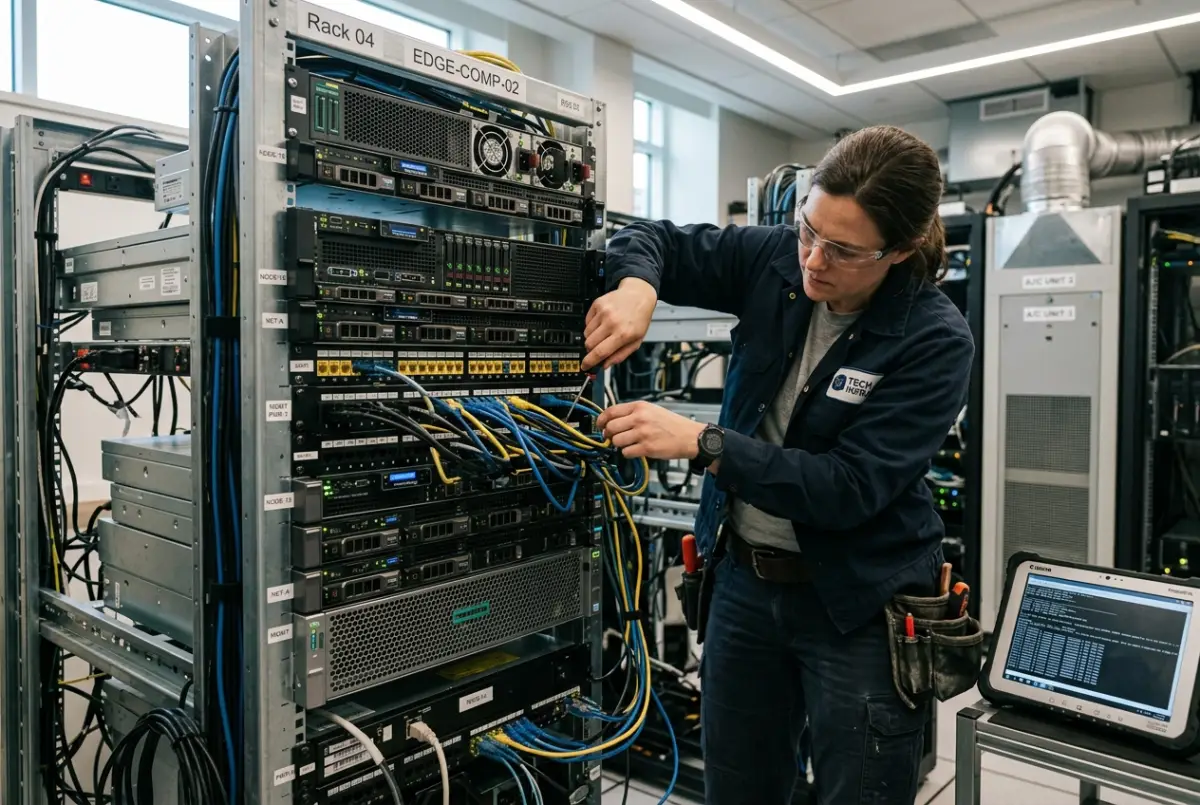
Cloud Latency: Why Distance Still Limits Modern Internet Infrastructure
 Tornike Moss
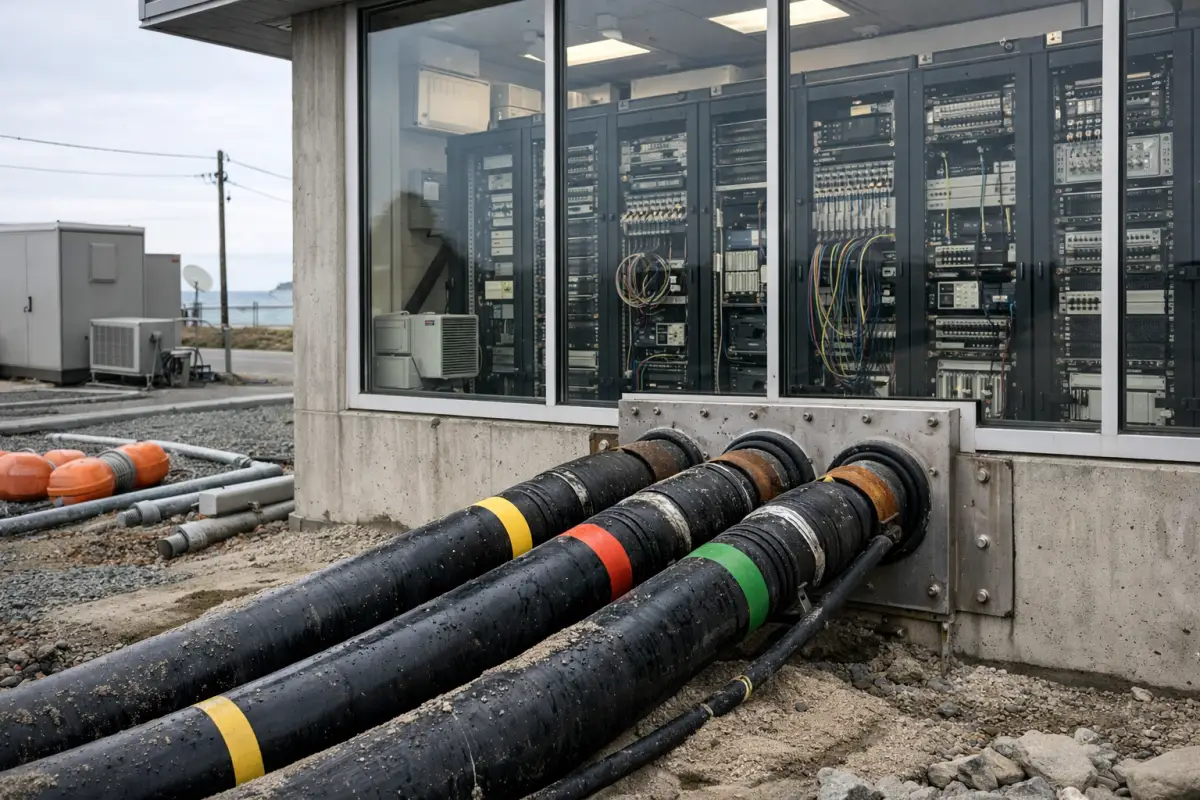
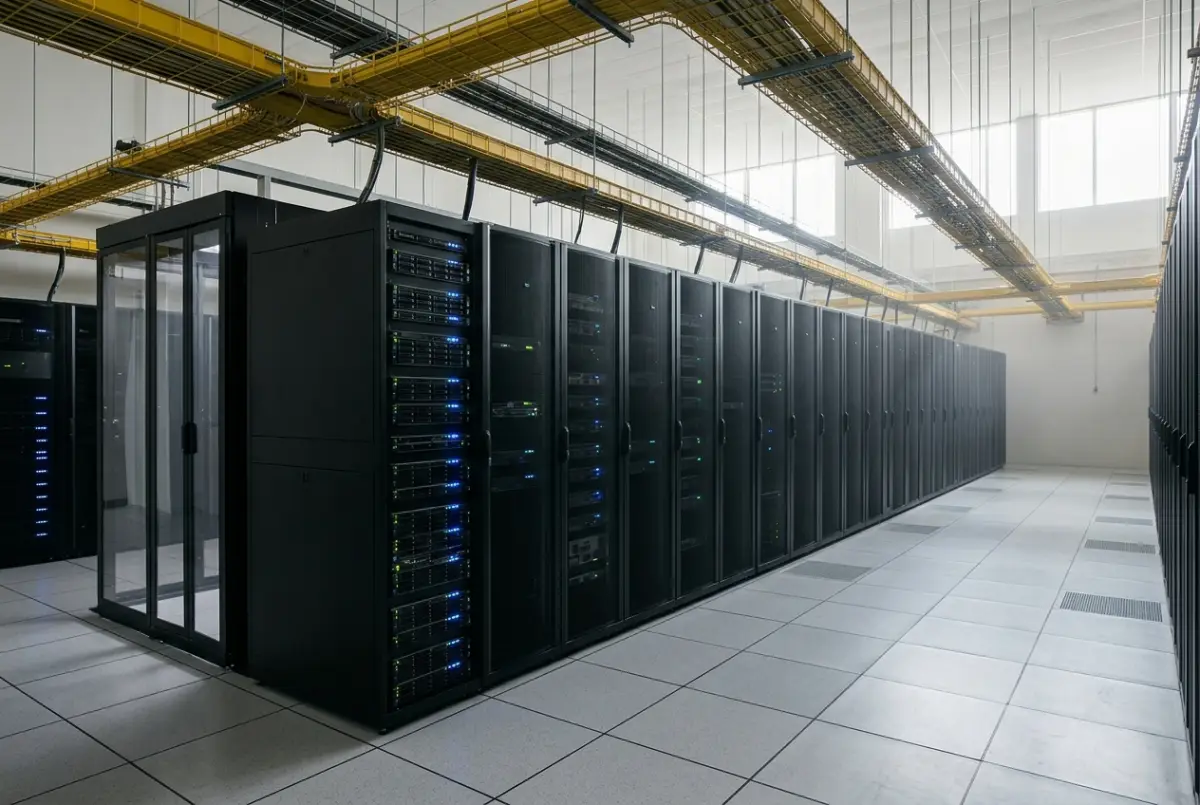
Modern digital infrastructure largely relies on centralized data centers that provide enormous computing power and virtually unlimited storage capacity worldwide. This model has enabled the rapid expansion of cloud computing, allowing businesses, developers, and entire industries to access scalable computing resources without maintaining their own physical infrastructure.
However, despite these advantages, the centralized cloud architecture has an inherent structural limitation that cannot be fully resolved through traditional engineering approaches. This limitation is network delay, commonly referred to as latency, which arises directly from the physical distance between end-user devices and remote servers.
When data travels across continents and oceans through complex networks of fiber-optic cables, even signals moving at the speed of light cannot provide instantaneous communication. As artificial intelligence applications, real-time automation systems, and interconnected industrial devices grow in scale and complexity, minimizing network latency becomes increasingly critical.
This shift forces engineers and system architects to rethink the design principles of internet infrastructure. In modern digital systems, every millisecond directly influences the efficiency, reliability, and safety of technological processes. This analytical article explores the physical and architectural foundations of latency and explains why it has become one of the defining constraints of contemporary internet infrastructure.
Quick Summary
Key takeaways: The main ideas and conclusions of the article are summarized below.
- Network latency refers to the time required for a data packet to travel from a device to a server and for a response to return, a metric commonly measured as Round Trip Time (RTT).
- The most fundamental cause of latency is physical distance, since data transmitted through fiber-optic infrastructure travels slower than the speed of light in a vacuum.
- Additional delays arise from the internet’s layered architecture, where data packets pass through multiple routers, switches, and network nodes before reaching their destination.
- Centralized cloud infrastructure amplifies this delay because computational resources are concentrated in a limited number of geographically distant hyperscale data centers.
- For modern digital systems such as autonomous vehicles, industrial automation, and real-time AI analytics, even millisecond-level delays can significantly impact safety, efficiency, and operational reliability.
- These limitations are driving a shift in internet architecture toward decentralized computing models, where data processing occurs closer to where information is generated.
Table of Contents
What Is Network Latency and How It Emerges in Internet Architecture
Network latency refers to the time required for a data packet to travel from its origin to its destination and for a response to return to the sender. In telecommunications and network engineering, this metric is typically measured in milliseconds (ms) and is commonly known as Round Trip Time (RTT).
Non-specialists often confuse latency with network bandwidth, but these two concepts represent fundamentally different characteristics of a communication system. Bandwidth describes the maximum amount of data that can be transmitted over a network connection during a specific time interval. Latency, by contrast, measures the delay between sending data and receiving a response.
From an engineering perspective, increasing bandwidth alone cannot solve latency problems. Even if a network connection allows large volumes of data to be transferred simultaneously, the physical time required for signals to travel through the network remains unavoidable. Latency is therefore an intrinsic consequence of the internet’s physical topology and the routing processes that guide data across global networks.
Physical Foundations and the Speed-of-Light Limit
The most fundamental and unavoidable cause of network latency is physical distance and the speed-of-light limit imposed by the laws of physics. Modern global internet infrastructure primarily relies on fiber-optic cables, where information travels in the form of light pulses.
While light travels at approximately 300,000 kilometers per second in a vacuum, its speed decreases when passing through optical fibers made of glass or plastic. Due to the refractive properties of these materials, signals typically travel about 30–40 percent slower than they would in a vacuum.
As a result, when an industrial automation sensor or an autonomous system sends a signal from Tbilisi to a hyperscale cloud server located in Frankfurt, London, or Virginia, simply covering the physical distance requires tens of milliseconds. This delay is known as propagation delay, and it represents a hard boundary that cannot be eliminated, regardless of technological progress.
Even with the most advanced network infrastructure, the laws of physics impose an unavoidable limit on how quickly information can move across long distances.
Routing Complexity and the Impact of Network Nodes
Beyond physical distance, latency is significantly affected by the logical and topological structure of the internet. Data packets do not travel along a perfectly straight path between two points. Instead, they pass through numerous intermediate nodes before reaching their final destination.
These nodes include routers, switches, and various network gateways that process and forward data packets along the most efficient path available. Each device examines the packet header, determines the next optimal route using protocols such as Border Gateway Protocol (BGP), and then forwards the packet to the next node.
This process introduces additional delays known as processing delay and queuing delay. When network segments become congested, packets may temporarily wait in buffers before being transmitted further. Each of these delays may appear insignificant individually, but together they accumulate into measurable latency.
For systems that rely on real-time analytics and dynamic decision-making, the cumulative effect of these micro-delays becomes a significant and often unpredictable barrier.
The Journey of Data Packets Through Global Infrastructure
Latency becomes particularly visible within centralized cloud infrastructures where computational power is concentrated in a limited number of geographic regions.
When a user device or a complex artificial intelligence system interacts with a remote data center, the information typically passes through multiple layers of network infrastructure. It first travels through the local internet service provider (ISP), then through national transit networks, international backbone connections, and often undersea cable systems before finally reaching the cloud provider’s internal infrastructure.
Even within the data center itself, communication between servers, often referred to as east-west traffic, introduces additional internal delays before a response is generated.
Each of these stages adds several milliseconds to the total communication time. For example, an IoT sensor embedded within a smart city infrastructure may instantly detect an event. However, if the analysis and response generation occur on a server located on another continent, the time required to transmit the data and receive a response can make the system significantly less effective.
This complex, multi-layered architecture demonstrates how latency emerges as a structural limitation of centralized internet infrastructure.
Why Centralized Cloud Infrastructure Creates Natural Latency Constraints
The centralized paradigm of cloud computing has fundamentally transformed the digital industry over the past two decades. Large technology companies have built enormous data centers in strategic locations to maximize economies of scale and efficiently manage global computing resources.
While this model is extremely effective for long-term data storage and asynchronous processing, it is structurally incompatible with modern systems that require immediate responses.
When computational intelligence is concentrated in a single central location, devices at the network’s edge become entirely dependent on continuous communication with remote servers. This dependency naturally creates latency constraints that cannot be eliminated.
The Economic Geography of Hyperscale Architecture
Hyperscale data centers are rarely located in regions with the highest concentration of end users or industrial infrastructure. Instead, cloud providers choose locations based on economic and environmental considerations.
These facilities are typically built in areas where electricity is inexpensive, land is abundant, and cooling resources are readily available. As a result, a large portion of global computing capacity becomes concentrated in a small number of geographically isolated regions.
This geographical imbalance creates a physical gap between where data is generated and where it is processed. When an industrial robot on a manufacturing line or a smart energy grid sensor requests the execution of a complex AI algorithm, the data may need to travel hundreds or even thousands of kilometers before reaching the nearest cloud server.
This spatial separation is an inherent feature of centralized cloud architecture.
The Data Tromboning Effect and Topological Paradox
Another critical limitation of centralized architectures is known as data tromboning or hairpinning. This phenomenon occurs when two geographically close devices communicate through a distant cloud server instead of exchanging data locally.
For example, imagine two industrial sensors operating inside the same factory. In a centralized cloud architecture, the data generated by one sensor may first be transmitted to a remote cloud data center for processing before being sent back to the second device in the same building.
This unnecessary detour creates an artificial communication loop that significantly increases latency. It also illustrates a fundamental paradox: even local interactions become dependent on global infrastructure when computational intelligence is centralized.
Architectural Mismatch with Real-Time Systems
The rapid expansion of the Internet of Things (IoT) and autonomous systems exposes the limitations of centralized cloud computing more clearly than ever before.
Traditional cloud architectures assume that data is collected at the edge while analysis and decision-making occur in centralized data centers. However, in systems such as autonomous vehicles or real-time industrial monitoring platforms, decisions must often be made within milliseconds.
Sending data to a remote data center and waiting for a response introduces unacceptable risks. In these environments, centralized infrastructure becomes an informational bottleneck.
The continuous transmission of massive volumes of raw data to centralized servers not only increases latency but also places heavy strain on global network backbones. This reality demonstrates that the digital systems of the future cannot rely solely on distant computing centers.
Why Millisecond-Level Response Times Are Critical for Modern Digital Systems
In the early stages of the internet, network architectures were designed primarily around human perception. When loading a web page or retrieving information from a database, delays of 100 or even 200 milliseconds were considered acceptable because the human brain cannot easily perceive such short interruptions.
Today, however, the digital ecosystem has undergone a fundamental transformation. Humans are no longer the primary “users” of network infrastructure. Instead, machines, sensors, and autonomous systems have become the dominant participants.
In machine-to-machine (M2M) communication environments where processors perform billions of operations per second, even a single millisecond represents a significant time interval.
From Human Perception to Machine Precision
Traditional cloud services such as email platforms, cloud storage systems, and video streaming services rely heavily on asynchronous data transmission and buffering techniques. These methods effectively mask network delays from human users.
However, real-time analytics systems and modern AI models cannot rely on buffering. When automated cybersecurity systems analyze network anomalies or financial algorithms perform high-frequency trading, the value of data decreases exponentially with time.
If network infrastructure cannot keep pace with the computational speed of modern processors, the network itself becomes the primary performance bottleneck.
Autonomous Systems and Physical Safety
The need for ultra-low latency becomes even more critical in systems that bridge the digital and physical worlds.
Autonomous vehicles, for instance, function as mobile data centers that generate gigabytes of sensor data every second. If a self-driving car traveling at 120 km/h detects an unexpected obstacle, every additional 100 milliseconds spent transmitting data to a cloud server and receiving a braking command means the vehicle travels several additional meters before reacting.
In such scenarios, latency is not merely a performance metric — it becomes a direct determinant of physical safety.
Industrial Automation and Closed-Loop Control
In the context of Industry 4.0, smart factories and modern energy systems rely on high-precision robotics and closed-loop control systems.
Within these environments, communication between sensors and actuators must occur within extremely strict time windows — often between 1 and 5 milliseconds.
Even a slight delay in network communication can disrupt the synchronization of robotic systems, damage expensive machinery, or cause cascading failures in industrial processes.
For industrial environments, millisecond-level responsiveness is not an optional optimization but a fundamental requirement for operational stability.
How the Latency Problem Drives the Shift Toward Edge Computing
The collision between modern digital systems and the physical limits imposed by the speed of light forces internet architects to reconsider traditional centralized computing models.
Because it is impossible to eliminate physical distance or infinitely accelerate data transmission, the only practical solution is to move computational resources closer to where data is generated.
This paradigm shift, known as edge computing, represents a decentralization of internet infrastructure. Instead of sending all data to distant hyperscale data centers, computing resources move toward the edges of the network, closer to users, telecommunications infrastructure, and industrial environments.
Infrastructure Decentralization and Micro Data Centers
Edge computing blurs the traditional boundary between local networks and global internet infrastructure.
In this architecture, massive centralized server farms are complemented by smaller micro data centers and distributed edge nodes located physically near the sources of data generation.
These compact but powerful computing units may be installed within factories, telecommunications towers, or urban infrastructure networks.
For example, a traffic monitoring system equipped with real-time video analytics may process video streams locally at an edge node located only a few hundred meters away. By minimizing routing stages, this architecture can reduce latency from tens of milliseconds to single-digit values, often approaching 1–2 milliseconds.
To see how this decentralized edge infrastructure operates in real urban environments — from intelligent traffic systems to distributed sensor networks — read our detailed analysis — smart city infrastructure.
Local AI Inference and Backbone Network Optimization
Moving computation closer to the network edge also improves overall network efficiency.
Modern IoT devices and AI systems generate enormous volumes of raw data. If all this data were transmitted to centralized cloud servers, global internet backbone networks would quickly become overwhelmed.
Edge infrastructure enables local AI inference, where data can be filtered and analyzed near its source. Instead of transmitting full data streams to the cloud, only relevant insights, anomalies, or summarized metadata need to be sent to centralized systems.
This approach significantly reduces network traffic while preserving the ability to perform real-time decision-making.
The Emergence of a Hybrid Computing Ecosystem
Edge computing does not replace centralized cloud infrastructure. Instead, the future internet architecture is evolving toward a hybrid model in which different layers perform different roles.
Cloud infrastructure remains essential for global orchestration, long-term data storage, and the training of large-scale artificial intelligence models.
Edge systems, on the other hand, handle real-time operations, local decision-making, and the execution of pre-trained AI models.
Together, these layers form a multi-tier computing ecosystem that combines the scalability of cloud platforms with the responsiveness of localized computing.
Ultimately, network latency is no longer merely a technical inconvenience. It has become one of the defining structural challenges of modern digital architecture.
Centralized cloud systems, despite their extraordinary scalability and global computing capabilities, ultimately confront the immutable laws of physics. Transmitting data across thousands of kilometers inevitably introduces delays that modern digital systems can no longer tolerate.
Autonomous vehicles, smart energy grids, high-precision robotics, and real-time artificial intelligence systems all require data to be processed instantly at the location where it is generated.
This requirement is driving a fundamental transformation in internet architecture. The future internet will not rely solely on isolated hyperscale data centers. Instead, it will evolve into a highly distributed ecosystem in which computational resources are integrated directly into the environments where data originates.
This structural decentralization not only reduces latency but also improves infrastructure resilience, optimizes network efficiency, and opens new possibilities for the next generation of digital applications.
Go backComments (0)
From This Author
Select Crypto to Support the Author 💫
×TXintEE7aezp6QxNNtbghCXvmXJdgofEyr
0x9c6299454A6B617A0Db228024279F2a3EEf956dD
bc1qj7caz3xfh5qd4ud3v3nh7k4tfl5lg8jh9er73e
0x9c6299454A6B617A0Db228024279F2a3EEf956dD
3TndfWAhPytTaBZjC2GbNWqh9iWx171SYACjbG2j5vx8
DHsrtwiL56Xk1xAj3fe8pVcfLhE8xgt3EQ
0x9c6299454A6B617A0Db228024279F2a3EEf956dD
UQDFkubJxb8KmxFmy1arJxkewzmNEg6-G2pJFVzFihB65d7W
ltc1q3fentl6ur9cxm0vxyqkdmmzxkj92j00p9l8m7z
✍ Article Author
- Registration: 26 July 2025, 19:34
- Location: Georgia