



Digital Twilight: Why We Seek Calm in Black Screens
 Tornike Moss
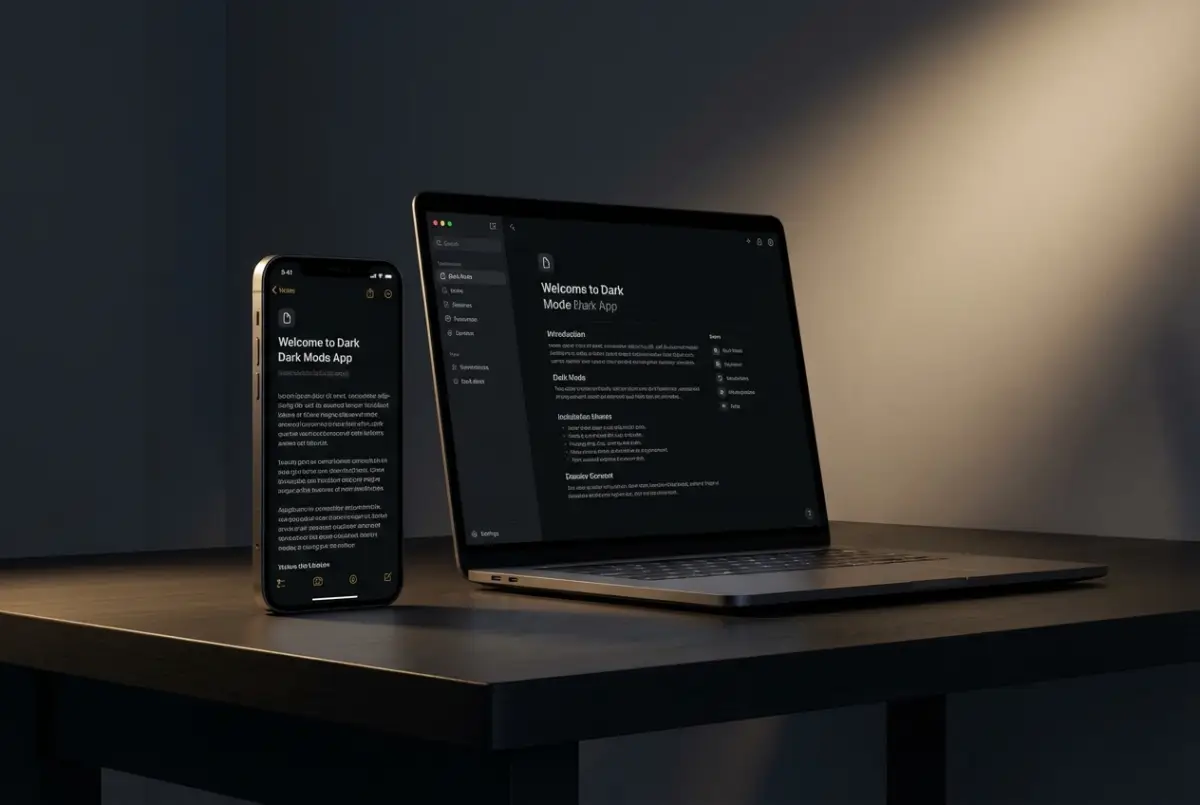
There is something intimate—almost ritualistic—about the moment when the sun goes down, the room slips into dusk, and you open your phone’s settings to activate Dark Mode. Sometimes it happens without your involvement at all, switching automatically into night mode. The harsh, aggressive white light disappears, replaced by deep, velvety black. It feels as if the digital world has lowered its voice, held its breath, and quietly stepped into your bedroom.
This shift is far more than a simple change of pixel color. It’s a moment when the brain exhales in relief, because on a subconscious level we believe the danger—visual or otherwise—has passed. We tend to think of Dark Mode as a practical choice: a way to save battery life or protect our eyes. In reality, our attraction to black screens is rooted in much deeper psychology than any ophthalmologist’s advice.
There’s an interesting paradox at work. Throughout human evolution, darkness was associated with danger, uncertainty, and fear, while light meant safety. In the digital age, that equation has flipped. Today, white backgrounds—with their intense brightness—are linked to offices, obligations, stress, spreadsheets, and the relentless informational noise of daytime life. A white screen shouts. It demands attention and keeps us alert even when we want to rest.
A dark screen, by contrast, offers refuge. It creates visual silence. When an interface darkens, it seems to retreat, leaving only the essential content—text, images, video—on stage. This sense of disappearance gives us an illusion of control. It feels as though we are managing the device, not the other way around, because its “body” dissolves into the darkness.
This is where the myth of eye protection enters the story—a convenient indulgence we grant ourselves. From a scientific perspective, the issue is debatable. Reading light text on a dark background can sometimes cause a halo effect, where letters blur and strain the eyes more than classic black-on-white contrast. And yet we stubbornly believe Dark Mode “rests” our eyes. Why? Because subjective experience often outweighs objective reality.
When fewer photons hit our retinas, we feel less attacked by technology. It’s like putting on headphones in a noisy room—the noise hasn’t vanished, but we’ve shielded ourselves from it. Dark Mode functions as a psychological barrier, a digital pair of sunglasses protecting us from the constant bombardment of stimuli. We think we’re saving our eyes; in truth, we’re protecting our nervous system from overload.
Beyond comfort, dark backgrounds carry a distinct aesthetic code—one associated with premium design, depth, and mystery in modern tech culture. Think of hacker movies, programming environments, The Matrix—everything serious and sophisticated happens on a black background. Dark Mode makes us feel like insiders, people who understand technology, or at least users with refined taste.
That aesthetic blends seamlessly with nighttime intimacy. Under the blanket, when it’s just you and your phone, a black screen dissolves the boundary between physical darkness and digital space. It doesn’t light up the room or announce itself to others. It preserves your small, isolated world intact. This may be the most comfortable form of modern solitude: being connected to the entire world without anyone noticing the glow on your face.
But this calm comes at a cost. The comfort created by Dark Mode often becomes a trap. Because the screen feels less aggressive—and because we believe our eyes are less tired—we lose track of time more easily. Nighttime scrolling becomes endless, as the brain no longer receives a clear signal that the “day” has ended and sleep should begin.
Blue-light filters and dark backgrounds reassure us that everything is fine, that we can read one more article or watch one more video. Ironically, our attempt to protect ourselves from digital fatigue keeps us engaged with technology even longer. We choose darkness not to sleep, but to stay awake more comfortably.
Ultimately, the Dark Mode phenomenon reveals more about our psychology than about our devices. It is a collective attempt to tame the digital beast—to make it quieter, less demanding, more familiar. We want information without stress, connection without obligation, and light without pain.
And when we pause to reflect on all of this, one question inevitably emerges—one worth asking the next time you switch to night mode:
Do we really choose dark screens so we can see the world more clearly, or are we simply trying to hide from it as deeply as possible?
Go backComments (0)
From This Author
Select Crypto to Support the Author 💫
×TXintEE7aezp6QxNNtbghCXvmXJdgofEyr
0x9c6299454A6B617A0Db228024279F2a3EEf956dD
bc1qj7caz3xfh5qd4ud3v3nh7k4tfl5lg8jh9er73e
0x9c6299454A6B617A0Db228024279F2a3EEf956dD
3TndfWAhPytTaBZjC2GbNWqh9iWx171SYACjbG2j5vx8
DHsrtwiL56Xk1xAj3fe8pVcfLhE8xgt3EQ
0x9c6299454A6B617A0Db228024279F2a3EEf956dD
UQDFkubJxb8KmxFmy1arJxkewzmNEg6-G2pJFVzFihB65d7W
ltc1q3fentl6ur9cxm0vxyqkdmmzxkj92j00p9l8m7z
✍ Article Author
- Registration: 26 July 2025, 19:34
- Location: Georgia