



Invisible Walls: Why We Can’t Find the Exit Where There Is No Door
 Tornike Moss
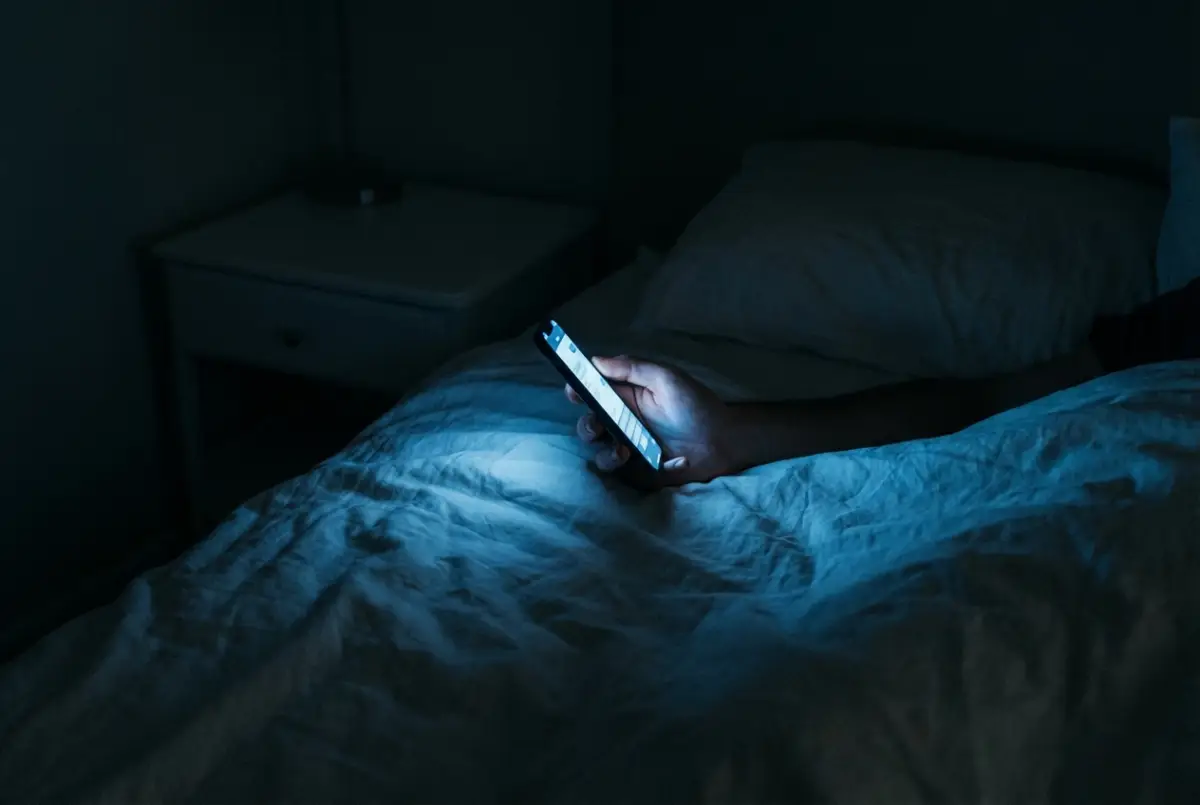
It’s two in the morning. Or maybe three. The room is silent, except for the blue glow of your smartphone lighting up your face, creating the illusion that the rest of the world has temporarily disappeared. You know exactly how tomorrow will feel—heavy, slow, exhausting. You know that this “just five more minutes” has already turned into half an hour for the third time. And yet, your thumb keeps moving upward with stubborn persistence, as if it were an independent mechanism.
This moment is universally familiar: a strange paralysis where the mind wants sleep, but the body—more precisely, one small motion of the hand—refuses to obey. We usually blame ourselves, scold our “weak willpower,” and assume we simply lacked discipline. In reality, this scene is the result of a far deeper psychological and technological architecture than simple laziness.
Paradoxically, entering the digital world always feels like sliding downhill, while leaving it feels like climbing uphill with a heavy load. This is no coincidence. When you open an app, you’re greeted by a design deliberately stripped of barriers. There are no doors. No thresholds. But the moment you decide to leave, you discover that the exit is barely marked—if it exists at all.
In the physical world, actions have natural endings. A book chapter ends. A movie fades into credits. A conversation runs out of words. In digital space, these “stop signs” are intentionally erased. Scrolling is infinite. Videos autoplay one after another. Content never tells you, “That’s it—you can go now.” This is the psychology of the unfinished loop, where the brain constantly anticipates a climax that never arrives. The algorithm’s goal isn’t satisfaction; it’s prolonged anticipation.
Here, the laws of physics quietly enter psychology—specifically, inertia. Just as in Newton’s first law, a moving object tends to stay in motion unless acted upon by an external force. In this case, the moving object is your attention. The problem is that app design minimizes friction to near zero. Everything glides. The screen is smooth. The interface seamless.
To close the app, you must generate artificial friction. You must make a conscious, active decision to interrupt a comfortable process and return to a reality that often feels more stressful or less stimulating than the colorful chaos on your screen. The app doesn’t ask you to stay—it simply gives you no reason to leave. It’s like a party where the host never dims the lights or lowers the music. You know it’s time to go, but the environment keeps insisting that it’s still early.
This effect is intensified by the fact that “staying” is the default state of the digital ecosystem. Leaving is an active choice. The human brain, shaped by evolution to conserve energy, instinctively chooses the path of least resistance. When you’re lying in bed with your phone in hand, continuing to scroll is physically and cognitively easier than moving your finger elsewhere, searching for the power button, turning off the screen, and facing the dark silence of your own thoughts.
The screen offers the illusion of an open door—suggesting you can leave at any time. In reality, that door only opens in one direction: inward. We stay not because we want to, but because stopping requires a reserve of willpower that is already depleted by the end of the day.
Ultimately, our struggle over “just one more minute” is a struggle for autonomy within an environment designed to reward passivity. Technology makes us feel like we’re in control because our finger is moving—but the script was written by someone else. This is comfortable captivity, where the prison walls are invisible and the chains are entertaining content.
So the next time you try to put your phone down late at night and fail, remember: this isn’t your weakness. It’s the strength of a design that knows exactly where the human “off switch” is—and does everything it can to keep your finger from pressing it.
And finally, before you turn off the screen, ask yourself one last question: are you putting the phone down because you decided to—or simply because the content ran out and left you with no other choice?
Go backComments (0)
From This Author
Select Crypto to Support the Author 💫
×TXintEE7aezp6QxNNtbghCXvmXJdgofEyr
0x9c6299454A6B617A0Db228024279F2a3EEf956dD
bc1qj7caz3xfh5qd4ud3v3nh7k4tfl5lg8jh9er73e
0x9c6299454A6B617A0Db228024279F2a3EEf956dD
3TndfWAhPytTaBZjC2GbNWqh9iWx171SYACjbG2j5vx8
DHsrtwiL56Xk1xAj3fe8pVcfLhE8xgt3EQ
0x9c6299454A6B617A0Db228024279F2a3EEf956dD
UQDFkubJxb8KmxFmy1arJxkewzmNEg6-G2pJFVzFihB65d7W
ltc1q3fentl6ur9cxm0vxyqkdmmzxkj92j00p9l8m7z
✍ Article Author
- Registration: 26 July 2025, 19:34
- Location: Georgia