

Why Edge AI Is Faster Than Cloud AI: The Real Physics of Latency
 Tornike Moss
In modern artificial intelligence systems, response time—known as latency—is not merely a technical metric but a factor of critical importance. When technologies such as autonomous vehicles, intelligent surveillance cameras, or real-time industrial robotics are involved, even a few lost milliseconds can have serious consequences.
Within traditional cloud architecture, a local sensor system collects data, transmits it through the network to a centralized server for processing, and then waits for a response. Although cloud infrastructure offers virtually unlimited computational power, the round-trip transmission of data inevitably introduces delay. The speed of information transfer is governed by the speed of light and the physical limitations of fiber-optic networks. In optical fiber, light travels at roughly 200,000 kilometers per second, meaning that transmitting data over a distance of 1,000 kilometers requires at least five milliseconds. As a result, data transport itself becomes a significant component of total system latency.
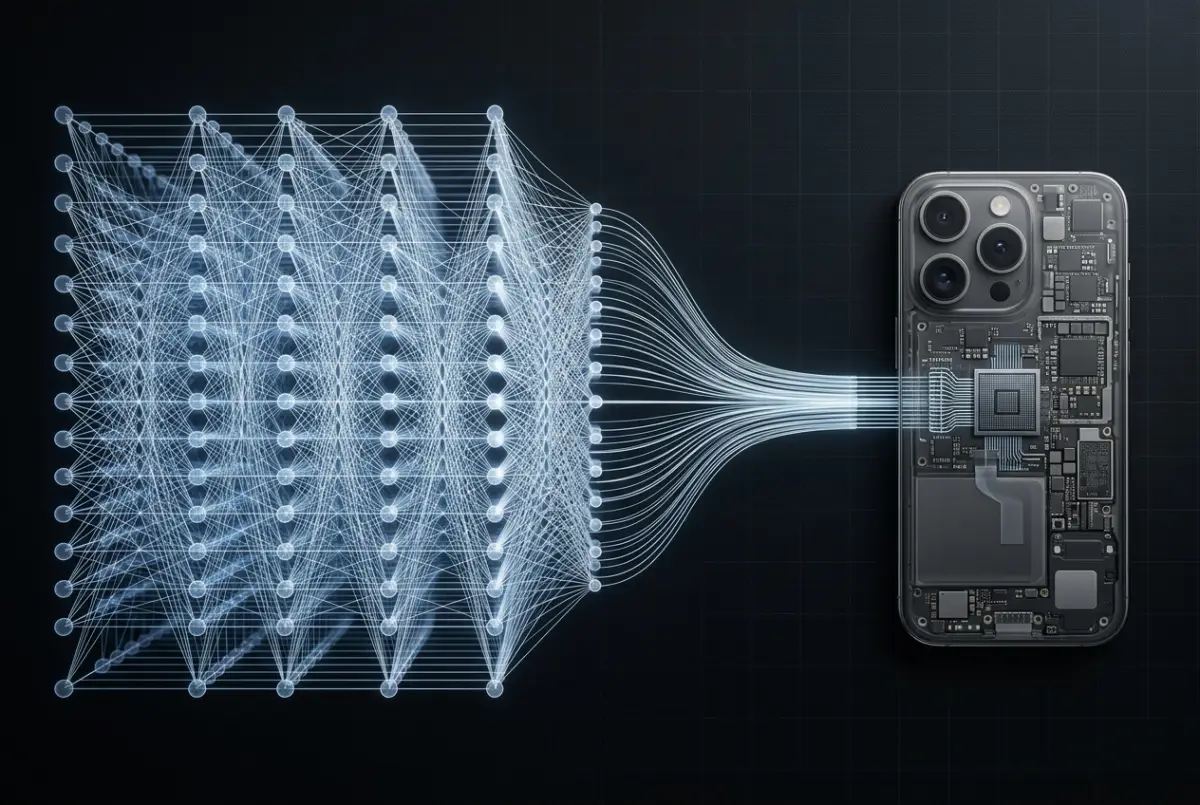
Edge computing addresses this challenge in a fundamentally different way. By moving the data-processing stage directly to the source of the data—onto the device itself—the system eliminates the need to send information across thousands of kilometers and significantly reduces response time. In modern digital infrastructure, the speed of artificial intelligence systems is therefore often constrained not by the computational efficiency of algorithms, but by the physics of network distance. This unavoidable physical reality explains the principle behind Edge AI: Why Artificial Intelligence Is Moving from the Cloud to Devices.
Quick Summary
Key takeaways: The main ideas and conclusions of the article are summarized below.
- In real-time artificial intelligence systems, performance is often limited not by algorithms but by network latency.
- Cloud architectures require data to travel to a centralized server and back, increasing round-trip time and delaying system response.
- The speed of data transmission is constrained by the physical limits of fiber-optic networks and the speed of light.
- In applications such as autonomous vehicles, industrial robotics, and video analytics, even tens of milliseconds can critically affect safety and operational reliability.
- Edge AI reduces latency by moving inference directly to devices or local infrastructure close to where data is generated.
- The future of digital infrastructure will rely on a hybrid architecture in which the cloud trains models while edge devices deliver instantaneous real-world responses.
Table of Contents
Why the Cloud Slows Down Real-Time AI Systems
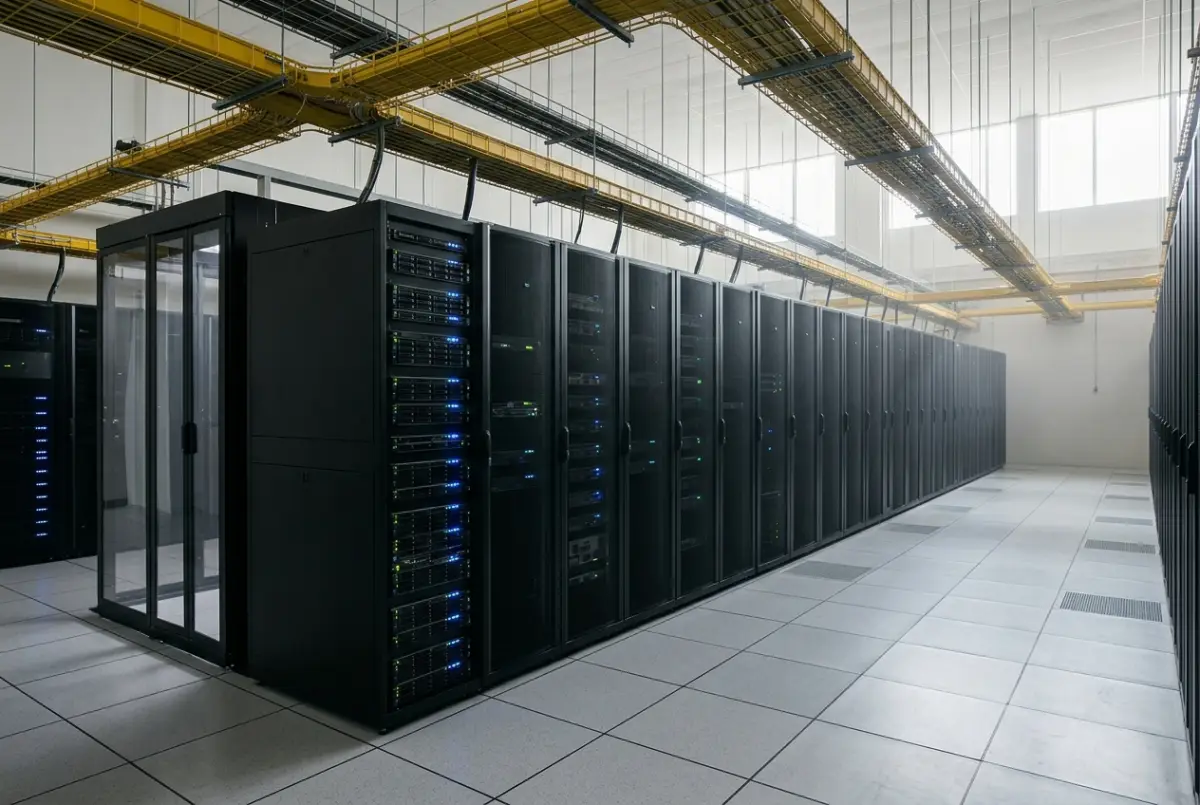
In the early stages of artificial intelligence development, the industry’s primary focus was improving algorithms and increasing computational power. To achieve this goal, engineers built massive cloud infrastructures in which thousands of graphics processors work together to process enormous volumes of data. However, as AI began to move into real-time applications, it became clear that the main limiting factor was not the speed of the AI model itself but the network infrastructure that connects devices to centralized servers.
A system may run the fastest algorithm in the world, yet if its data must travel hundreds of kilometers to be processed, the overall response time will still be slow. Cloud architecture is fundamentally based on centralization: information is collected locally, transmitted to a centralized server, processed there, and then returned to the originating device. This transport layer represents the critical bottleneck that slows down real-time AI systems and limits their effectiveness.
Latency and Round-Trip Time
In network engineering, latency is defined as the time required for a data packet to travel from one point to another. In practical artificial intelligence deployments, however, a more meaningful metric is round-trip time—the total time required for data to travel to a remote server and for the response to return.
When a local device such as a sensor or camera detects an event, it generates a request that must travel through the internet service provider’s network, across multiple routers and optical backbones, before reaching the cloud server. The server must then receive the data, process it through a neural network, generate a result, and send that response back along the same path to the original device.
Consider a device located in Tbilisi while the cloud server resides in a data center in Frankfurt. The one-way network latency over fiber optics is often around 8 to 10 milliseconds. When the round-trip time is considered, this delay effectively doubles, and additional overhead is introduced by router processing, network congestion, and protocol operations.
Every additional node in the network, every routing decision, and every protocol-level validation adds milliseconds that accumulate into substantial delay. Even if the model’s inference on the server takes only a single millisecond, the round-trip time may reach tens or even hundreds of milliseconds, effectively negating the computational speed of the AI model itself.
Why Distance Creates a Physical Limitation
Network latency is ultimately governed by fundamental laws of physics that cannot be bypassed. In modern communication networks, information is primarily transmitted through fiber-optic cables where data travels as pulses of light. While the speed of light in a vacuum is approximately 300,000 kilometers per second, this speed decreases by roughly one-third when light passes through glass or plastic, reducing it to about 200,000 kilometers per second.
Furthermore, network cables are rarely laid in perfectly straight lines. If a user is located on one continent and the data center on another, the theoretical minimum delay alone may already exceed what is acceptable for real-time critical systems. Signal amplification, packet processing within routers, and queueing delays further increase this latency.
Distance therefore represents more than a technical inconvenience—it is a hard physical barrier. No amount of improved software can eliminate the fundamental limitations imposed by the physics of signal propagation.
Why Tens or Hundreds of Milliseconds Matter
In everyday internet activities such as browsing websites or sending emails, a delay of 100 or even 200 milliseconds is almost imperceptible. However, when machines interact with the physical world, the perception of time changes dramatically. Systems that continuously analyze their surroundings and make instant decisions operate on extremely tight time scales where even a single millisecond carries meaningful informational value.
Objects move, conditions change, and events unfold within fractions of a second. An artificial intelligence system that reacts too slowly therefore loses its functional purpose. In these scenarios, latency is no longer merely a matter of user convenience—it directly affects safety, accuracy, and operational reliability.
Autonomous Systems and Rapid Response
Autonomous vehicles provide one of the clearest demonstrations of why ultra-low latency is essential. Imagine a car traveling at 120 kilometers per hour on a highway. At this speed, the vehicle covers approximately 33 meters every second. If the car’s sensors detect an obstacle and send the data to the cloud for processing, requiring 200 milliseconds to receive a response, the vehicle will travel nearly seven meters without any reaction.
That distance can easily represent the difference between a safe stop and a catastrophic collision.
A similar dynamic exists in industrial robotics. In factories where robots operate alongside human workers, sensors must detect sudden human movement and halt the machine within milliseconds to prevent injury. In such safety-critical environments, reliance on network latency is simply unacceptable.
For this reason, companies developing autonomous technologies—including Tesla and Waymo—widely deploy onboard computing systems in which artificial intelligence models run directly on the vehicle’s internal computer, enabling decisions to be made locally without waiting for cloud responses.
The importance of edge infrastructure becomes even clearer in large urban environments, where thousands of sensors, cameras, and connected transportation systems interact in real time. To explore how modern cities use local computing for traffic management, energy systems, and public safety, see our analysis — Edge Computing in smart cities.
Video Analytics and Smart Cameras
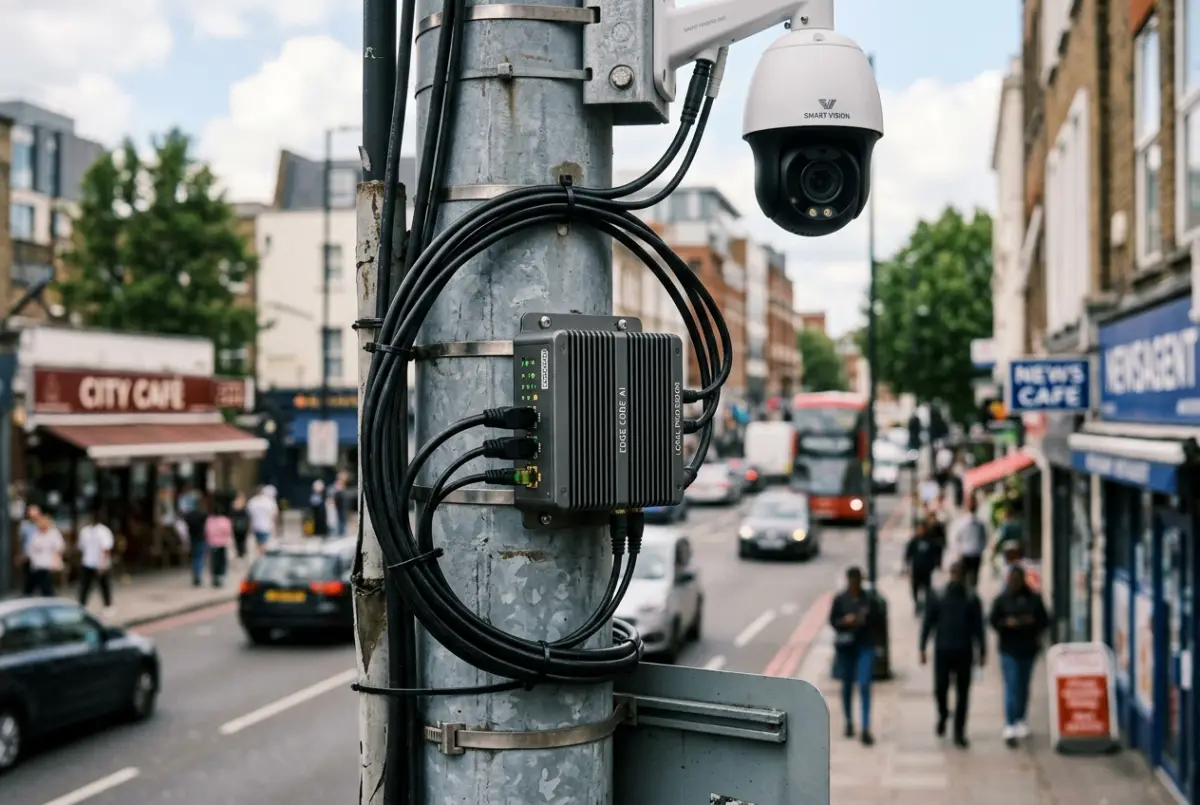
Another domain where latency and bandwidth become significant challenges is real-time video analytics. Modern security systems and intelligent cameras generate high-resolution video streams continuously. If dozens of such cameras are deployed at a facility and each one constantly transmits raw video to a cloud server for tasks such as facial recognition or anomaly detection, the resulting data flow can overwhelm network capacity.
The transmission of massive volumes of data creates congestion, which in turn increases latency and can cause dropped frames. As a result, the system loses its ability to respond to threats in real time. Continuous video streaming also demands enormous internet bandwidth, making the approach economically inefficient.
In many security applications, reaction times must remain within the range of 30 to 50 milliseconds to reliably detect objects, movements, or potential threats. If video frames must first travel to the cloud, be processed there, and then return to the camera, the total round-trip time may reach 200 to 500 milliseconds—far too slow for genuine real-time response.
This is why modern video analytics systems increasingly deploy local AI models such as optimized versions of YOLO or MobileNet, which run directly on cameras or edge devices and can perform object detection within tens of milliseconds.
Why Not Every Solution Can Run in the Cloud
Although cloud technologies provide virtually unlimited computational resources, they cannot be applied effectively in every scenario. Dependence on the cloud inherently means dependence on continuous and stable internet connectivity. Many industrial facilities, mining operations, offshore platforms, and agricultural infrastructures are located in regions where internet access is unstable or entirely unavailable.
In such environments, cloud-based artificial intelligence simply stops functioning when connectivity is lost. Continuous data transmission also introduces privacy risks and cybersecurity concerns. When critical decisions must be made instantly, the system must operate autonomously and remain resilient to external disruptions—something that purely cloud-based architectures cannot guarantee.
How Edge AI Solves the Latency Problem
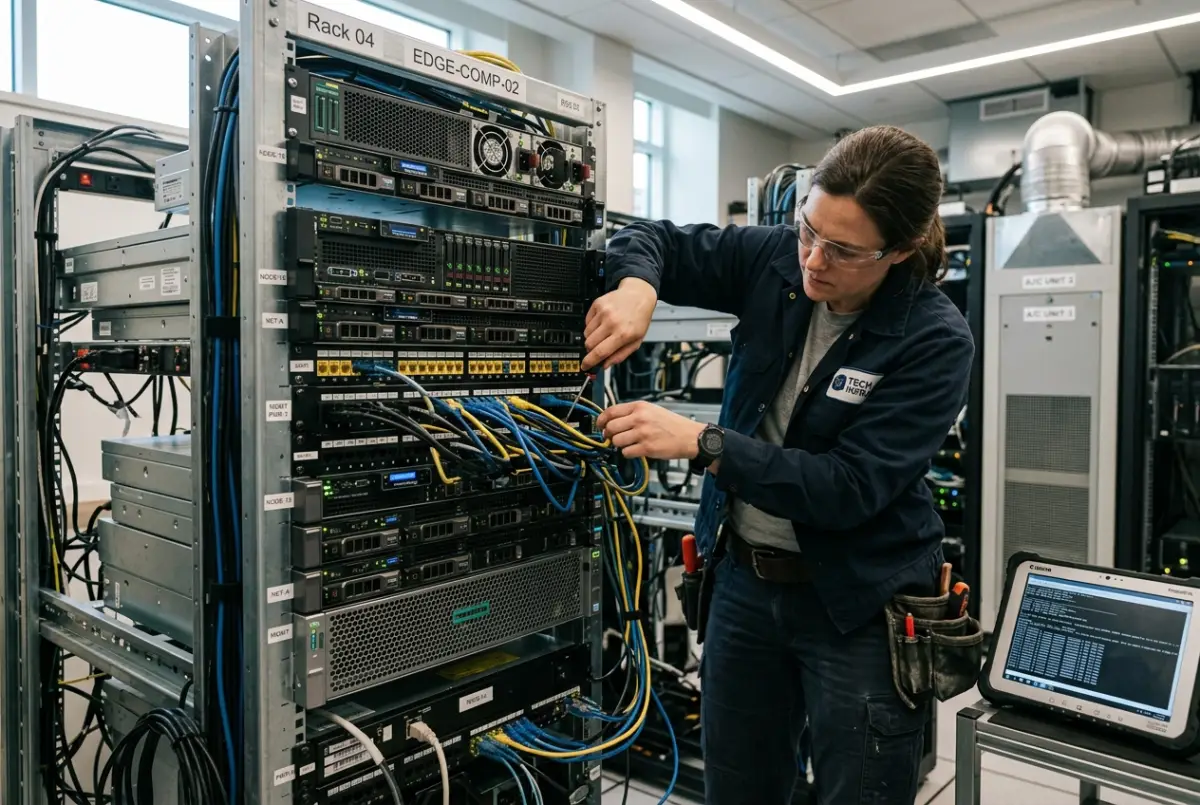
Edge AI represents an architectural paradigm that fundamentally changes how data is processed. Instead of sending data to distant computing centers, the computational process moves to the location where the data is generated. In this model, artificial intelligence algorithms are embedded directly into sensors, cameras, smartphones, or local servers.
As a result, the need to transmit data across the network is dramatically reduced or eliminated altogether. The system no longer waits hundreds of milliseconds for a remote response because analysis and decision-making occur locally at the moment the data is generated.
This approach not only significantly reduces latency but also frees up network bandwidth and makes the system largely independent of internet connectivity quality.
Inference Directly on the Device
The lifecycle of artificial intelligence consists of two main phases: model training and inference—the stage in which a trained model analyzes new data. Training requires enormous computational resources and remains primarily a cloud-based process. Inference, however, typically demands far fewer resources.
Advances in microelectronics, particularly the development of specialized neural processing units (NPUs), have made it possible to perform complex mathematical operations on compact and energy-efficient chips. At the same time, model compression techniques such as quantization reduce the size of neural networks while preserving much of their accuracy.
As a result of these technological developments, powerful pre-trained models can now run directly on local devices and deliver real-time inference without the delays introduced by network communication.
Why Edge Does Not Replace the Cloud
Despite its clear advantages in responsiveness, Edge AI is not a replacement for cloud computing. In practice, the two technologies form a complementary ecosystem. The cloud remains indispensable for aggregating massive datasets, performing global analytics, and most importantly training artificial intelligence models—a process that often requires petabytes of data and enormous computational power.
Within this hybrid architecture, the cloud functions as the system’s brain, responsible for learning and improvement, while edge devices act as its reflexes, delivering immediate responses in the physical environment. When improved models are developed in the cloud, they can be distributed to edge devices, ensuring that the entire system remains continuously updated and highly efficient.
Why Edge AI Is Becoming a Fundamental Layer of Modern Infrastructure
At this stage of technological development, it is increasingly clear that the performance of artificial intelligence systems is not determined solely by the sophistication of algorithms. When AI interacts with the physical world in real time, network distance and data transmission time become unavoidable physical constraints.
The advantage of Edge AI lies not in the fact that local processors are more powerful than cloud servers, but in the fact that edge computing removes network latency from the equation entirely. By relocating computation to the source of data generation, systems gain the instantaneous reflexes required for autonomous transportation, robotics, and industrial automation.
Ultimately, the digital infrastructure of the future will rely not only on centralized supercomputers but also on the decentralization of intelligence—an architecture in which every device can independently make critical decisions within fractions of a second.
Go backComments (0)
From This Author
Select Crypto to Support the Author 💫
×TXintEE7aezp6QxNNtbghCXvmXJdgofEyr
0x9c6299454A6B617A0Db228024279F2a3EEf956dD
bc1qj7caz3xfh5qd4ud3v3nh7k4tfl5lg8jh9er73e
0x9c6299454A6B617A0Db228024279F2a3EEf956dD
3TndfWAhPytTaBZjC2GbNWqh9iWx171SYACjbG2j5vx8
DHsrtwiL56Xk1xAj3fe8pVcfLhE8xgt3EQ
0x9c6299454A6B617A0Db228024279F2a3EEf956dD
UQDFkubJxb8KmxFmy1arJxkewzmNEg6-G2pJFVzFihB65d7W
ltc1q3fentl6ur9cxm0vxyqkdmmzxkj92j00p9l8m7z
✍ Article Author
- Registration: 26 July 2025, 19:34
- Location: Georgia