

The Invisible Writer: From Ancient Incantations to Digital Code
 Tornike Moss
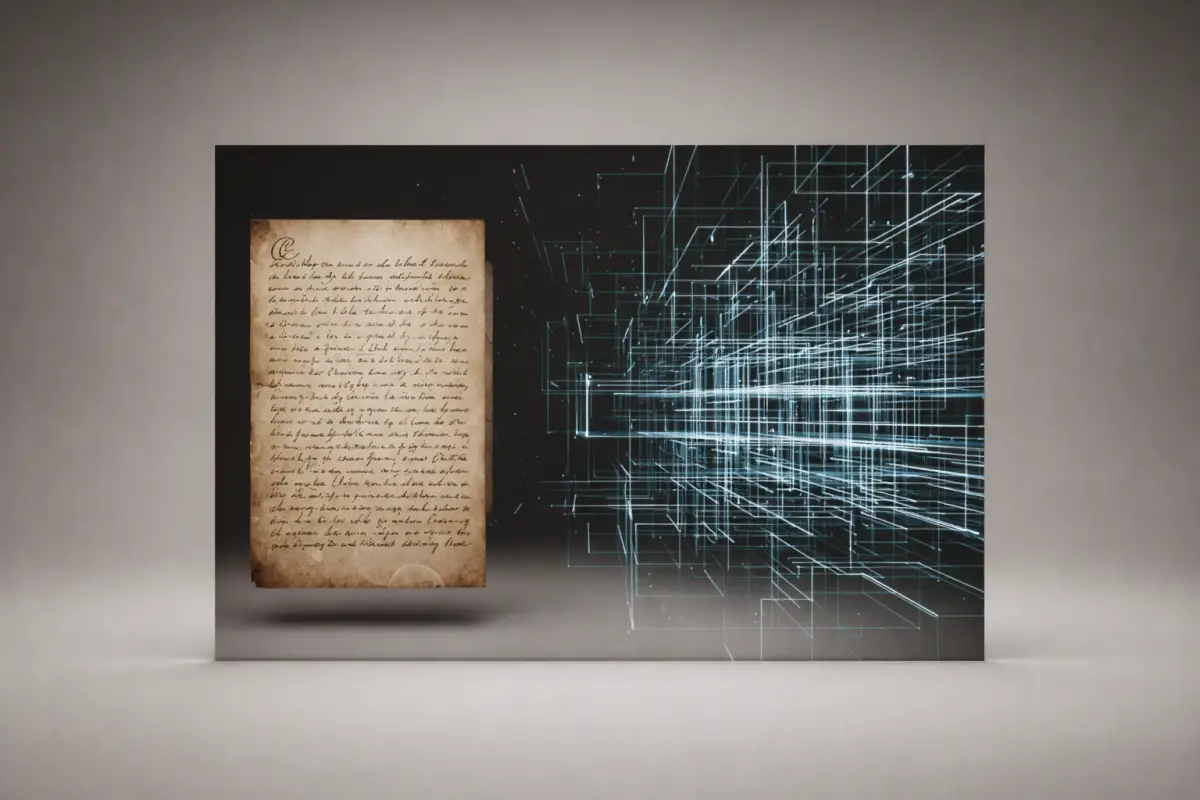
Imagine a dimly lit chamber where a monk bends over parchment by the trembling glow of a candle. His ink-stained hand moves slowly and deliberately across the page, a quill gliding in careful strokes. In the silence, only the soft scratching of the pen can be heard—a sound that, for centuries, bore witness to the accumulation of human knowledge.
Today, that image has changed. What was once ink and paper has transformed into streams of light and invisible pulses. We live in an era where words have changed their physical form, yet their almost mystical power remains intact.
History shows that the transmission of knowledge has always felt closer to ritual than to mere information exchange. When we now watch text appear on a screen—emerging seemingly from nothing—we are witnessing the same kind of miracle that medieval scribes once experienced. The difference lies only in form. Magic once hid within symbols; today, it is woven into complex digital architectures we cannot see.
From Symbols to Invisible Streams
Centuries ago, literacy belonged to the few. For most people, a book was an object that remained silent unless someone initiated into its code brought it to life. Symbols written in cryptic lines seemed almost supernatural—how could lifeless marks preserve living thought?
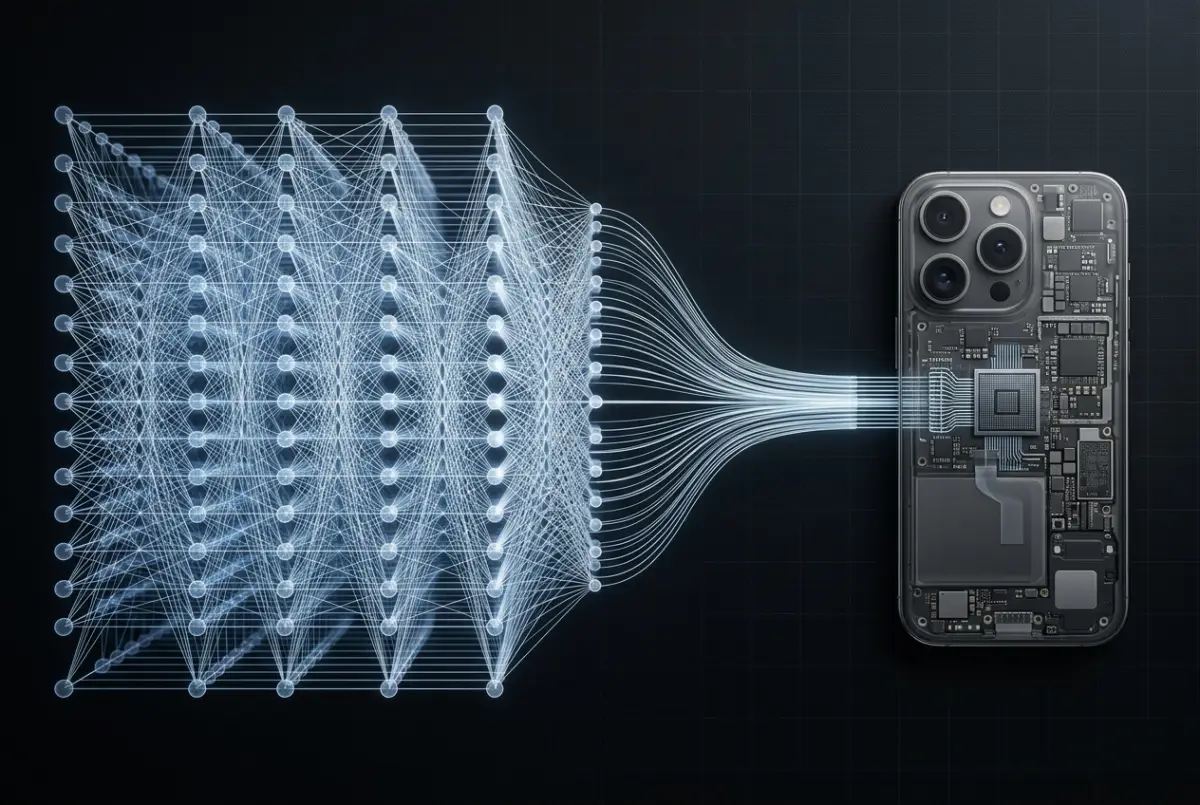
We stand before a similar wonder today. We have built systems capable of understanding the deep structure of language and generating new ideas from it. This is not merely mechanical automation; it represents the evolution of language as a living organism.
What was once inscribed on parchment now travels through invisible networks. Yet the essence has not changed. Words remain one of the most powerful forces capable of shaping reality. In this context, artificial intelligence appears not as an alien intrusion, but as a new librarian of humanity’s accumulated knowledge—able to read, connect, and synthesize what we have written over centuries within seconds.
The Modern Oracle and the Mirror
Human nature seeks answers where logic begins to blur. For many, this new technology carries the same aura once attributed to oracles. We pose a question into emptiness, and emptiness responds—structured, articulate, sometimes uncannily human.
The experience is both captivating and unsettling. It feels as though something else is conversing with our thoughts, even though we know this “presence” is not made of flesh and blood.
In reality, this digital intelligence is our reflection. It did not descend from the sky. It learned from our books, our poetry, our scientific research, and our everyday conversations. It is an immense mirror that reveals not only what we know, but how we think collectively.
The fear that often accompanies new technologies may ultimately be fear of self-recognition. Are we prepared to see our own consciousness reflected back at us as if it were an independent entity?
As we watch our ideas transform into digital code, it becomes clear that humanity is turning a new page. The writer who once worked by candlelight has not disappeared; he has evolved. The pen is no longer held in a hand—it is embedded within the process of thought itself.
And perhaps this transformation is not an ending, but an opportunity: a chance to explore the labyrinth of our own minds in ways that were never before possible.
Go backComments (0)
From This Author
Select Crypto to Support the Author 💫
×TXintEE7aezp6QxNNtbghCXvmXJdgofEyr
0x9c6299454A6B617A0Db228024279F2a3EEf956dD
bc1qj7caz3xfh5qd4ud3v3nh7k4tfl5lg8jh9er73e
0x9c6299454A6B617A0Db228024279F2a3EEf956dD
3TndfWAhPytTaBZjC2GbNWqh9iWx171SYACjbG2j5vx8
DHsrtwiL56Xk1xAj3fe8pVcfLhE8xgt3EQ
0x9c6299454A6B617A0Db228024279F2a3EEf956dD
UQDFkubJxb8KmxFmy1arJxkewzmNEg6-G2pJFVzFihB65d7W
ltc1q3fentl6ur9cxm0vxyqkdmmzxkj92j00p9l8m7z
✍ Article Author
- Registration: 26 July 2025, 19:34
- Location: Georgia