




When the Forest Echoes Your Voice: The Silence That Changes Us from Within
 Tornike Moss
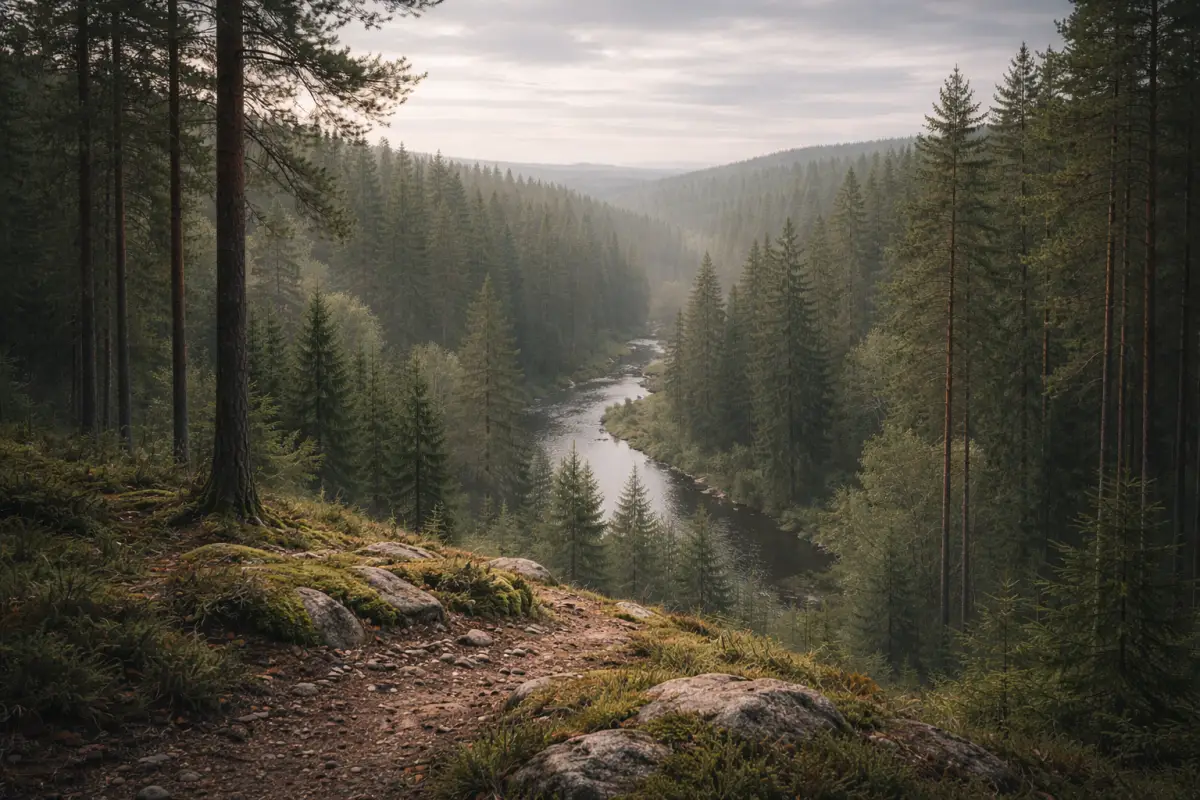
Sometimes we don’t even realize how loud our minds are until we find ourselves alone among trees.
The steady hum of the city fades into the background, and with it, something in our breathing begins to shift. As you step onto a forest path, a strange sensation arises—like you’ve been running for miles without noticing, and suddenly someone places a sign in front of you. Not a warning sign. A resting sign.
Going into nature often feels like escape. In reality, it’s more of a return. A return to a place where time isn’t measured by ticking hands on a clock, but by the changing angle of sunlight and the lengthening of shadows. No one asks you to be productive here. No one expects a reply. And that indifference may be nature’s greatest gift.
Landscape as a Mirror of the Self
It’s fascinating how the outer world reflects our inner state. When anxiety weighs on us, even the wind can feel aggressive. When we’re calm, a cloudy sky wraps around us like a soft blanket.
Nature is an immense mirror. It reflects our emotions, yet somehow absorbs their heaviness. Trees that have stood in the same place for decades remind us that not everything demands immediate reaction. Their stillness is contagious.
Watch a river crash against stones and continue its path regardless. You begin to understand that resistance is not a tragedy—it’s simply part of movement. Our thoughts are no different. They arrive and depart like clouds drifting across the sky, if we allow them to move freely instead of clinging to them.
Silence That Isn’t Empty
In a forest or open field, you discover that true silence is not the absence of sound. It is full—of rustling leaves, distant birds, the subtle snap of branches underfoot.
The difference is that these sounds ask nothing of us. They aren’t notifications demanding response. They aren’t problems waiting to be solved.
Within this unconditional space, the mind begins to slow. Attention softens. You might find yourself watching moss on a stone, or sunlight filtering through leaves, thinking about absolutely nothing. This moment—when analysis pauses and simple observation takes over—is something we often search for and rarely find between concrete walls.
It isn’t escape from problems. It’s restoration. A quiet recalibration that allows us to look at the world with clearer eyes.
When we return from the forest, its scent and coolness linger. The problems that once seemed overwhelming haven’t disappeared—but somehow, they’ve shrunk.
Perhaps that’s the real secret. Nature doesn’t give us answers. It gives us space—space where our questions no longer feel so heavy.
Go backComments (0)
From This Author
Select Crypto to Support the Author 💫
×TXintEE7aezp6QxNNtbghCXvmXJdgofEyr
0x9c6299454A6B617A0Db228024279F2a3EEf956dD
bc1qj7caz3xfh5qd4ud3v3nh7k4tfl5lg8jh9er73e
0x9c6299454A6B617A0Db228024279F2a3EEf956dD
3TndfWAhPytTaBZjC2GbNWqh9iWx171SYACjbG2j5vx8
DHsrtwiL56Xk1xAj3fe8pVcfLhE8xgt3EQ
0x9c6299454A6B617A0Db228024279F2a3EEf956dD
UQDFkubJxb8KmxFmy1arJxkewzmNEg6-G2pJFVzFihB65d7W
ltc1q3fentl6ur9cxm0vxyqkdmmzxkj92j00p9l8m7z
✍ Article Author
- Registration: 26 July 2025, 19:34
- Location: Georgia