



Humans in Zero Gravity: What Really Happens to the Body When We Leave Earth
 Tornike Moss
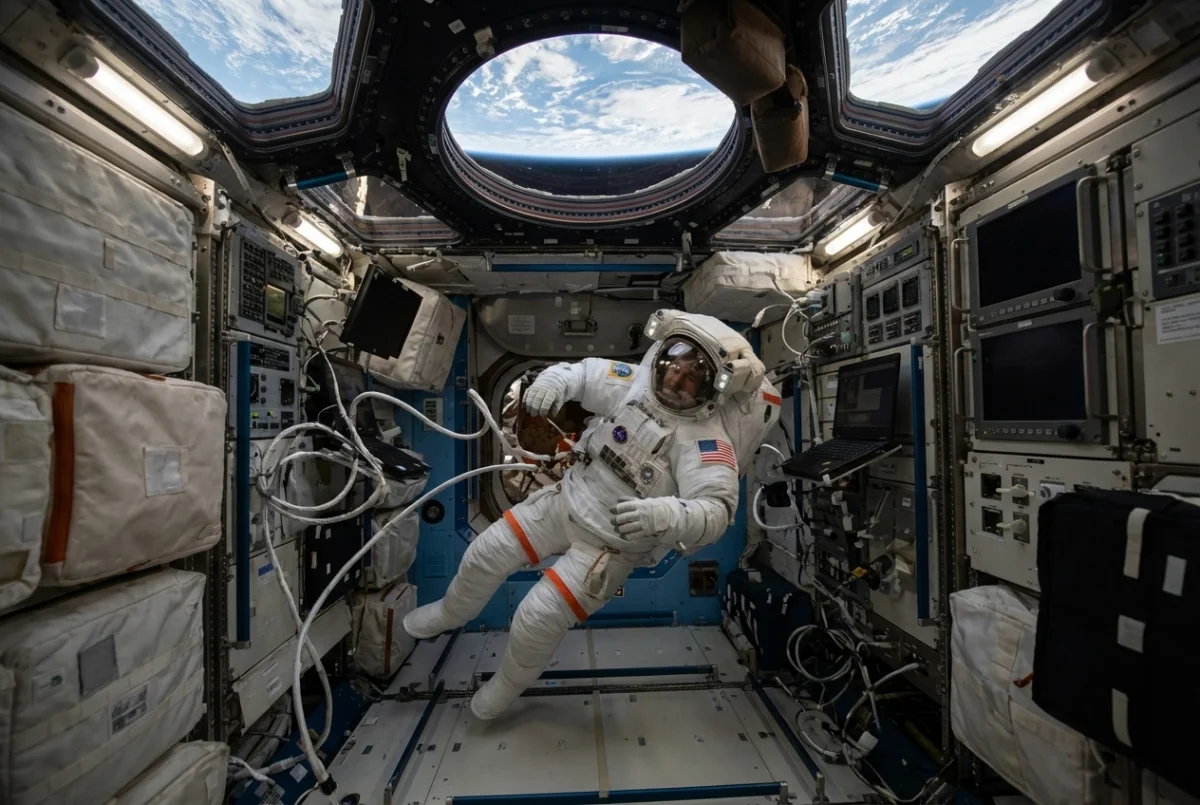
Space travel is often wrapped in romance — heroic missions, breathtaking views, and technological triumphs. Yet once the roar of rocket engines fades and a spacecraft settles into orbit, a very different and far less visible drama begins. It is the human body’s struggle to survive in an environment it was never designed for.
For millions of years, human evolution unfolded under the constant pull of Earth’s gravity. Our bones, muscles, blood vessels, and balance system are all finely tuned to a force that relentlessly pulls us downward. Remove that force, and the body is forced into a rapid and radical adaptation process.
So what actually happens inside an astronaut’s body in space — and what price does the human organism pay for reaching toward the stars?
Microgravity: The First Biological Shock
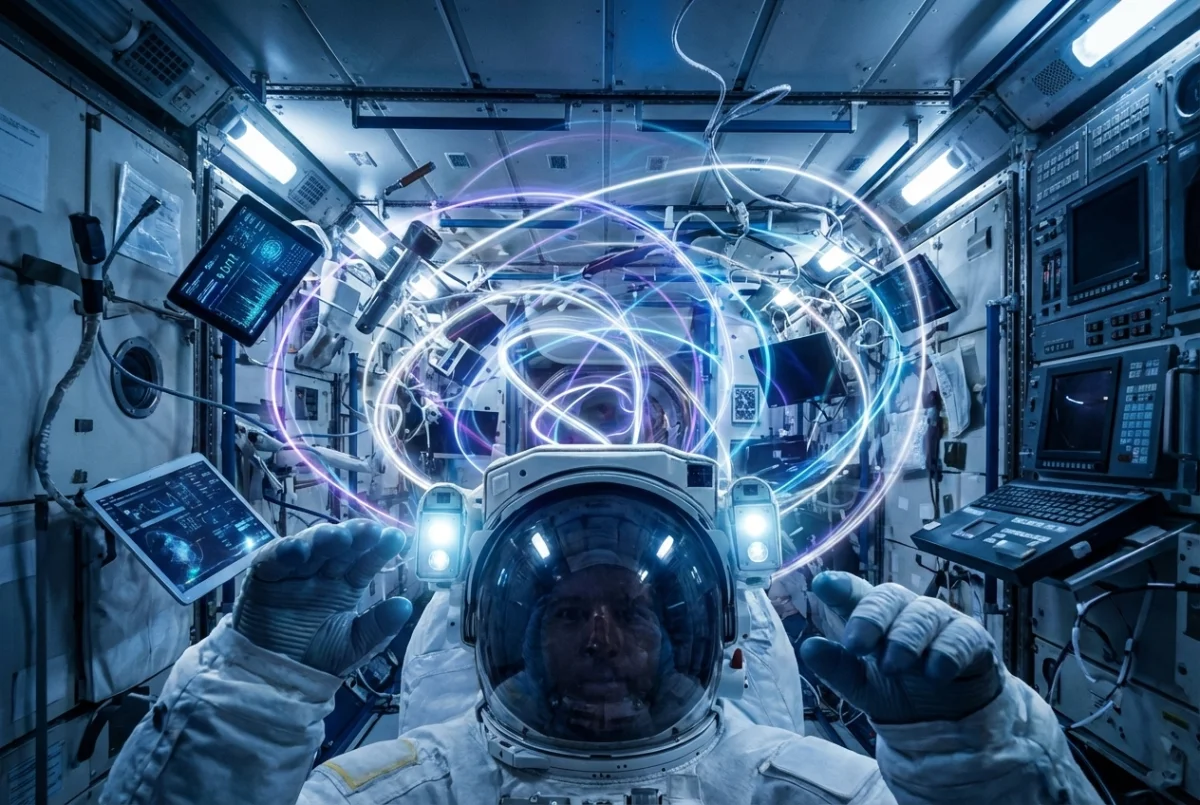
The term weightlessness is misleading. Astronauts don’t become truly weightless in orbit; instead, they are in a continuous state of free fall around Earth. This condition is known as microgravity.
Within the first hours of entering orbit, the body experiences sensory confusion. The vestibular system — the inner ear mechanism responsible for balance — can no longer determine what is “up” or “down.” The eyes see movement, but the body feels no physical support. This sensory mismatch triggers what is known as Space Adaptation Syndrome.
Symptoms include nausea, dizziness, and disorientation — similar to motion sickness, but driven by far more complex neurological causes. For most astronauts, these effects fade after a few days as the brain recalibrates to its new reality.
Fluid Shifts and the “Moon Face” Effect
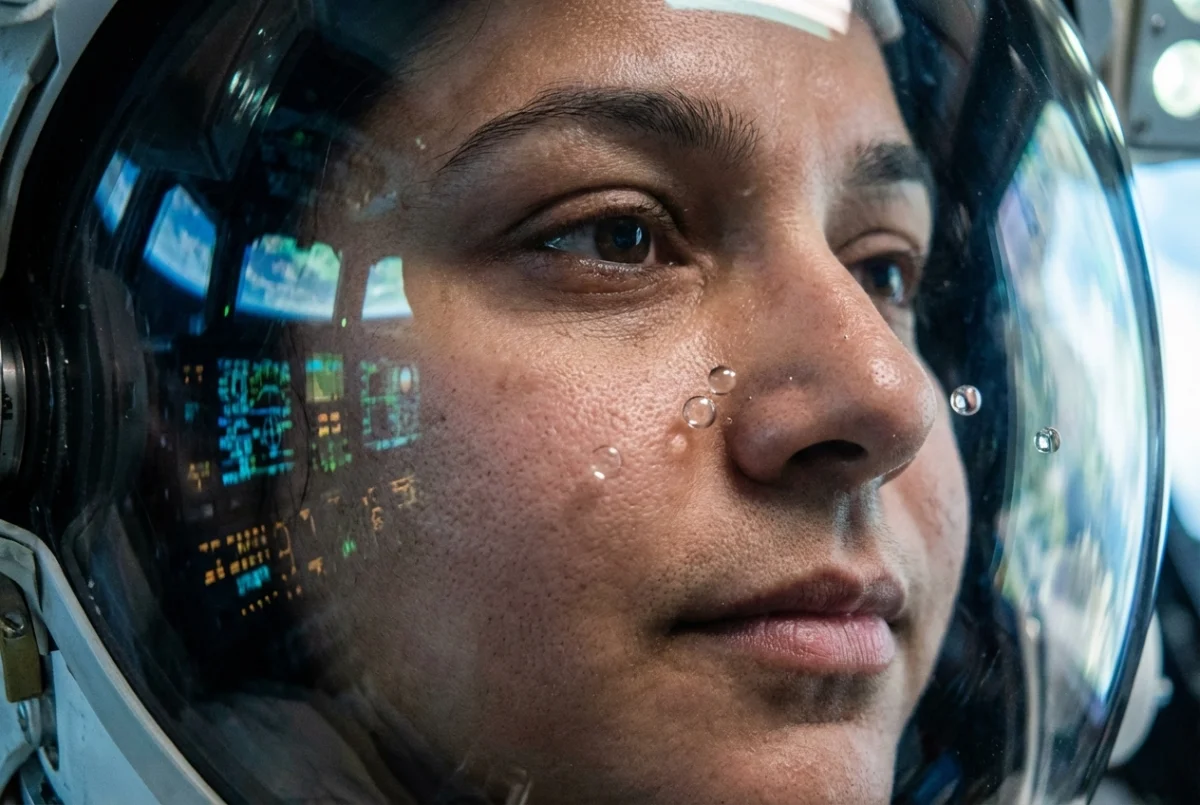
One of the most visible changes astronauts experience affects their appearance. On Earth, gravity constantly pulls blood and bodily fluids toward the legs. The cardiovascular system works continuously to push blood back up toward the brain.
In space, that downward pull disappears. Fluids migrate freely toward the upper body and head — a phenomenon known as fluid redistribution.
The result is a puffy face, often called moon face, while the legs appear thinner due to fluid loss — sometimes jokingly referred to as chicken legs. This shift is not merely cosmetic. It confuses the body’s internal sensors. The heart and kidneys interpret the excess fluid as overload and respond by expelling it, increasing the risk of dehydration.
Muscle Atrophy and Bone Loss
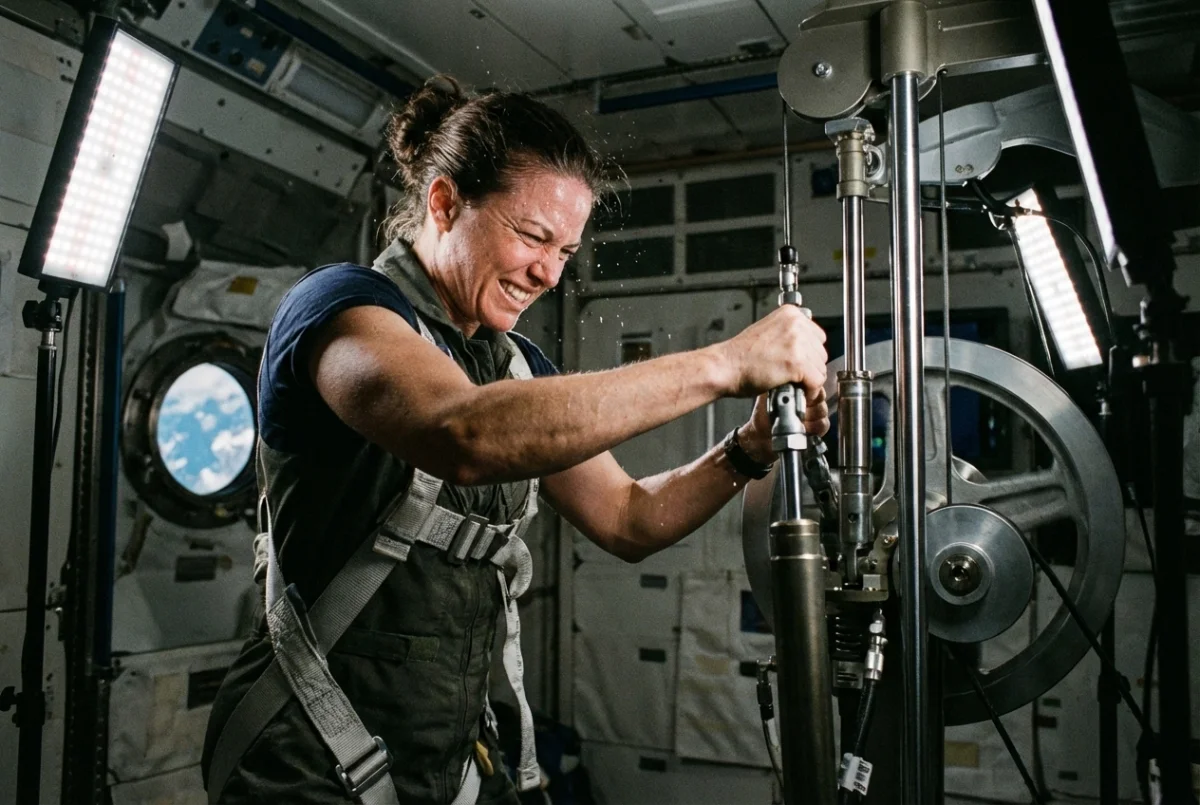
The human musculoskeletal system follows a simple rule: use it or lose it. On Earth, even standing upright requires constant muscle engagement. In space, however, astronauts can move massive objects with a gentle push of a finger.
Without regular load-bearing activity, muscles begin to weaken and shrink rapidly. The muscles of the legs and lower back — which normally work hardest against gravity — are the most affected.
Bone loss is an even more serious concern. In the absence of mechanical stress, bones stop renewing themselves efficiently and begin to release calcium. Astronauts can lose between 1 and 2 percent of their bone mass per month in space — a rate comparable to an accelerated form of osteoporosis. The excess calcium released into the bloodstream also increases the risk of kidney stones.
This is why exercise aboard the International Space Station is not optional. Astronauts spend roughly two hours a day training on specialized equipment designed to simulate resistance and preserve muscle and bone strength.
Vision Changes and the Nervous System
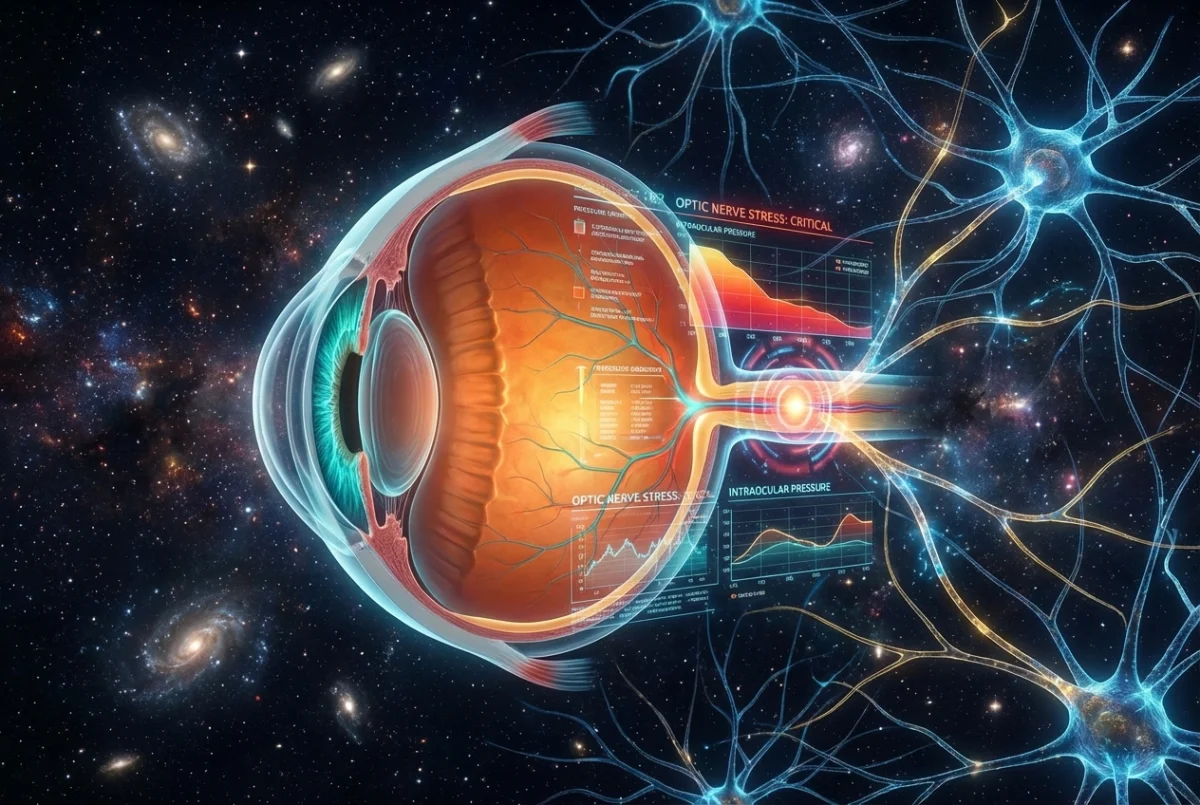
In recent years, scientists have identified another unexpected issue: Spaceflight-Associated Neuro-Ocular Syndrome (SANS). After long-duration missions, many astronauts experience changes in vision.
Once again, fluid redistribution is the primary culprit. Increased fluid pressure in the head raises intracranial pressure, which pushes against the back of the eyeball. This can alter its shape and affect the optic nerve, leading to vision impairment. In some cases, eyesight returns to normal after landing on Earth; in others, the changes can persist.
At the same time, the nervous system undergoes profound adaptation. The brain learns how to control movement in an environment without gravity, where falling is no longer a threat. This remarkable display of neuroplasticity allows astronauts to function in space — but it creates challenges when returning to Earth, where the brain must relearn gravity-based movement all over again.
Psychological Stress and Isolation
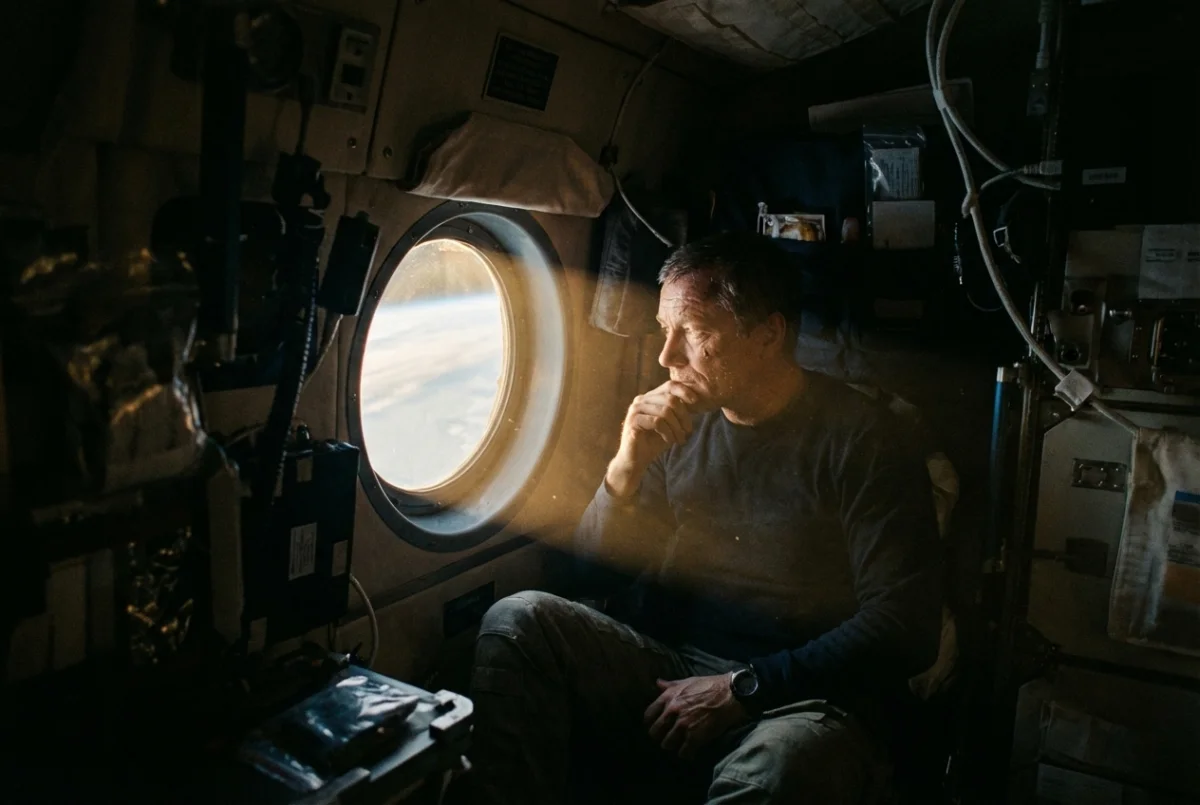
Beyond physical changes, space poses a serious psychological challenge. Astronauts live in confined quarters, surrounded by the same people for months, separated from family, friends, and normal social life.
Sleep disruption is one of the biggest issues. The International Space Station orbits Earth every 90 minutes, meaning astronauts witness 16 sunrises and sunsets every 24 hours. This constant cycle disrupts circadian rhythms, often leading to insomnia and chronic fatigue.
Continuous monitoring, high responsibility, fear of mistakes, and monotony all contribute to elevated stress levels. As a result, psychological resilience is just as critical in astronaut selection as physical fitness.
Returning to Earth: Relearning Gravity
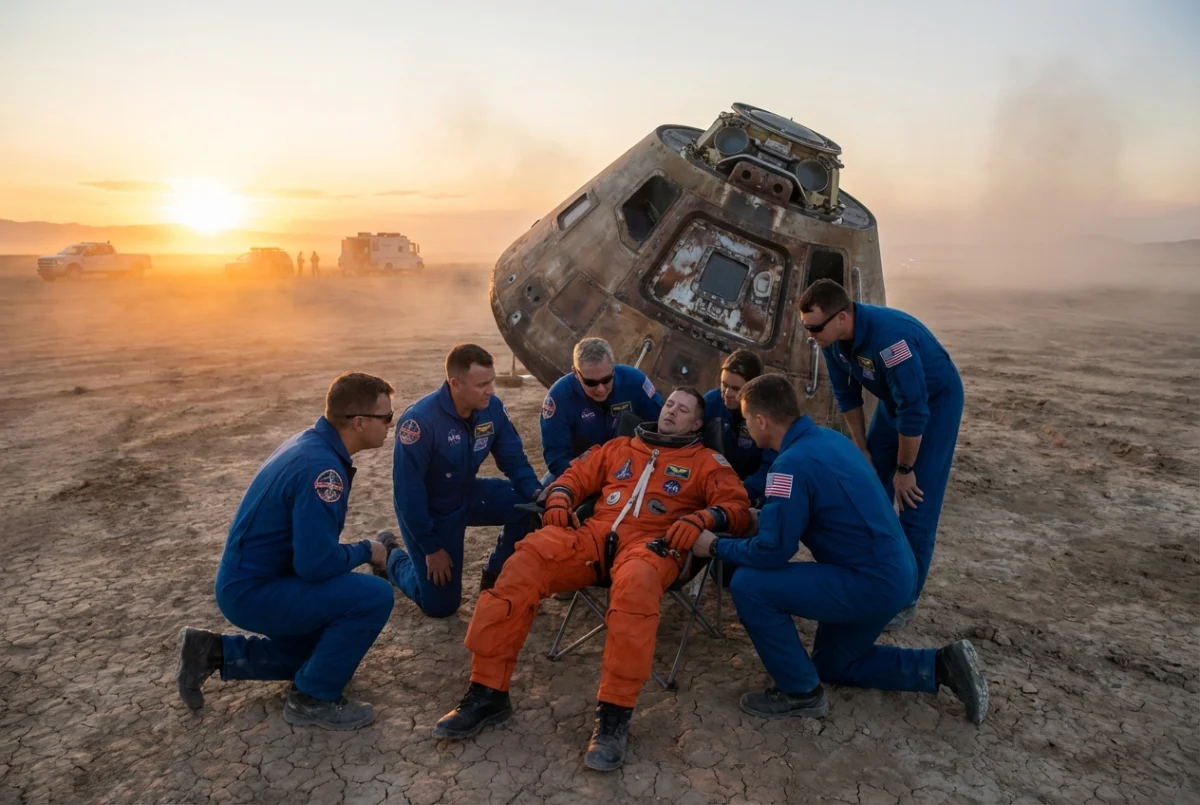
When a mission ends and a spacecraft lands back on Earth, the body faces its most difficult transition yet. Gravity — once a constant and unnoticed force — suddenly feels overwhelming.
In the first hours after landing, astronauts often struggle to stand, walk, or maintain balance. Blood that had been evenly distributed throughout the body rapidly pools in the legs, sometimes causing fainting. The heart must relearn how to pump blood upward against gravity.
Full recovery depends on the length of the mission. Muscles and circulation usually rebound relatively quickly, but restoring bone density can take months or even years.
A Reminder of Where We Come From
Despite extraordinary technological progress, space remains an extreme environment for the human body. Our biology constantly reminds us that we are, at our core, children of Earth.
Every journey into space is not just a scientific mission — it is a biological experiment that tests the limits of human adaptability. It reveals both our remarkable resilience and our underlying fragility, offering a sobering reminder of how finely tuned the human body is to the world it evolved in.
And yet, despite the cost, we keep reaching for the stars.
Go backComments (0)
From This Author
Select Crypto to Support the Author 💫
×TXintEE7aezp6QxNNtbghCXvmXJdgofEyr
0x9c6299454A6B617A0Db228024279F2a3EEf956dD
bc1qj7caz3xfh5qd4ud3v3nh7k4tfl5lg8jh9er73e
0x9c6299454A6B617A0Db228024279F2a3EEf956dD
3TndfWAhPytTaBZjC2GbNWqh9iWx171SYACjbG2j5vx8
DHsrtwiL56Xk1xAj3fe8pVcfLhE8xgt3EQ
0x9c6299454A6B617A0Db228024279F2a3EEf956dD
UQDFkubJxb8KmxFmy1arJxkewzmNEg6-G2pJFVzFihB65d7W
ltc1q3fentl6ur9cxm0vxyqkdmmzxkj92j00p9l8m7z
✍ Article Author
- Registration: 26 July 2025, 19:34
- Location: Georgia